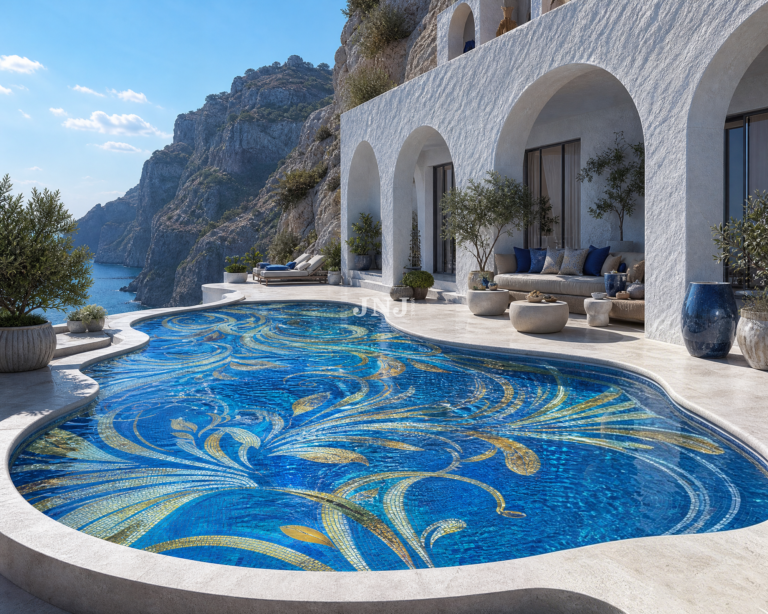
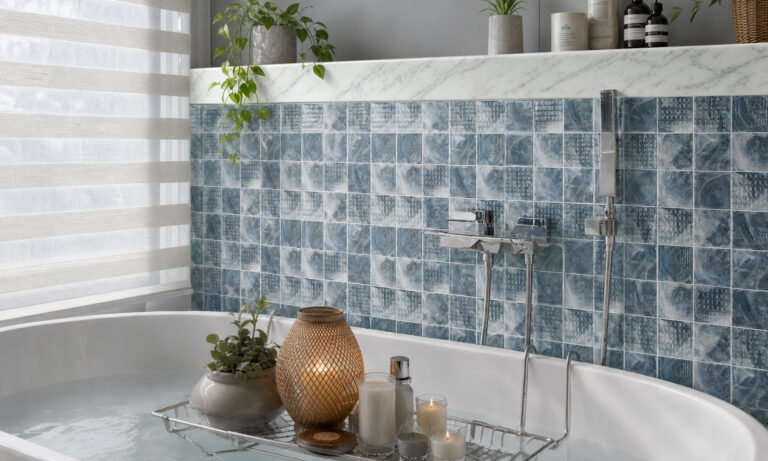
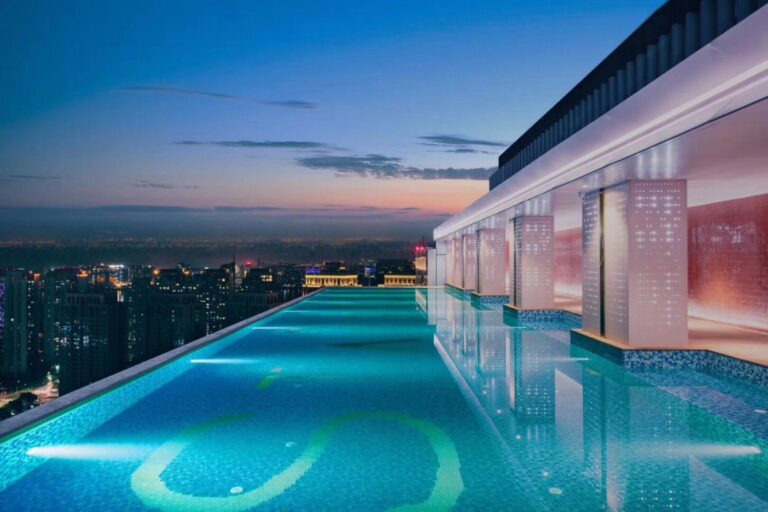
Introduction: A Hotel Mosaic Supplier Must Deliver More Than Tiles
Choosing a luxury hotel mosaic tile supplier involves more than comparing products and prices. Hotels need mosaic surfaces that support the design concept, suit the intended space, and remain consistent across samples, production batches, and installation areas.
A capable supplier should help translate drawings into practical mosaic systems while coordinating materials, patterns, prototypes, production, and installation details. This is especially important for custom lobby walls, bathrooms, restaurants, spas, and resort pools.
This guide explains how to evaluate a hospitality mosaic supplier, avoid common sourcing risks, and select the right partner for a complex hotel project. It also highlights JNJMosaic’s experience in delivering custom hospitality mosaic solutions for international hotel environments.
What Does a Luxury Hotel Mosaic Tile Supplier Actually Do?
A hotel mosaic supplier does more than manufacture and ship tiles. Its role is to help turn a design concept into a surface that can be produced accurately and installed efficiently.
From Design Concept to Production
For a custom hospitality project, the supplier may support:
– Material, color, texture, and finish selection
– Pattern development from drawings or artwork
– Sample and prototype production
– Adaptation for curves, corners, pools, and large surfaces
– Panel division, numbering, and packaging
– Production checks and installation guidance
This process helps identify practical issues before mass production begins. It also reduces the risk of distorted patterns, inconsistent batches, unclear layouts, or difficult on-site adjustments.
Coordinating the Project Team
Hotel mosaic projects often involve owners, designers, architects, contractors, procurement teams, and installers. A qualified supplier connects these parties by confirming dimensions, application conditions, approved samples, production drawings, and delivery stages.
The objective is not to replace the designer or installer. It is to preserve the design intent while ensuring that the mosaic system is practical to manufacture, transport, and install. For complex hospitality spaces, this coordination is what separates a project partner from a standard tile vendor.
Why Mosaic Tiles Work in Luxury Hospitality Design
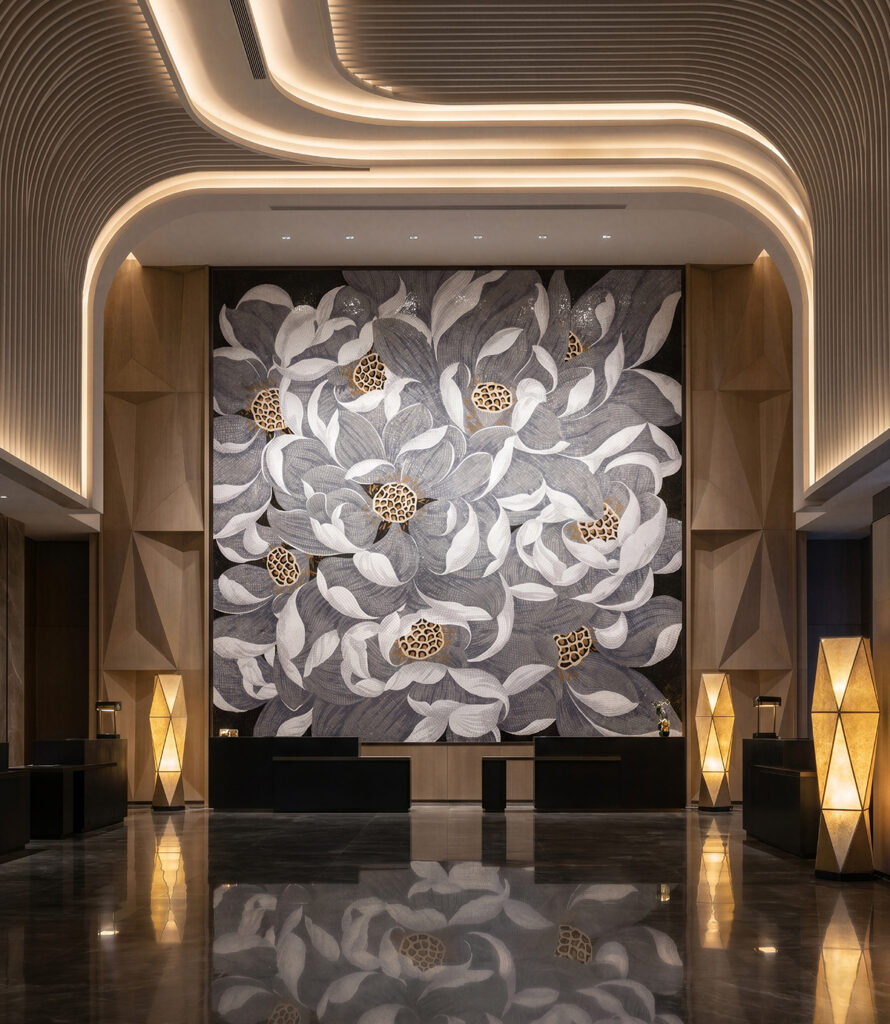
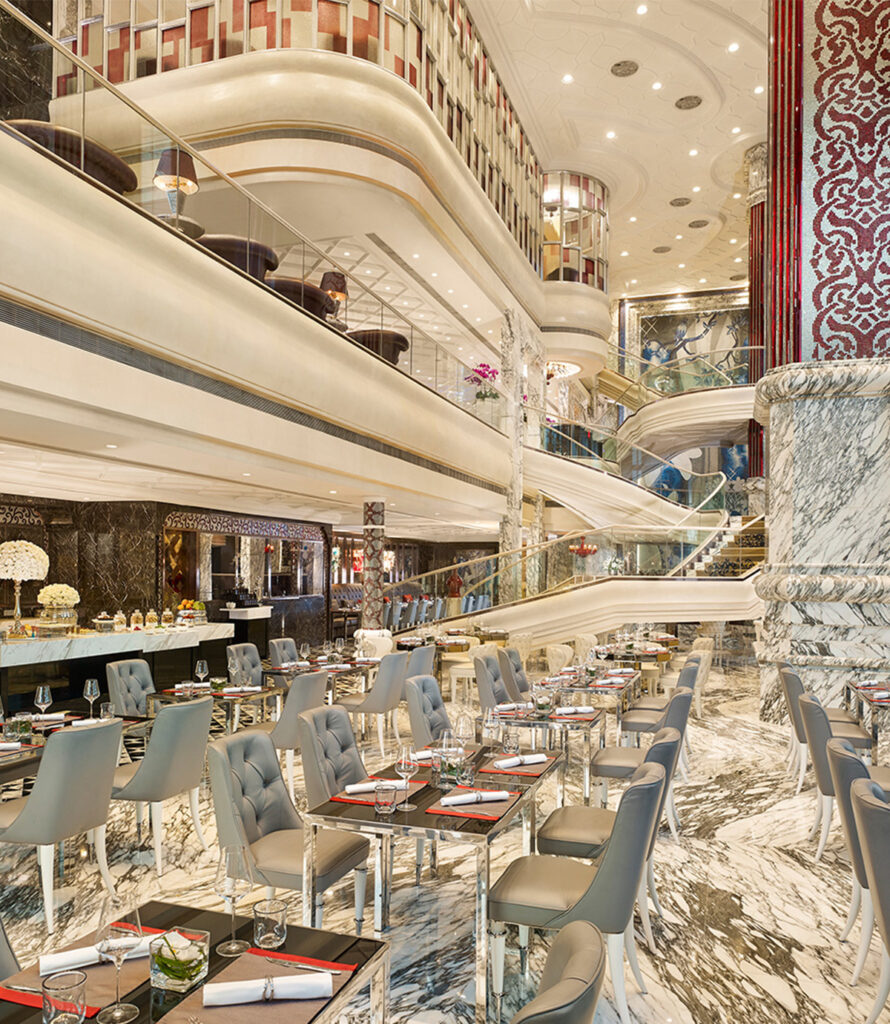
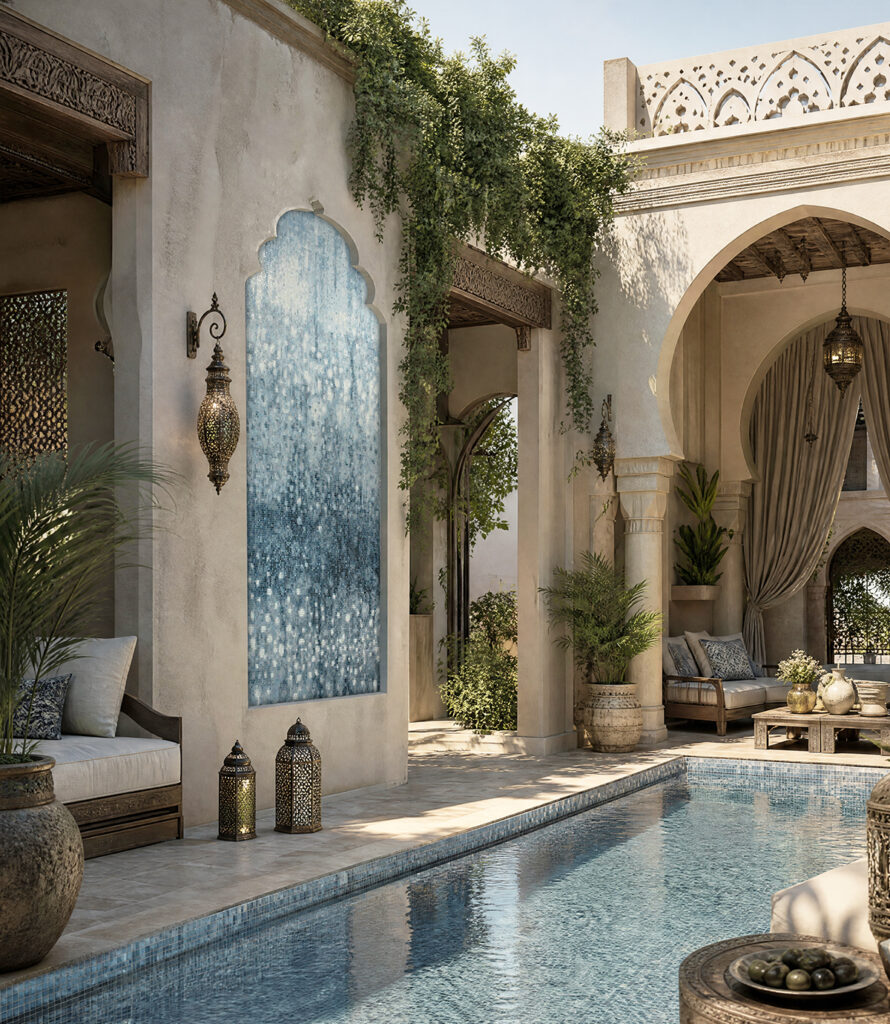
Luxury hotels need surfaces that create a memorable identity while supporting the function of each space. Mosaic tiles offer designers control over color, pattern, scale, texture, and reflection, making them suitable for both subtle details and large architectural features.
Creating a Distinctive Hotel Identity
Custom mosaics can translate brand colors, local culture, artwork, or natural forms into a unique material language. In a lobby or reception area, they can establish a strong first impression without relying on mass-produced decoration.
Connecting Different Hotel Spaces
A coordinated mosaic concept can extend across guest bathrooms, restaurants, bars, corridors, spas, pools, and feature walls. The pattern, finish, or color balance can change by area while maintaining a consistent visual story throughout the property.
Balancing Design with Daily Use
Hospitality surfaces must also respond to foot traffic, moisture, cleaning, lighting, and maintenance. Mosaic’s small-format structure makes it adaptable to curves, columns, and detailed transitions. However, suitability depends on the exact material, finish, substrate, installation system, and environment.
For this reason, material selection should be based on both the desired appearance and the technical requirements of each hotel area.
Seven Criteria for Choosing a Luxury Hotel Mosaic Tile Supplier
The right supplier should be evaluated by its ability to support the whole project—not only by its catalog or quotation. Use these seven criteria when comparing candidates.
1. Relevant Hospitality Project Experience
Ask for completed projects similar in scale, space type, and design complexity to yours. Review installed photographs, application areas, and the supplier’s documented role. A hotel lobby, bathroom, restaurant, or pool presents different production and installation challenges.
2. Design-to-Production Capability
A strong supplier should be able to translate drawings, artwork, or brand concepts into production-ready mosaic layouts. Check whether the team can develop patterns, adjust scale and color, prepare technical drawings, and adapt designs for curves, corners, and irregular surfaces.
3. Material selection based on the application
Materials should be selected for the specific environment rather than appearance alone. Consider traffic, moisture, cleaning, lighting, substrate, and maintenance. Request current technical information for the proposed material, especially for floors, pools, wet areas, and outdoor applications.
| Hotel Area | Design Priority | Questions to Verify |
| Lobby | Identity and visual impact | Pattern scale, lighting, cleaning |
| 浴室 | Detail and moisture exposure | Material, substrate, joints, maintenance |
| 泳池 | Underwater color and geometry | Verified immersion suitability and installation system |
| Restaurant | Atmosphere and cleaning | Finish, traffic, stain-management requirements |
| Spa | Texture and calm visual language | Moisture, maintenance, tactile requirements |
| Exterior | Architectural continuity | Climate, substrate and verified outdoor suitability |
4. Sampling and Prototype Approval
Samples allow the design team to assess color, texture, scale, reflection, and grout relationships under actual lighting. Complex patterns or architectural surfaces may require a larger mock-up to confirm alignment, transitions, and installation feasibility before mass production.
5. Quality Control Across Production Batches
Ask how the supplier controls dimensions, color ranges, pattern accuracy, joints, and panel alignment. For large projects, an approved control sample, batch records, panel inspections, and pre-shipment checks help maintain consistency across different production stages.
6. Installation Planning and Site Coordination
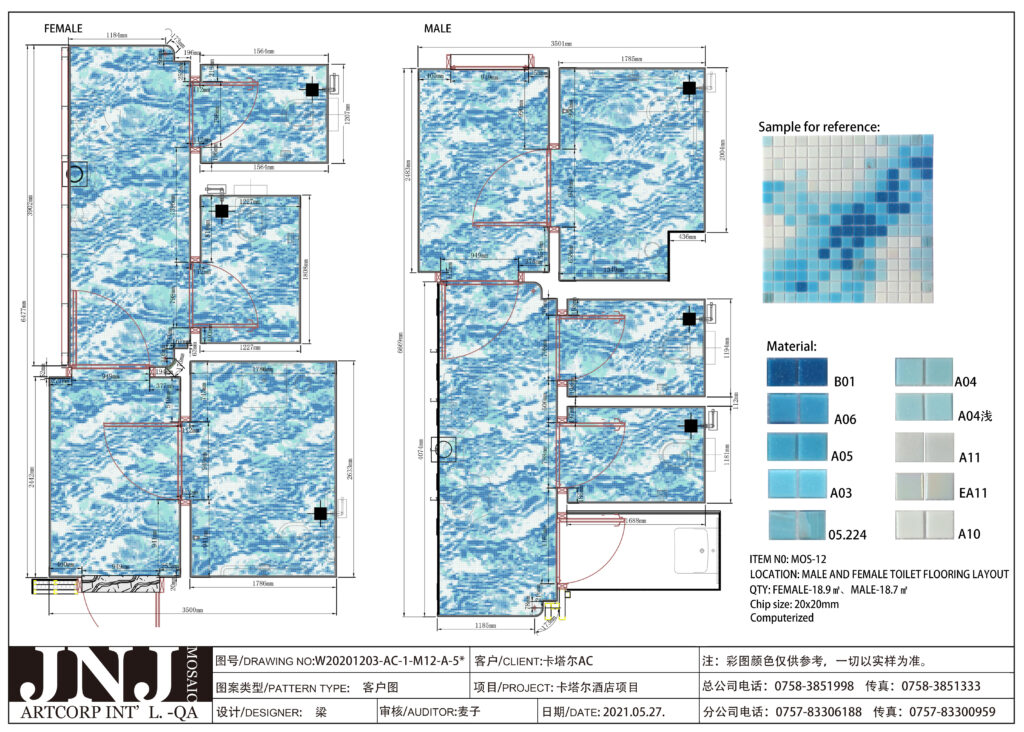
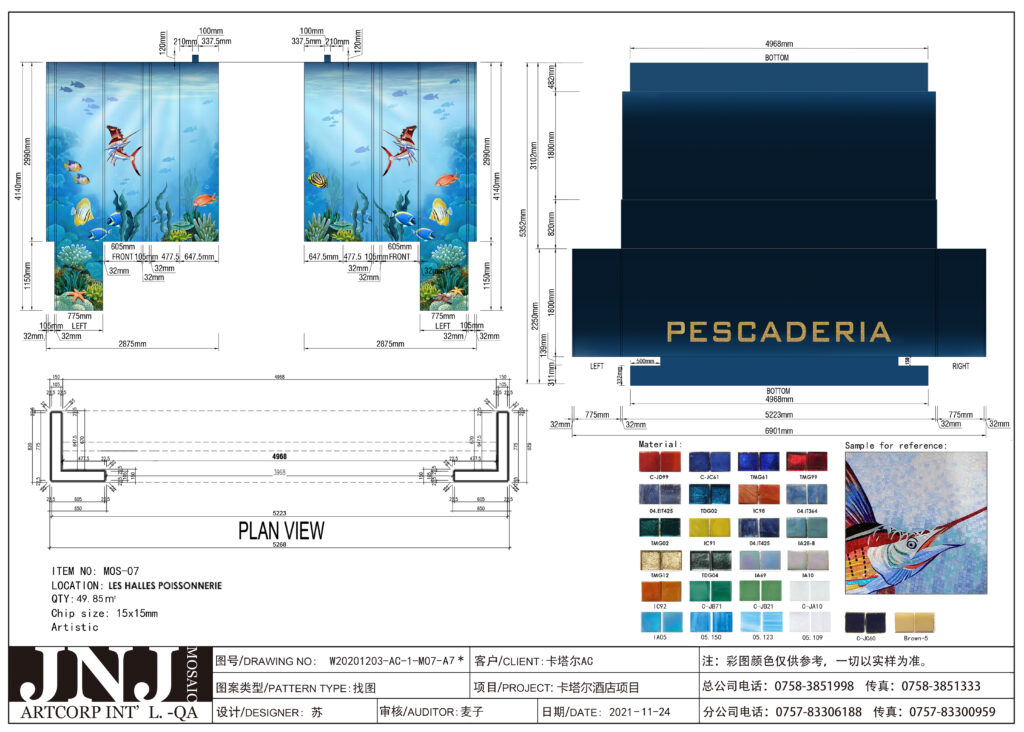
Even a well-made mosaic can fail visually if the layout is unclear. Confirm how murals or patterns will be divided, numbered, packed, and matched on site. The supplier should also review corners, curves, edges, and changing site dimensions with the contractor or installer before production.
7. Clear Delivery and Communication Processes
Hotel projects often involve phased construction and multiple decision-makers. A dependable supplier should define sample approvals, production milestones, drawing revisions, packing methods, shipment stages, and replacement procedures. Clear responsibilities and documented changes reduce delays and misunderstandings.
Price remains important, but it should be considered alongside design support, technical evidence, production control, and project coordination. The lowest quotation may not represent the lowest total project risk.
From Design Brief to Installation—A Reliable Project Workflow
A structured workflow helps protect the design intent and identify technical problems before they reach the construction site.
Step 1: Define the Project Requirements
Provide the location, application areas, dimensions, drawings, reference images, installation conditions, desired effect, budget range, and required delivery date.
Step 2: Align the Design and Materials
The supplier reviews the visual concept and recommends suitable colors, textures, finishes, tessera sizes, and production methods for each space.
Step 3: Review Technical Feasibility
Patterns, curves, corners, substrates, wet areas, and large surfaces are assessed. Any design that may be difficult to manufacture or install should be adjusted at this stage.
Step 4: Develop and Approve Samples
Samples or larger prototypes confirm color, scale, texture, reflection, grout relationships, and pattern accuracy. The approved sample then becomes the reference for production.
Step 5: Prepare Production Drawings
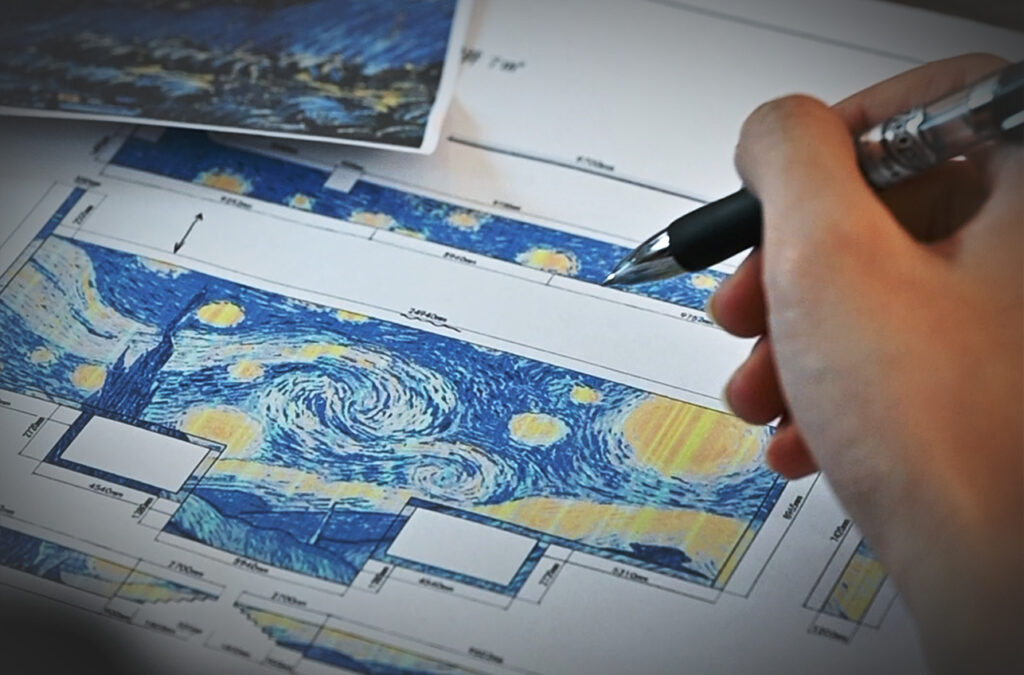
Final dimensions are translated into layouts, sections, panel numbers, installation directions, and packing lists. These documents should be approved before manufacturing begins.
Step 6: Control Production and Delivery
The supplier checks materials, dimensions, colors, pattern alignment, and packaging. Large orders may be inspected and shipped in phases according to the construction schedule.
Step 7: Support Installation and Acceptance
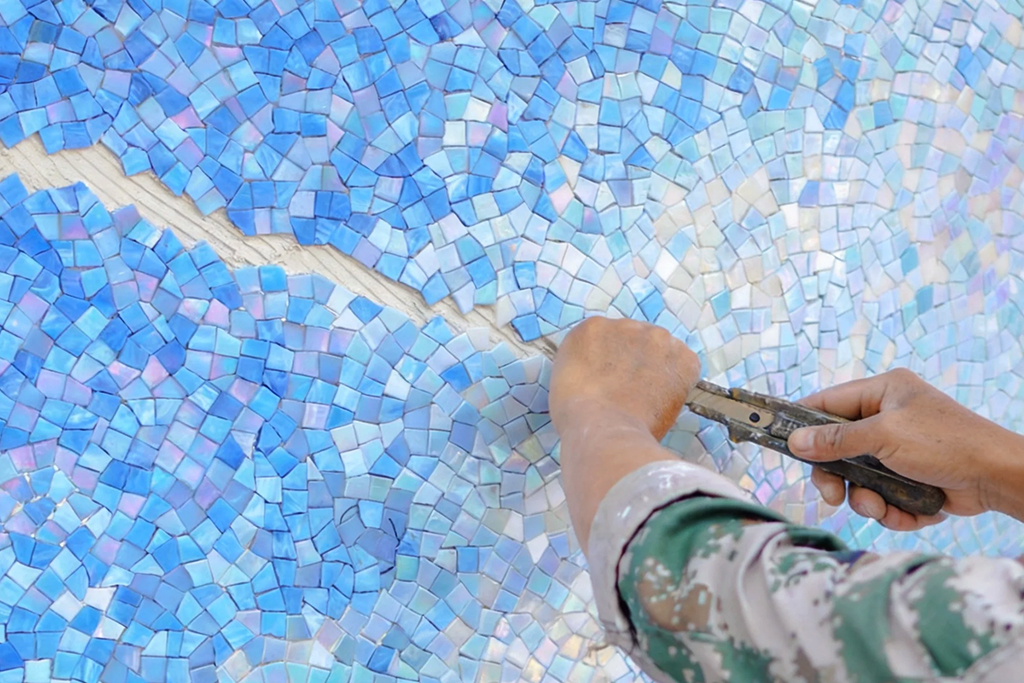
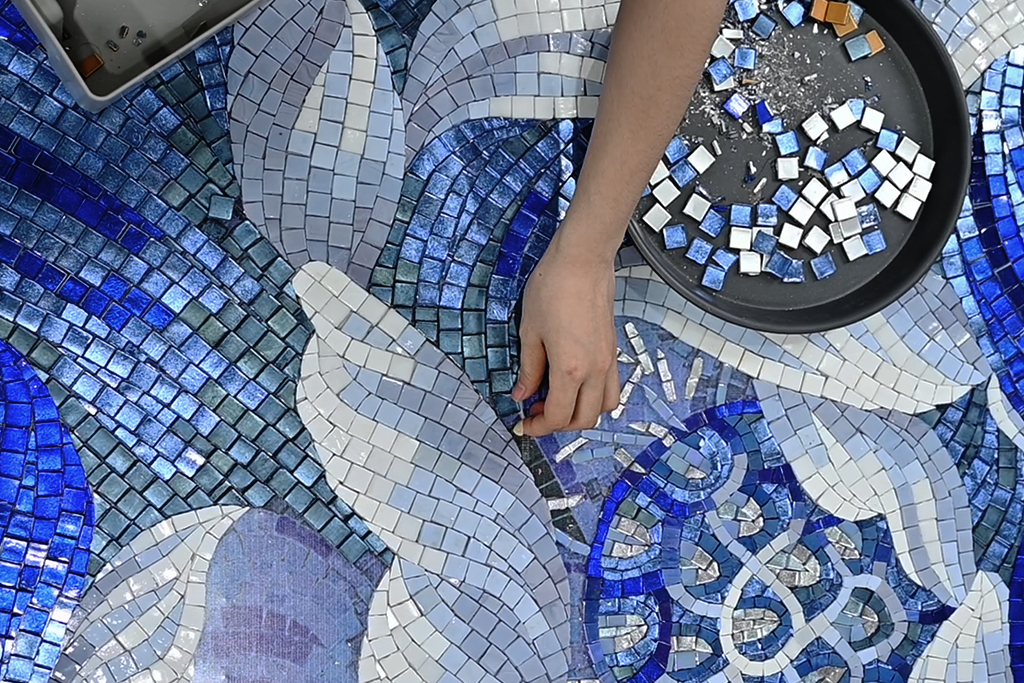
Numbered panels, layout drawings, and installation guidance help the site team assemble the mosaic correctly. Any replacements or adjustments should follow the approved project records.
JNJMosaic follows this project-based approach to connect design development, production control, and site coordination. Learn more about its mosaic solutions for hotels and resorts.
Project Evidence—How JNJMosaic Approaches Complex Hotel Spaces
Relevant project experience helps buyers understand how a supplier performs beyond the sample stage. The following JNJMosaic hotel cases show three different challenges: scale, design continuity, and application across varied environments.
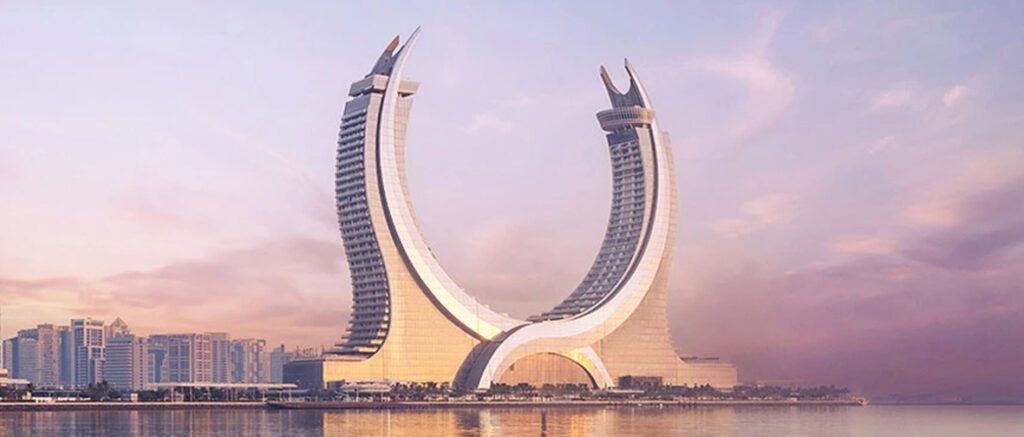
Fairmont Doha at Katara Towers: Scale and Pattern Control
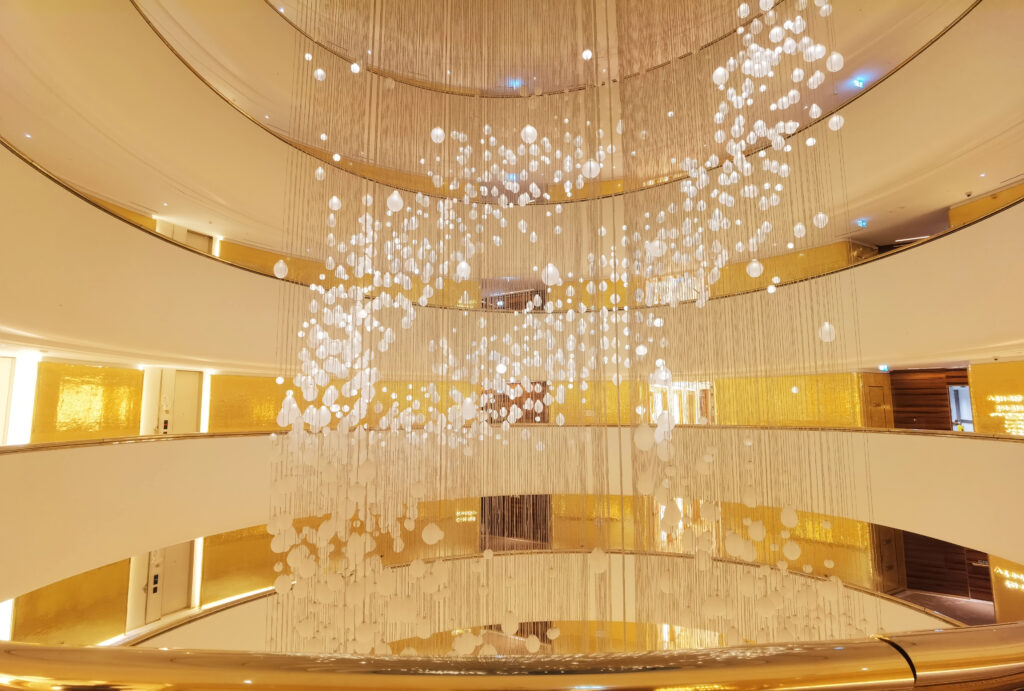
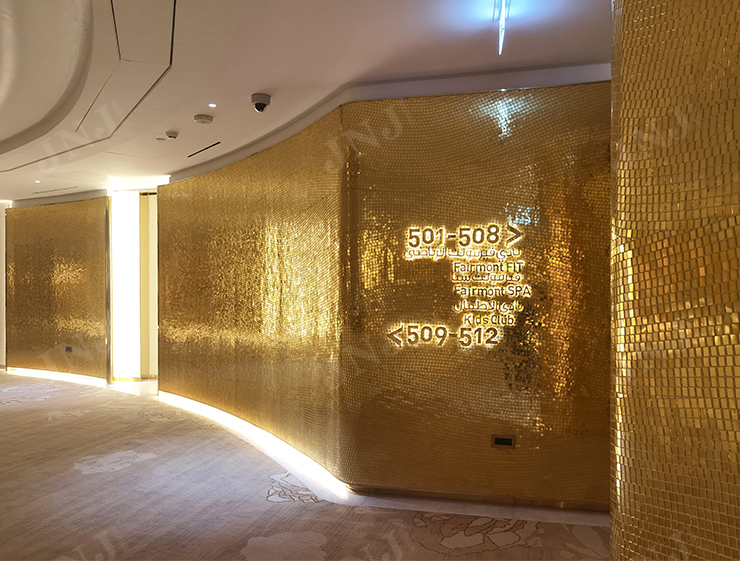
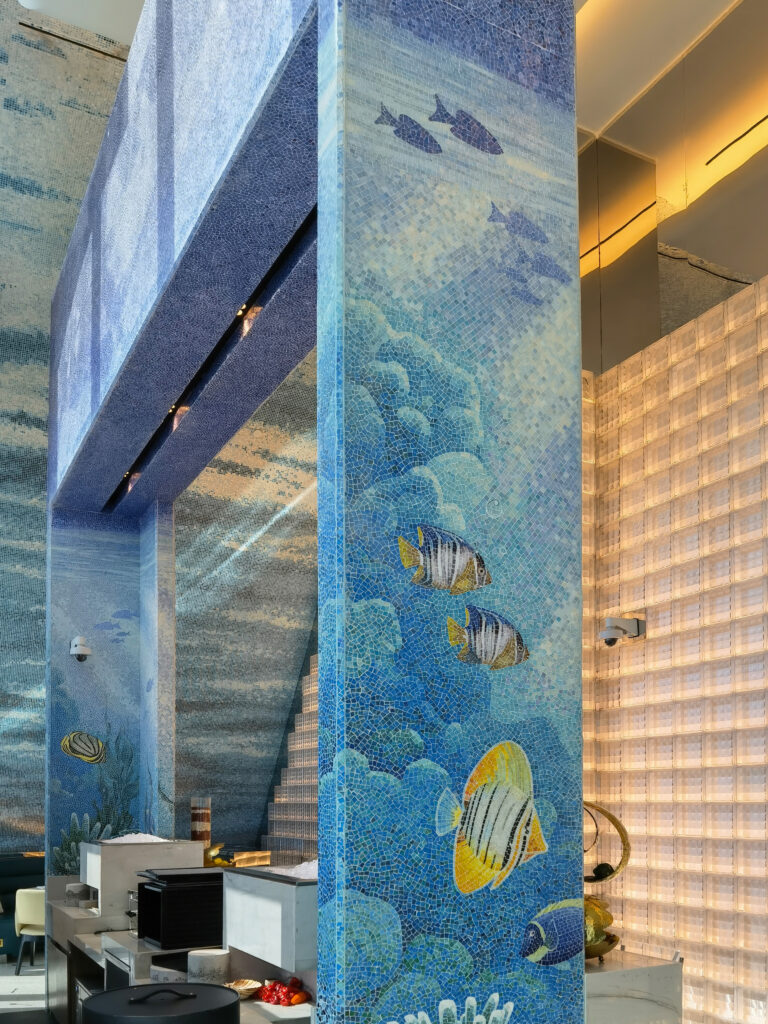
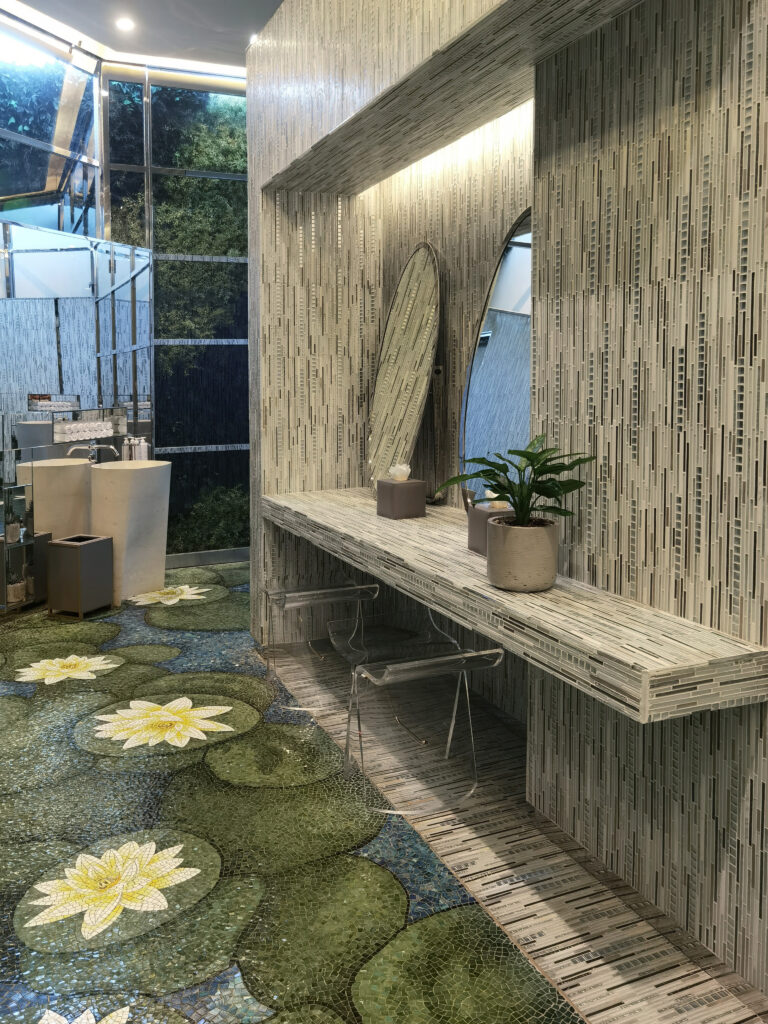
At Fairmont Doha, mosaic applications extend through public areas, guest rooms, restaurants, bars, and bathrooms. The designs interpret regional themes such as desert dunes, waves, lotus flowers, and marine life.
According to JNJMosaic’s project record, the development included 18 original mosaic products and more than 2,000 design drawings. Large quantities, multiple production batches, flowing lines, and complex corners required close control of dimensions and pattern continuity. This case demonstrates the importance of sampling, technical development, and coordination on a large hospitality project.
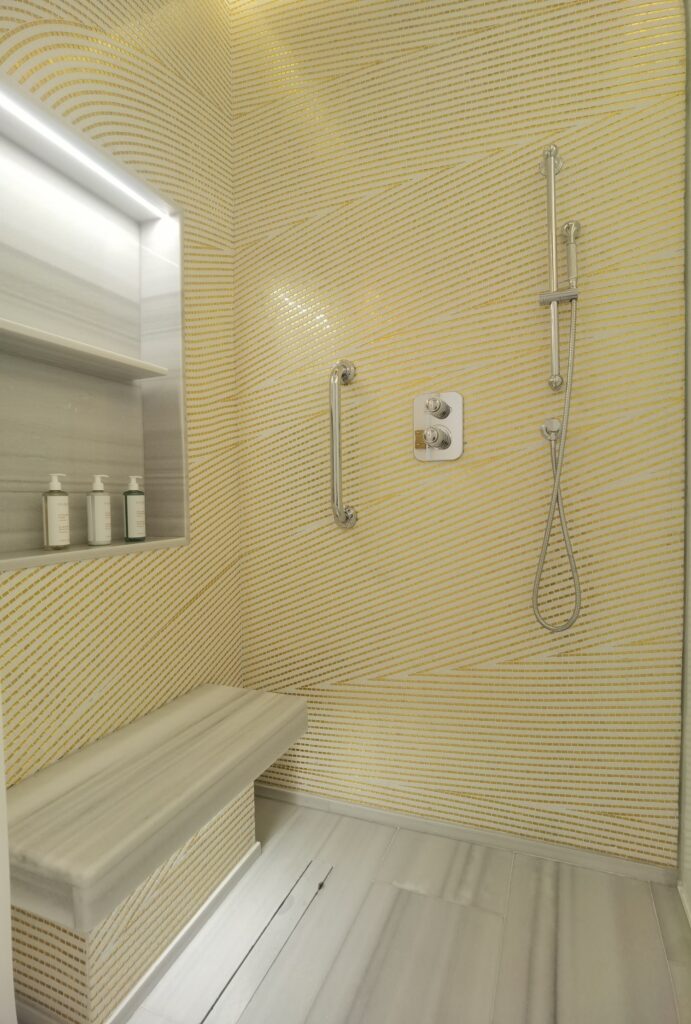
The Reverie Saigon : One Material Language Across Multiple Spaces
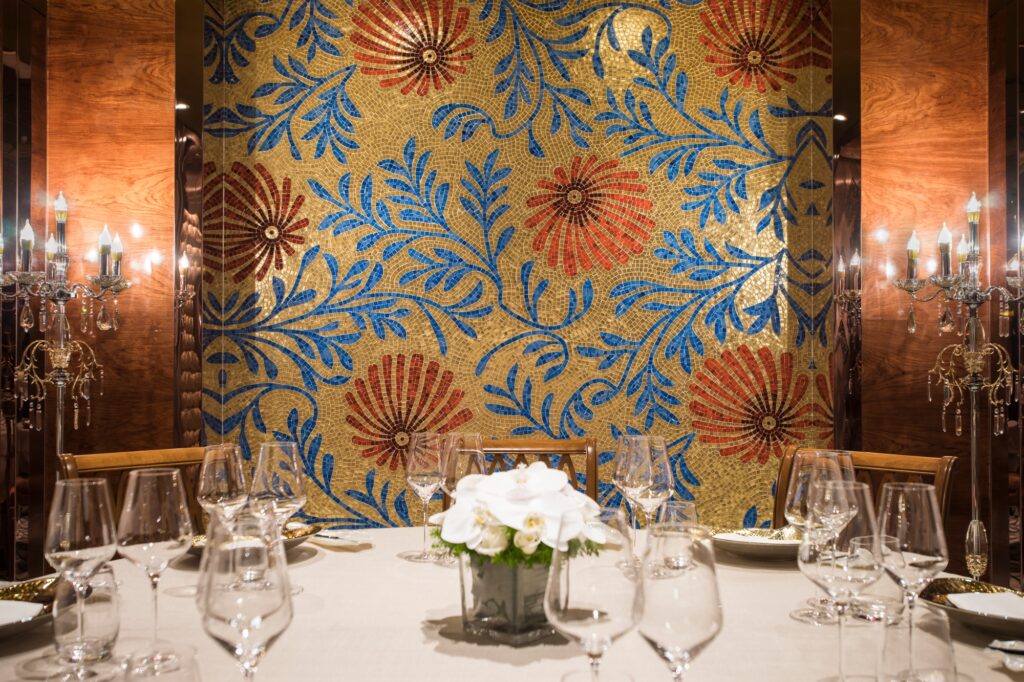
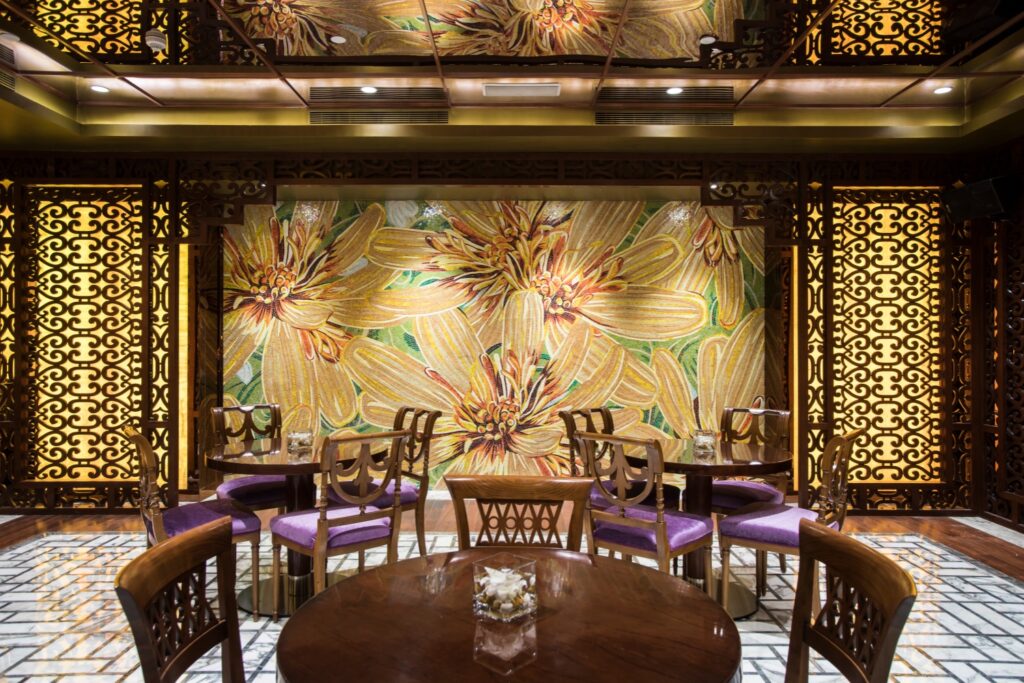
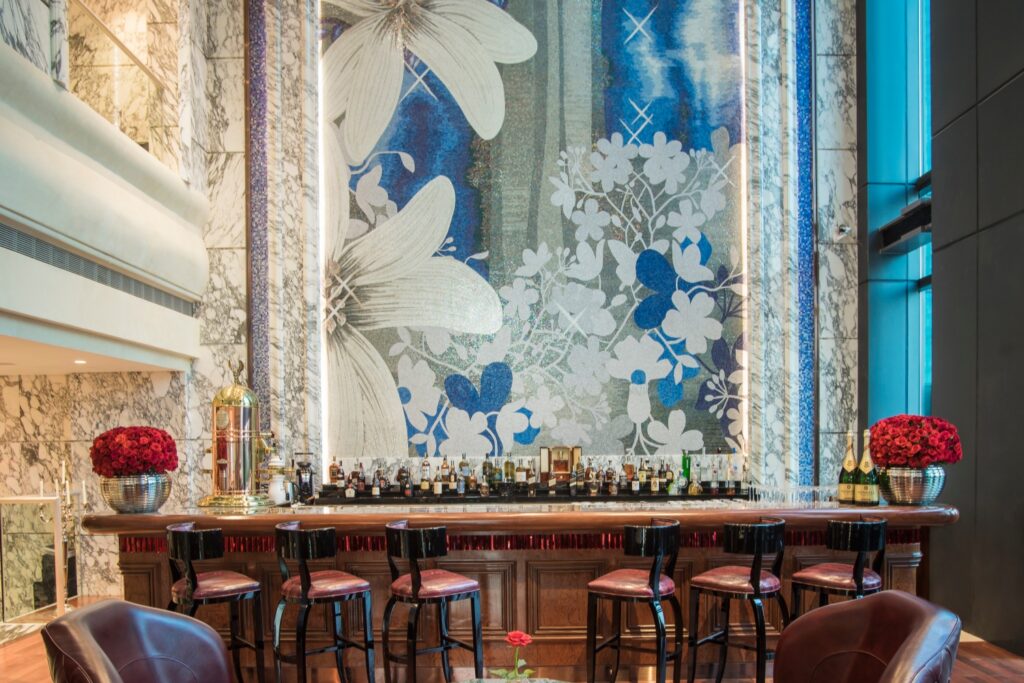
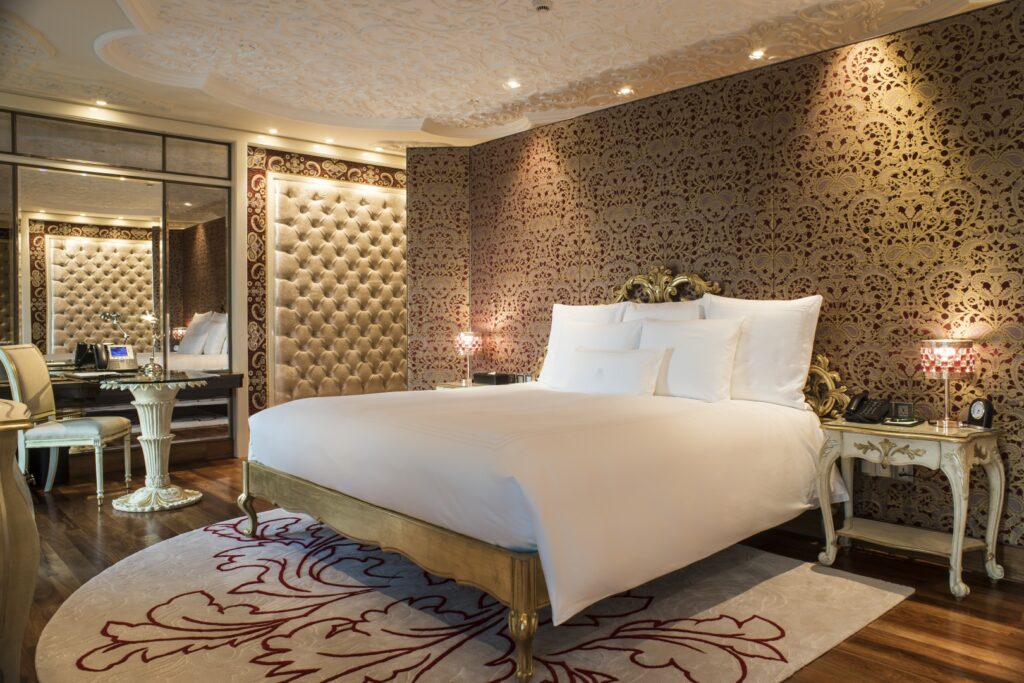
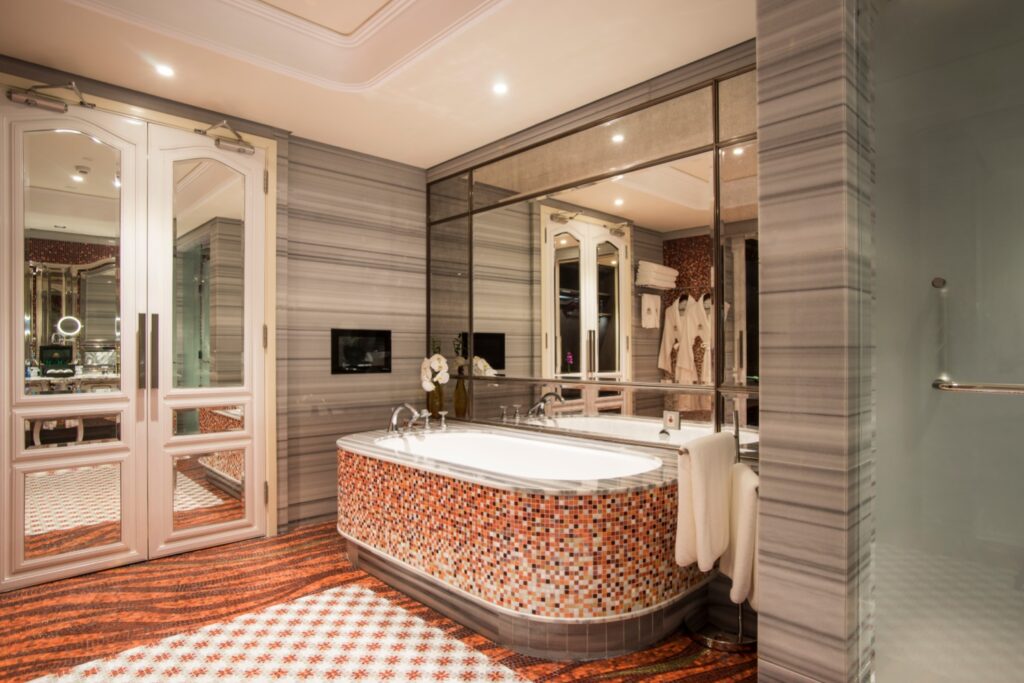
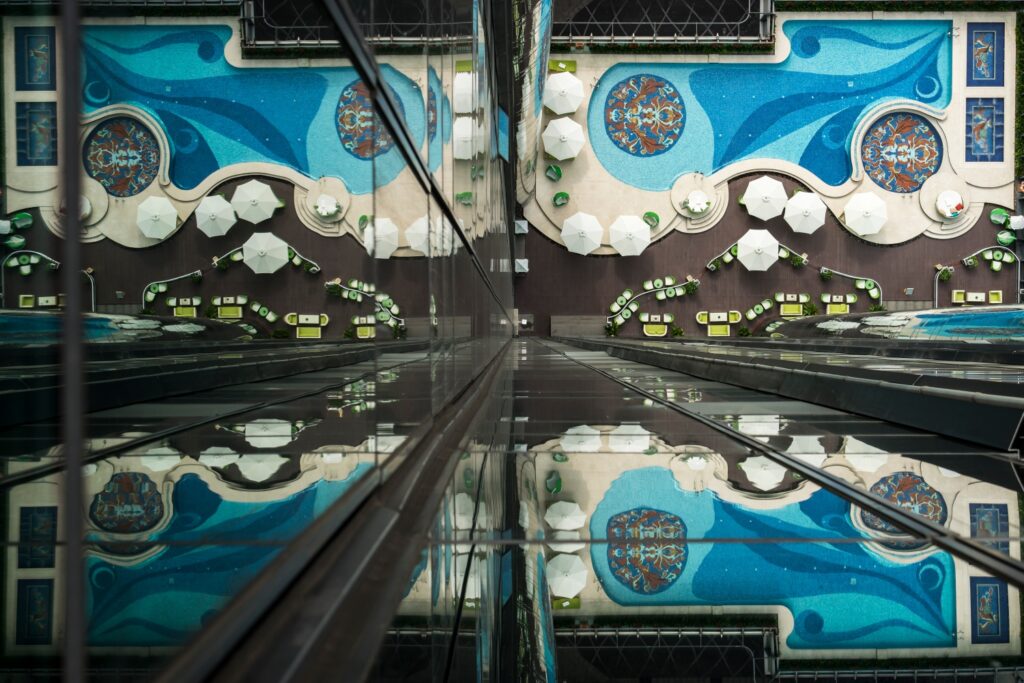
The Reverie Saigon uses customized mosaics across 286 guest rooms and suites, as well as bars, restaurants, bathrooms, leisure spaces, and the swimming pool.
Instead of repeating one surface throughout the hotel, different mosaic series respond to the atmosphere of each area. Hand-cut motifs, gold-toned finishes, iridescent surfaces, and coordinated colors connect the spaces while allowing each one to retain its own character. The project shows how mosaic can function as a property-wide design language rather than a single decorative feature.
马尔丹宫酒店: Adapting to Different Applications
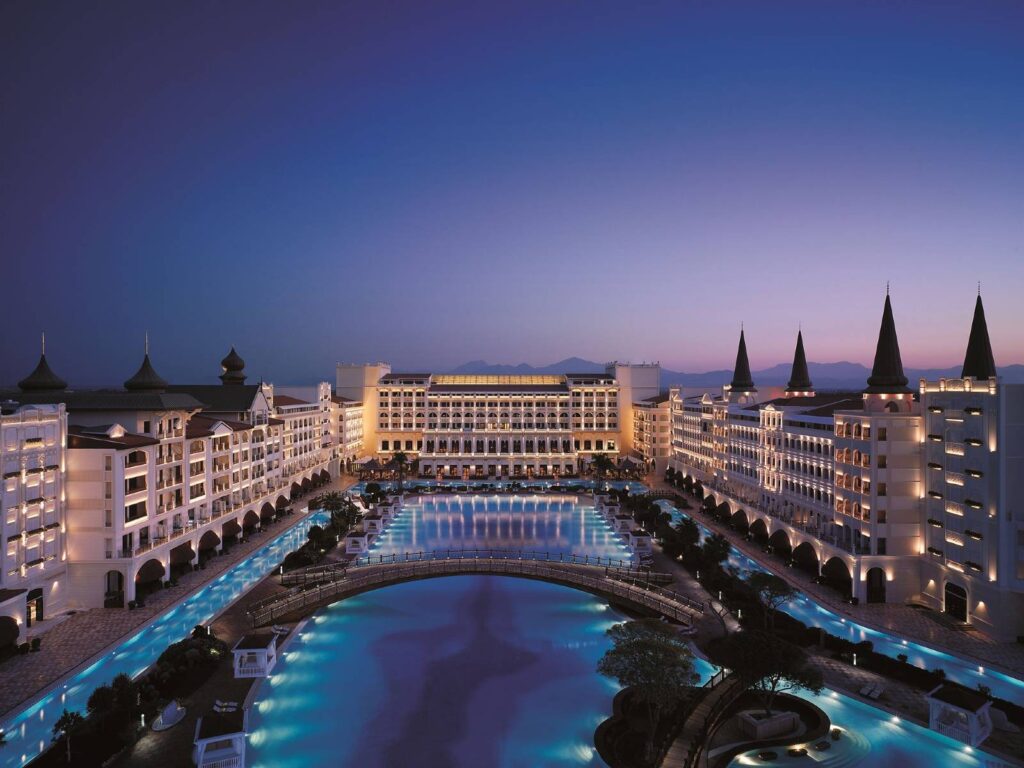
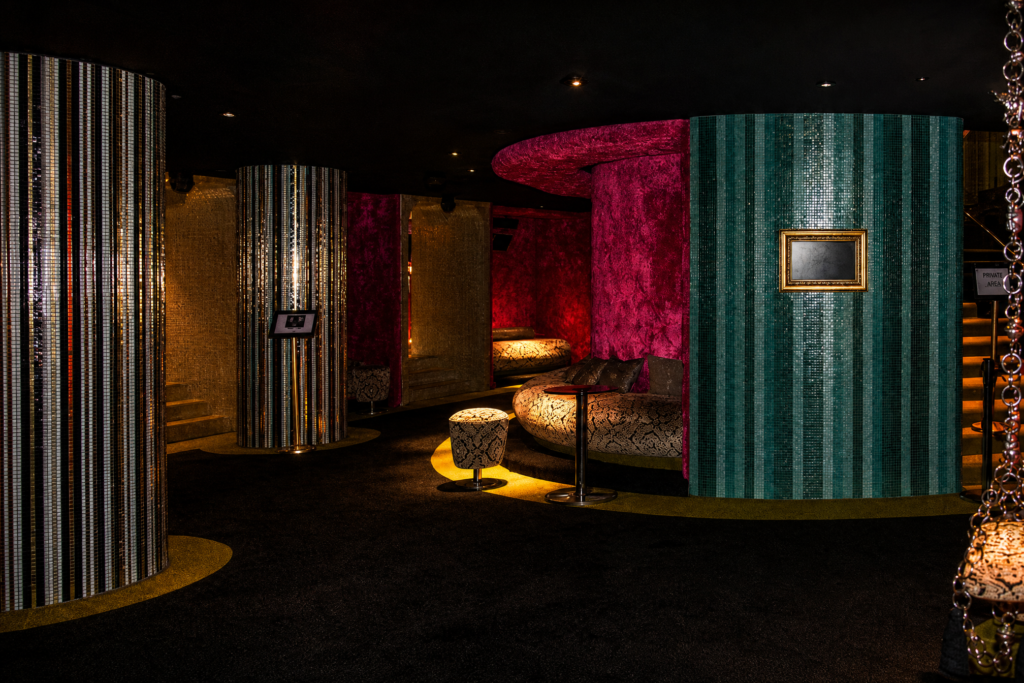
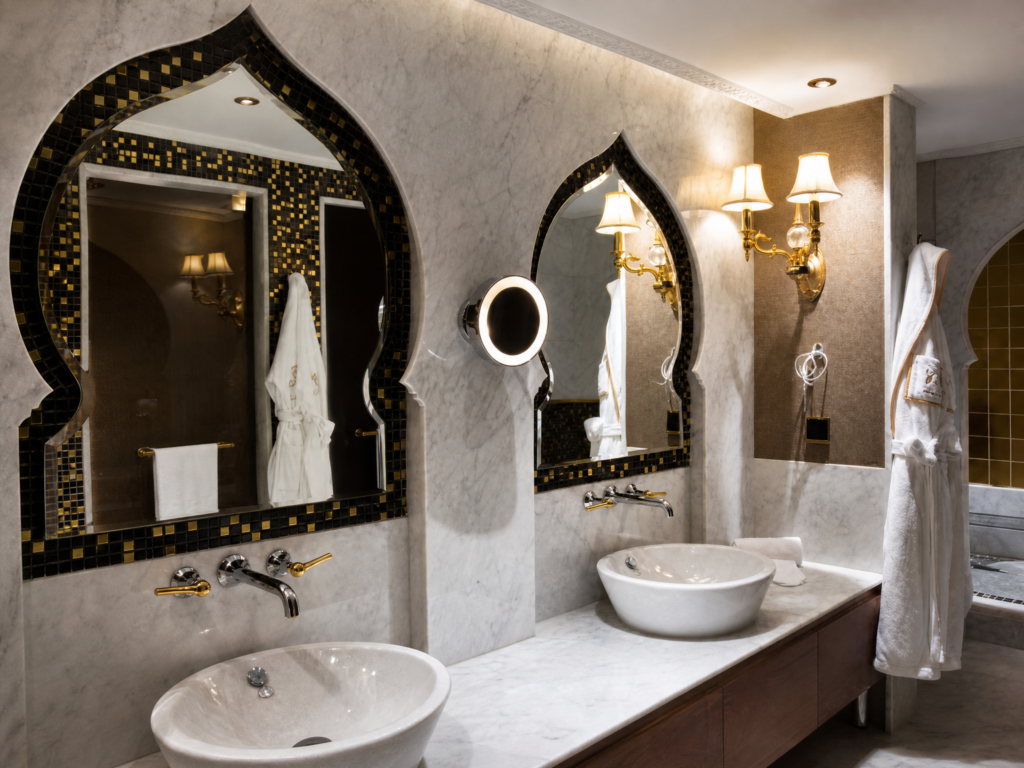
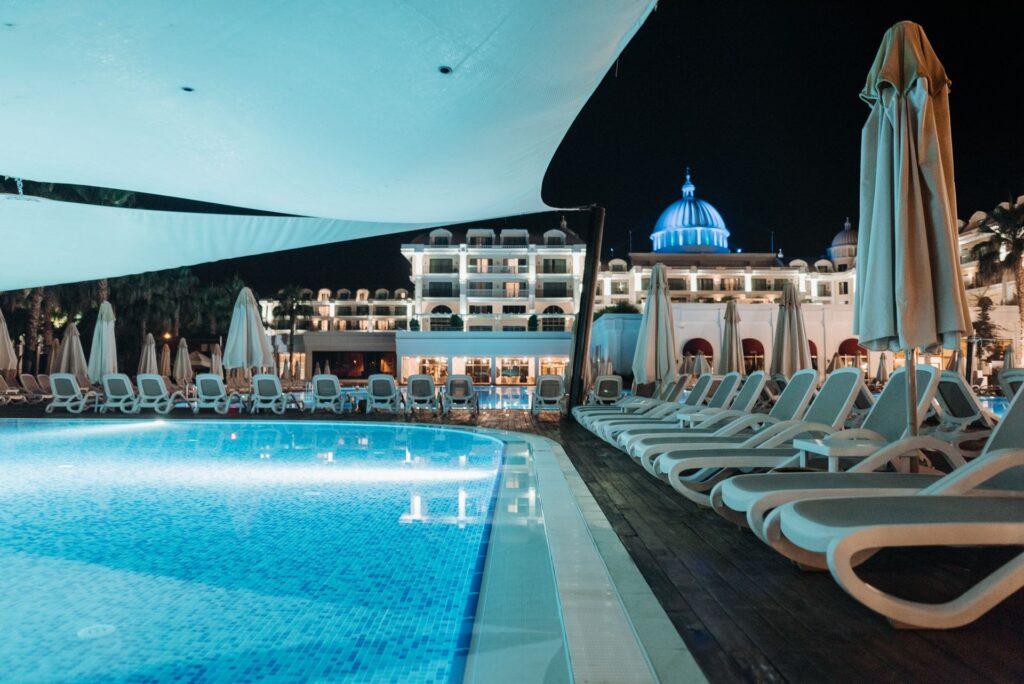
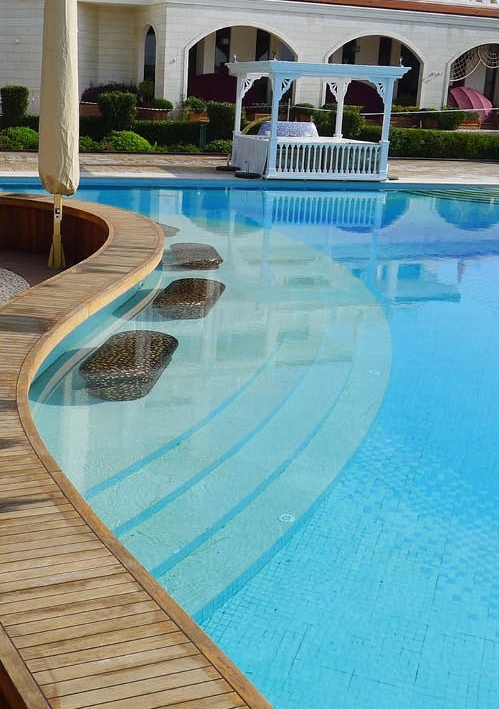
At Mardan Palace Hotel in Antalya, JNJMosaic products were applied to corridors, bathroom details, bar columns, and outdoor pool surfaces.
Each area required a different visual approach. Curved corridor walls used patterned compositions, darker mosaics complemented marble and metal finishes in bathrooms, and blue mosaic designs supported the pool concept. The project illustrates why color, pattern, surface geometry, and installation conditions must be considered together.
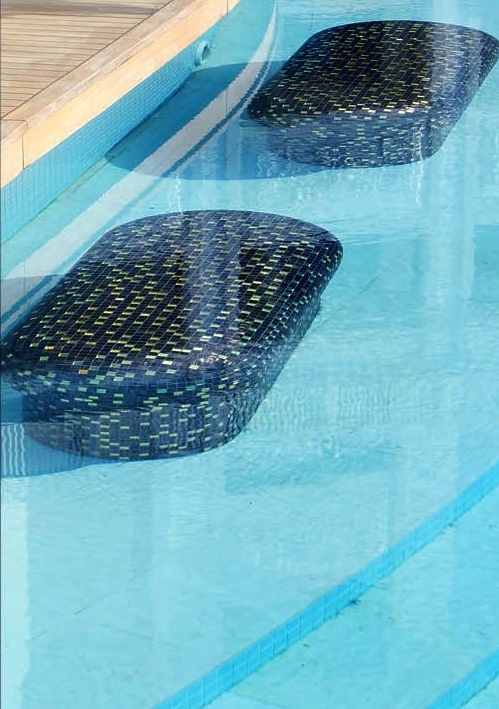
Across these projects, the common value is not a single material or style. It is the ability to develop custom mosaic systems for different spaces while coordinating patterns, samples, production, and installation details. More examples are available in JNJMosaic’s Global Landmark Projects.
Common Sourcing Mistakes—and How to Avoid Them
Even an attractive mosaic can create costly problems if the procurement process overlooks technical and installation details. Watch for these common mistakes.
Choosing by Price Alone
A low quotation may exclude design development, prototypes, inspection, protective packaging, or installation support.
How to avoid it: Compare the complete scope, quality controls, project experience, and delivery responsibilities—not only the price per square meter.
Approving Only a Small Sample
A small sample may not reveal problems with pattern scale, color transitions, panel joints, or curved surfaces.
How to avoid it: Request a larger mock-up for custom murals, complex patterns, or important architectural areas.
Using One Specification Everywhere
A mosaic selected for a lobby wall may not suit a pool, shower floor, exterior surface, or high-traffic restaurant.
How to avoid it: Evaluate each area according to moisture, traffic, cleaning, substrate, lighting, and maintenance requirements.
Starting Production Before Confirming Dimensions
Outdated drawings or incomplete site measurements can cause misaligned patterns and difficult adjustments.
How to avoid it: Approve final dimensions, elevations, curves, openings, and panel layouts before production begins.
Ignoring Installation Details
Grout color, joint width, substrate preparation, adhesives, corners, and panel orientation all affect the finished result.
How to avoid it:Involve the contractor or installer during technical review and provide clear numbered layouts with installation directions.
Accepting Unsupported Performance Claims
Terms such as “non-slip,” “weatherproof,” or “pool-safe” may not apply to every mosaic product or installation system.
How to avoid it:Request current technical documents for the exact material, finish, and application. Confirm that the proposed system meets the project’s local requirements.
Careful sourcing begins with clear specifications and documented approvals. Resolving these issues before mass production is usually easier than correcting them on site.
Questions to Ask Before Appointing a Hotel Mosaic Supplier
Before selecting a supplier, ask questions that reveal its project experience, technical process, and delivery controls:
1. Which completed hotel projects are comparable to ours?
2. What was your specific role in those projects?
3. Can you translate our drawings or artwork into production-ready mosaic layouts?
4. How do you develop and approve custom colors, patterns, and finishes?
5. Will our project require a standard sample or a full-scale mock-up?
6. How do you control dimensions, color ranges, and pattern accuracy across batches?
7. What technical documents are available for the proposed material and application?
8. How will large murals or custom patterns be divided, numbered, and packed?
9. Can you adapt layouts for curves, columns, corners, pools, or irregular surfaces?
10. What information must our architect, contractor, and installer provide before production?
11. How are drawing revisions, sample approvals, and design changes documented?
12. What support is available during delivery, installation, and replacement handling?
A reliable **luxury hotel mosaic tile supplier** should answer these questions with project records, samples, drawings, technical documents, and a clear workflow—not broad promises alone.
Why Consider JNJMosaic for a Luxury Hospitality Project?
JNJMosaic approaches hotel mosaics as project-based surface systems rather than isolated tile products. Rooted in mosaic manufacturing since 1992, the team supports design alignment, pattern development, sample approval, production preparation, quality control, and installation coordination.
Its hospitality experience includes applications in lobbies, guest rooms, bathrooms, restaurants, bars, spas, pools, corridors, and architectural feature walls. Projects such as Fairmont Doha, The Reverie Saigon, and Mardan Palace demonstrate its ability to coordinate custom patterns across different spaces and surface conditions.
For architects, designers, developers, and contractors, JNJMosaic can assist with:
– Translating drawings and artwork into producible mosaic patterns
– Developing custom colors, textures, finishes, and compositions
– Preparing samples, prototypes, and technical layouts
– Planning panels for large, curved, or irregular surfaces
– Coordinating production, packaging, delivery, and installation details
The objective is to preserve the design intent while making the mosaic practical to manufacture and install.
To discuss a project, share the space type, dimensions, drawings or reference images, application conditions, required date, and desired visual effect. Explore JNJMosaic hospitality solutions or submit your project brief for an initial review.
Discuss Your Hospitality Mosaic Project
Share your plans, dimensions, application areas or reference images with the JNJMosaic team to begin a material and feasibility review.
FAQs
What should I look for in a luxury hotel mosaic tile supplier?
Prioritize relevant hotel experience, customization capability, technical support, quality control, and installation coordination. Ask for completed project photographs, production drawings, samples, inspection procedures, and clear evidence of the supplier’s role. A strong supplier should explain how it manages the project from design development through delivery—not simply show a large product catalog.
Can the same mosaic be used in lobbies, bathrooms, and swimming pools?
Not automatically. Every application must be assessed according to the exact **material, surface finish, substrate, environment, and installation system**. A mosaic suitable for an interior feature wall may not meet the requirements of a bathroom floor, submerged pool surface, or exterior wall. Request current technical documents and confirm local project requirements before approval.
How are custom hotel mosaic samples approved?
The supplier first develops a sample from the approved artwork, color references, dimensions, and material direction. The design team should review its color, scale, texture, reflectivity, grout relationship, and pattern accuracy under relevant lighting. Large murals, curves, or complex transitions may require a full-scale mock-up. The signed sample should then become the production control reference.
How does a supplier control large mosaic murals across multiple panels?
The final artwork is converted into production drawings and divided into numbered sections. Each panel should include matching references, orientation marks, and installation directions. Dry layouts, dimensional inspections, alignment checks, photographic records, and organized packaging help preserve pattern continuity. The installer should receive the complete layout before work begins.
What information should I provide when requesting a hotel mosaic quotation?
Send the project location, application areas, dimensions, estimated quantity, drawings, reference images, preferred colors and finishes, environmental conditions, substrate information, installation requirements, budget range, and required delivery date. International buyers should also confirm packing, inspection, shipping terms, phased delivery, replacement procedures, and responsibility for customs documentation. More complete information leads to a more accurate proposal.
Conclusion: Choose a Supplier That Protects the Design Intent
Selecting a luxury hotel mosaic tile supplier is ultimately about protecting the project from concept to installation. Relevant hotel experience, approved samples, technical evidence, production control, and clear site coordination matter as much as the tile itself.
JNJMosaic works with architects, designers, developers, and contractors to translate creative concepts into practical mosaic systems for complex hospitality spaces.
Planning a hotel, resort, restaurant, spa, or pool project? Explore JNJMosaic hospitality solutions and share your drawings, dimensions, application conditions, and visual references for an initial project review.