Introduction — Beauty Is Only the Starting Point
Choosing hotel mosaic tiles involves much more than selecting an attractive color or pattern. In a luxury hotel, every surface contributes to the guest experience while responding to practical demands such as heavy traffic, moisture, frequent cleaning, lighting, and long-term maintenance.
Mosaics are especially valuable because they can transform walls, floors, pools, columns, and curved surfaces into distinctive design features. They can also translate a hotel’s brand identity, local culture, or artistic concept into a consistent visual language.
However, a mosaic that performs well on a lobby wall may not be suitable for a shower floor or swimming pool. This guide explains why luxury hotels use mosaics and how to choose the right material, finish, pattern, and installation approach for each hospitality space. For project-specific support, explore JNJMosaic’s hospitality mosaic solutions.
Why Do Luxury Hotels Use Mosaic Tiles?
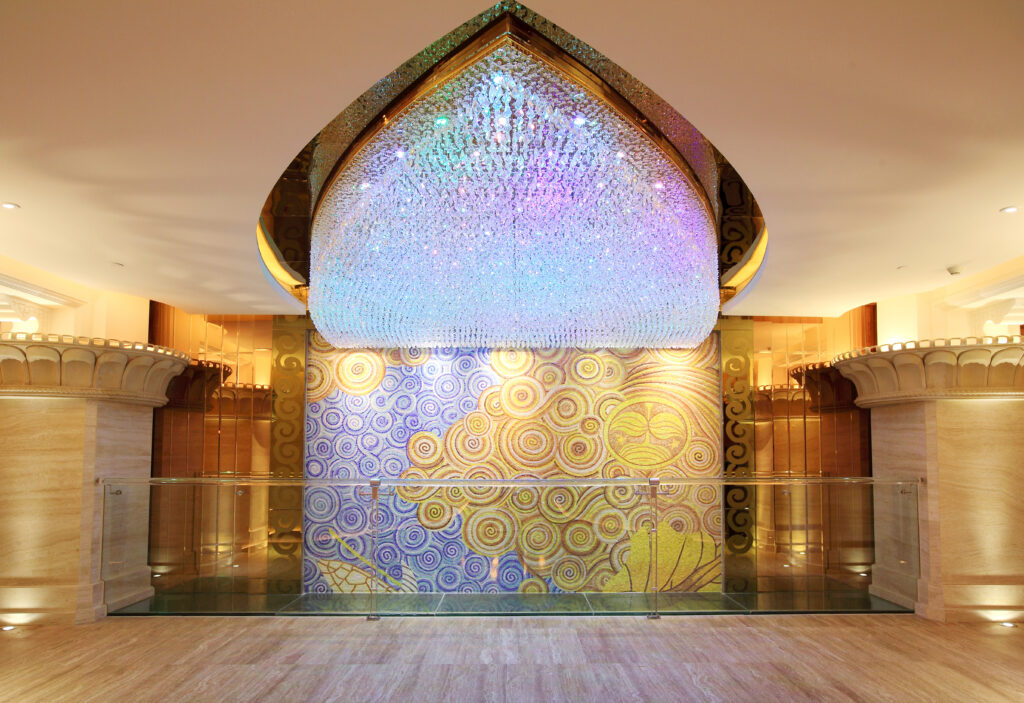
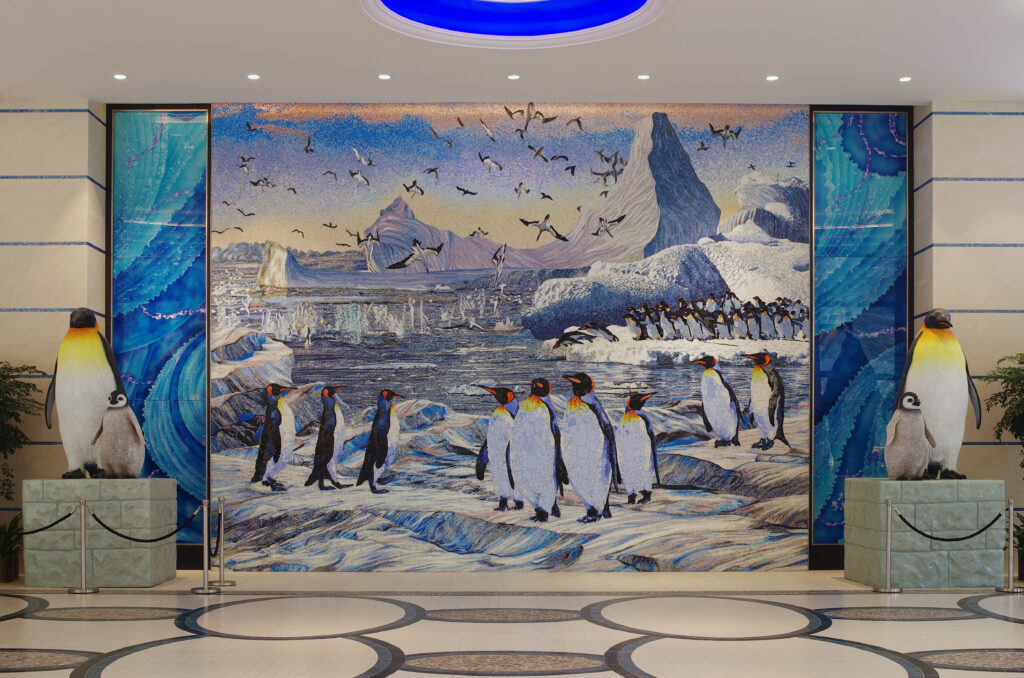
Luxury hotels use mosaics because they do more than decorate a surface. The right mosaic can strengthen a hotel’s identity, shape the atmosphere, and connect different areas while responding to complex architectural forms.
To Turn Surfaces into a Recognizable Brand Experience
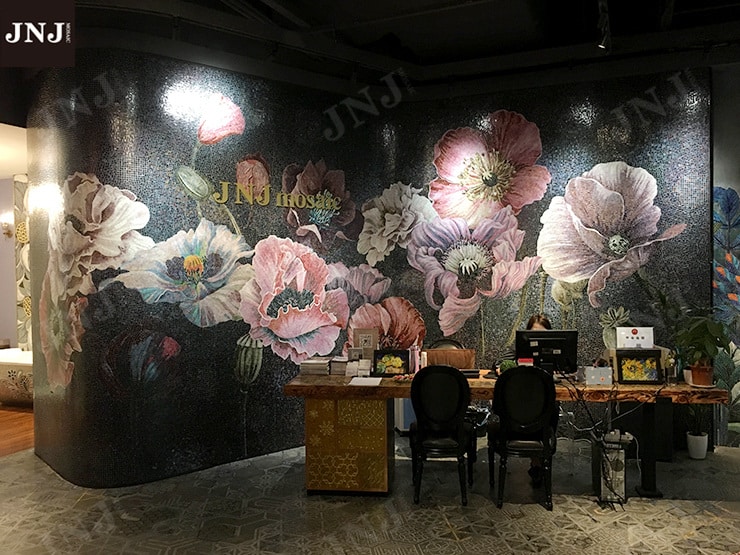
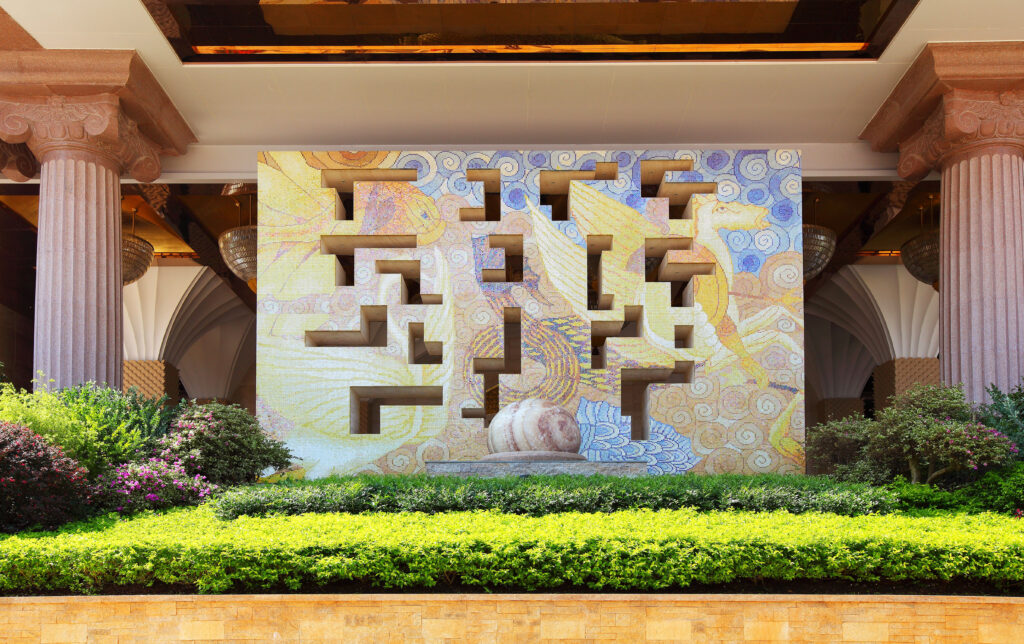
Custom mosaics can translate brand colors, local culture, natural scenery, or original artwork into a permanent part of the interior. In a lobby or reception area, a distinctive hotel wall mosaic creates a memorable first impression that mass-produced finishes rarely achieve. It can also give guests a visual landmark they associate with the property.
To Create Depth, Texture, and Light
Glass, metallic, iridescent, and gold-effect tesserae interact with light in different ways. Their small surfaces create subtle variations in reflection, color, and texture as guests move through the space. This visual depth helps a luxury hotel mosaic feel integrated into the architecture rather than applied as ordinary decoration.
To Connect Different Hotel Spaces
A coordinated hotel interior mosaic concept can extend from the lobby into restaurants, bars, guest bathrooms, spas, corridors, and pools. The material or pattern does not need to remain identical in every area. Designers can vary its scale, finish, or color intensity while preserving a recognizable visual story throughout the hotel.
To Cover Curves and Architectural Details
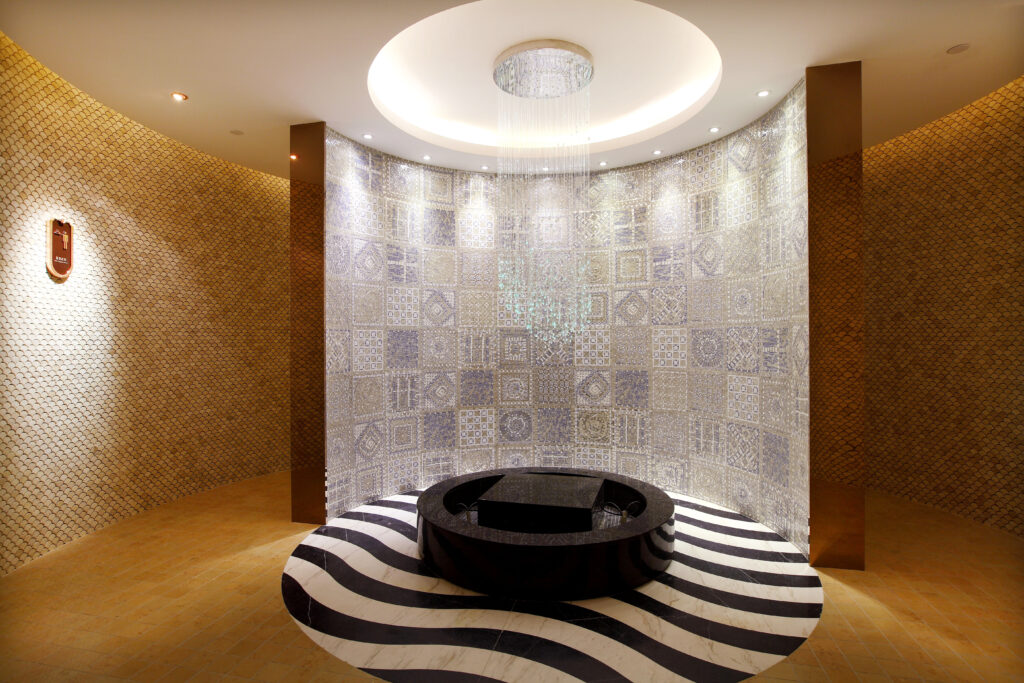
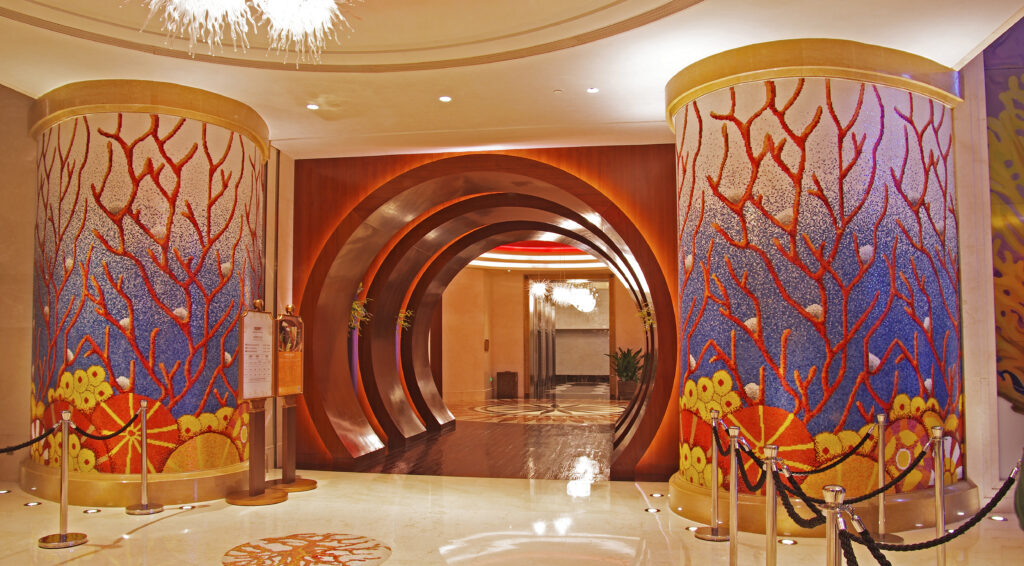
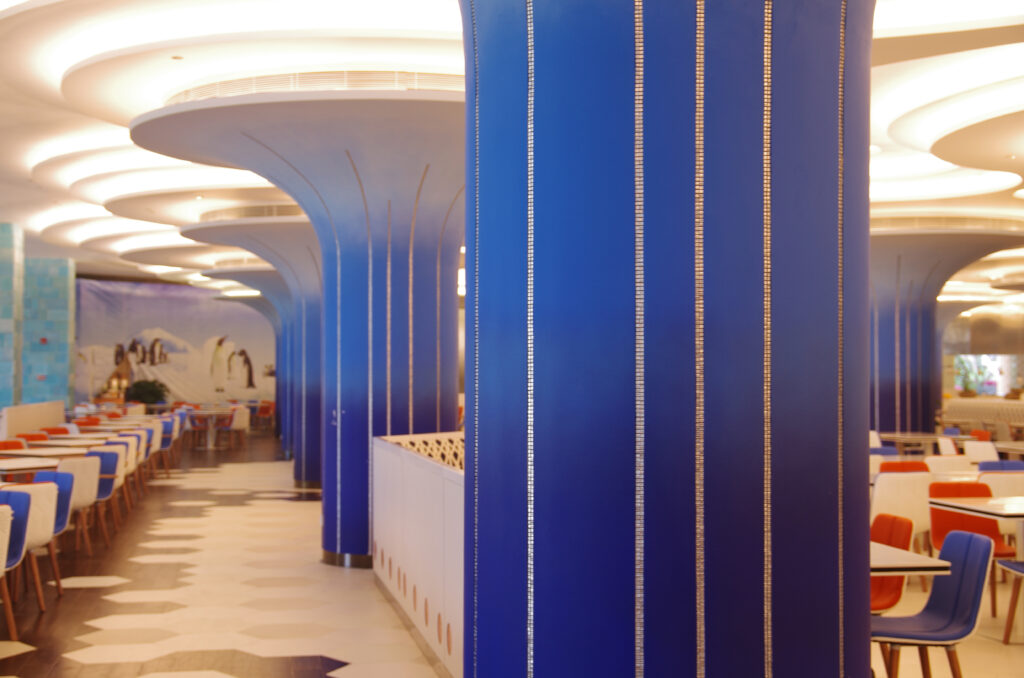
Because mosaics consist of small tesserae, they can follow columns, curved walls, bathtub exteriors, pool edges, and other complex forms more readily than many large-format finishes. This flexibility gives designers greater control over detailed transitions and unusual surfaces.
However, flexibility alone does not make every mosaic suitable for every location. Material, finish, substrate, traffic, moisture, cleaning, and installation requirements must still be evaluated for each application.
Start with the Space, Not the Sample
An attractive sample can inspire a design, but it cannot determine whether a mosaic will perform well in a hotel. Before comparing colors or patterns, define where the mosaic will be installed, what conditions it will face, and what role it should play in the guest experience.
1. Define the Application and Exposure Conditions
Begin by identifying whether the mosaic will cover a wall, floor, curved surface, pool, or exterior feature. Then assess the conditions in that location:
- Is it a dry, humid, or permanently submerged area?
- Will it receive heavy foot traffic or contact from luggage carts and furniture?
- How frequently will the surface be cleaned?
- Will it be exposed to chemicals, sunlight, or temperature changes?
- What substrate, adhesive, grout, and waterproofing system will be used?
A hotel wall mosaic designed for a reception backdrop cannot automatically be specified for a shower floor or swimming pool. Each application requires the exact material, finish, and installation system to be reviewed against the project’s technical and local regulatory requirements.
2. Match the Mosaic to the Hotel’s Design Story
The mosaic should support the property’s identity rather than function as an isolated decorative element. A city business hotel may benefit from restrained geometric patterns, neutral tones, or metallic details. A coastal resort might use aquatic colors, organic movement, or imagery inspired by the surrounding landscape. Boutique hotels can use custom murals to express local history or an original artistic concept.
The most effective luxury hotel mosaic designs create a clear relationship between the surface and the hotel’s broader story. Luxury does not necessarily mean using more color, shine, or ornament. In many interiors, a controlled palette and carefully placed focal point feel more sophisticated than several competing statement surfaces.
3. Evaluate Performance, Not Marketing Labels
Terms such as “commercial grade,” “non-slip,” “pool-safe,” and “weather-resistant” should not be accepted without supporting information for the exact product and finish.
Depending on the application, the project team may need to review:
- Water absorption and suitability for wet or submerged conditions
- Wear resistance for floors and high-traffic areas
- Slip-resistance data for wet walking surfaces
- Resistance to stains and cleaning chemicals
- Suitability for exterior exposure or temperature changes
- Compatibility with the proposed substrate and installation materials
Requirements vary by project and location. Architects, specification consultants, contractors, and installation-system suppliers should therefore confirm whether the proposed hotel mosaic tiles satisfy the applicable standards.
4. Review Color, Finish, and Grout Under Project Lighting
Mosaics can look significantly different under daylight, warm ambient lighting, directional spotlights, or underwater illumination. Glossy and iridescent surfaces may create dramatic reflections, while matte finishes can produce a quieter and more consistent appearance.
Grout is equally important. A contrasting grout emphasizes every tessera and strengthens the geometry; a closely matched grout creates a more continuous surface. Samples should be examined under lighting similar to the finished space and beside the intended stone, metal, timber, paint, and sanitary fixtures.
5. Approve a Representative Mock-Up
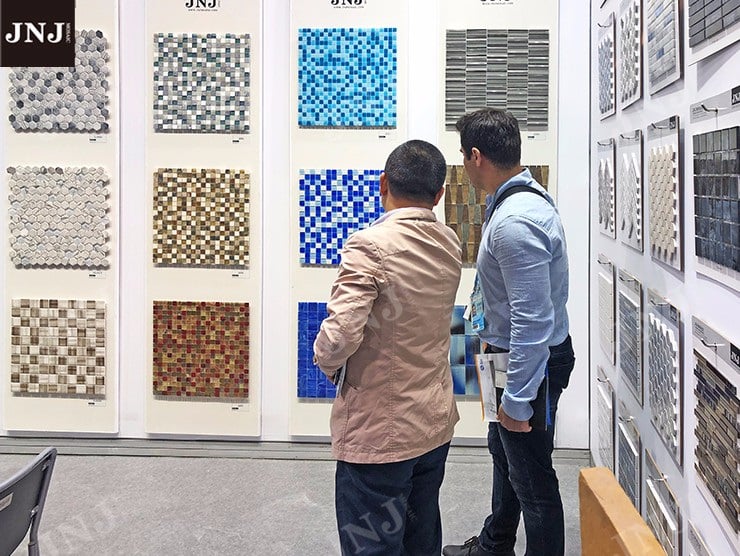
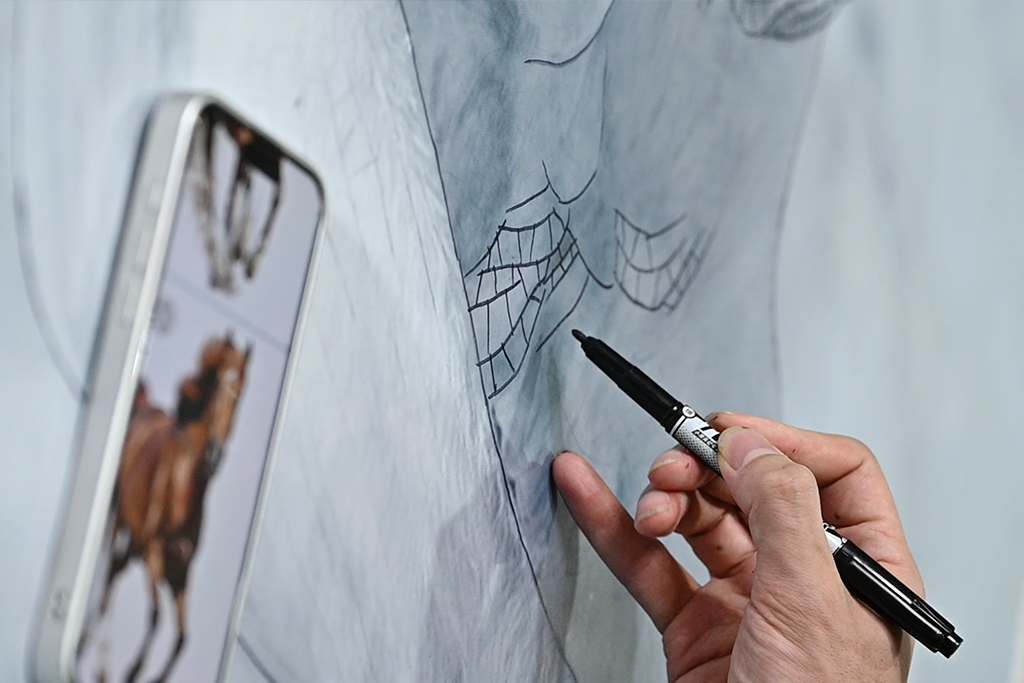
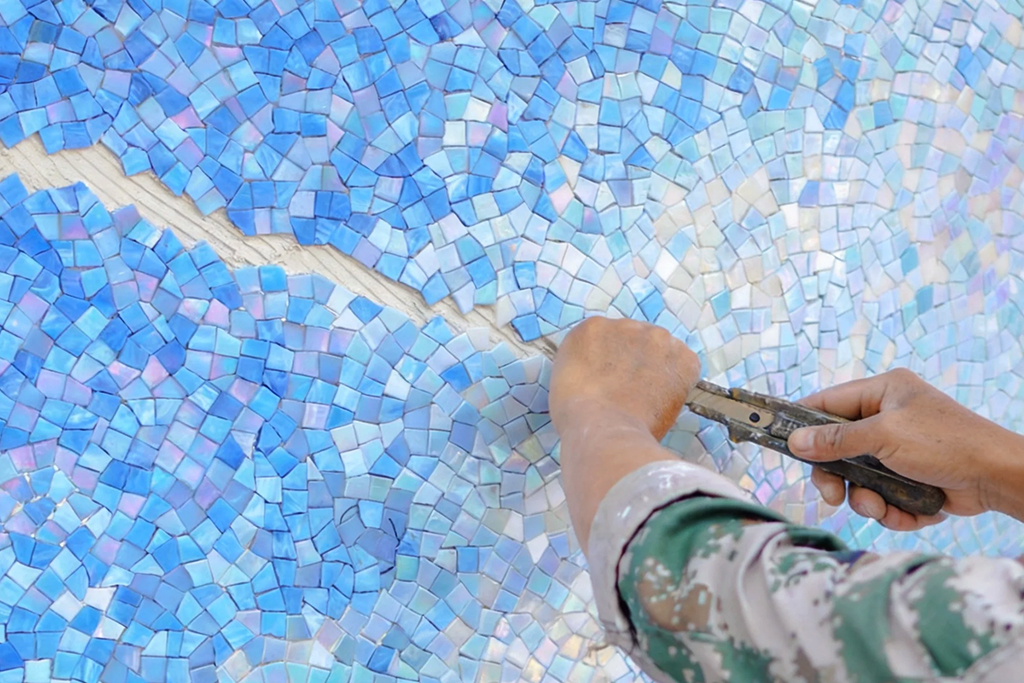
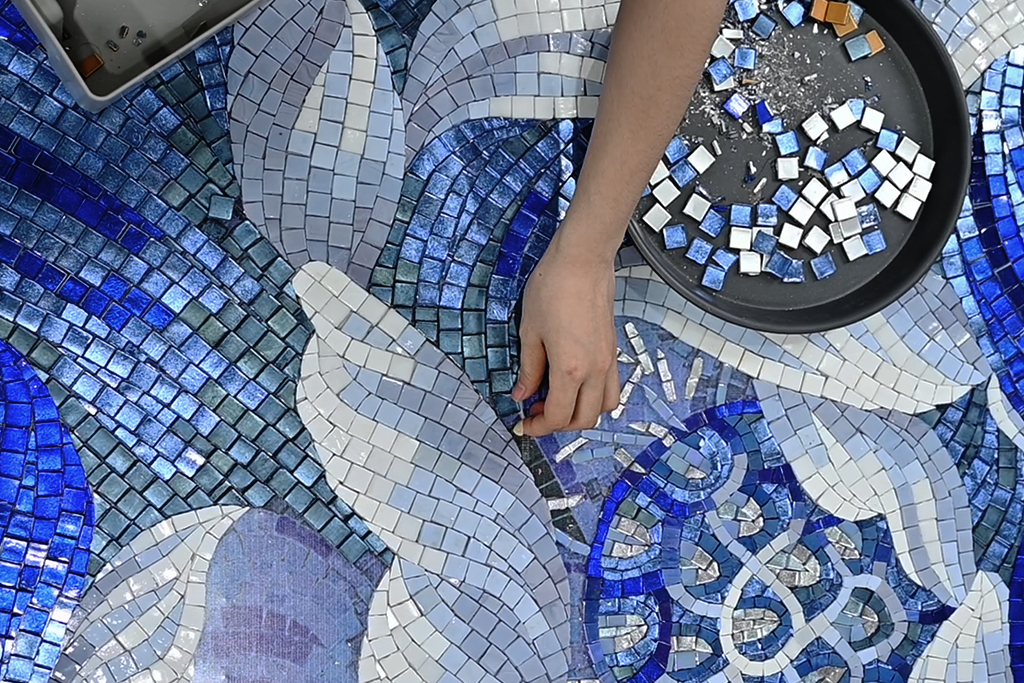
A small sample confirms basic color and texture, but it may not reveal pattern scale, sheet joints, color transitions, grout relationships, or installation challenges. Larger mock-ups are especially valuable for murals, gradients, curved surfaces, and prominent public areas.
The mock-up should reproduce the proposed backing, adhesive, grout, lighting, and installation direction as closely as practical. Once approved, it becomes the visual reference for production and final inspection. This process helps protect the design intent and identify avoidable problems before full-scale manufacturing begins.
Which Mosaic Material Is Best for a Hotel?
There is no single material that can be called the best mosaic tile for hotels in every situation. The right choice is the material whose appearance, surface finish, and verified performance suit the intended application. A luminous glass mosaic may be ideal for a spa wall but inappropriate for a heavily trafficked floor unless that specific product is approved for the use.
The following comparison provides a practical starting point:
| Mosaic material | Design strengths | Typical hotel applications | What to verify |
| Glass mosaic | Rich color, visual depth, reflection, and water-inspired effects | Pools, spas, bathrooms, bars, murals, and feature walls | Floor suitability, scratch visibility, water exposure, backing, and installation system |
| Porcelain or ceramic mosaic | Wide selection of colors, textures, shapes, and practical finishes | Bathrooms, corridors, selected floors, and maintenance-sensitive areas | Water absorption, wear resistance, slip performance, and suitability for commercial traffic |
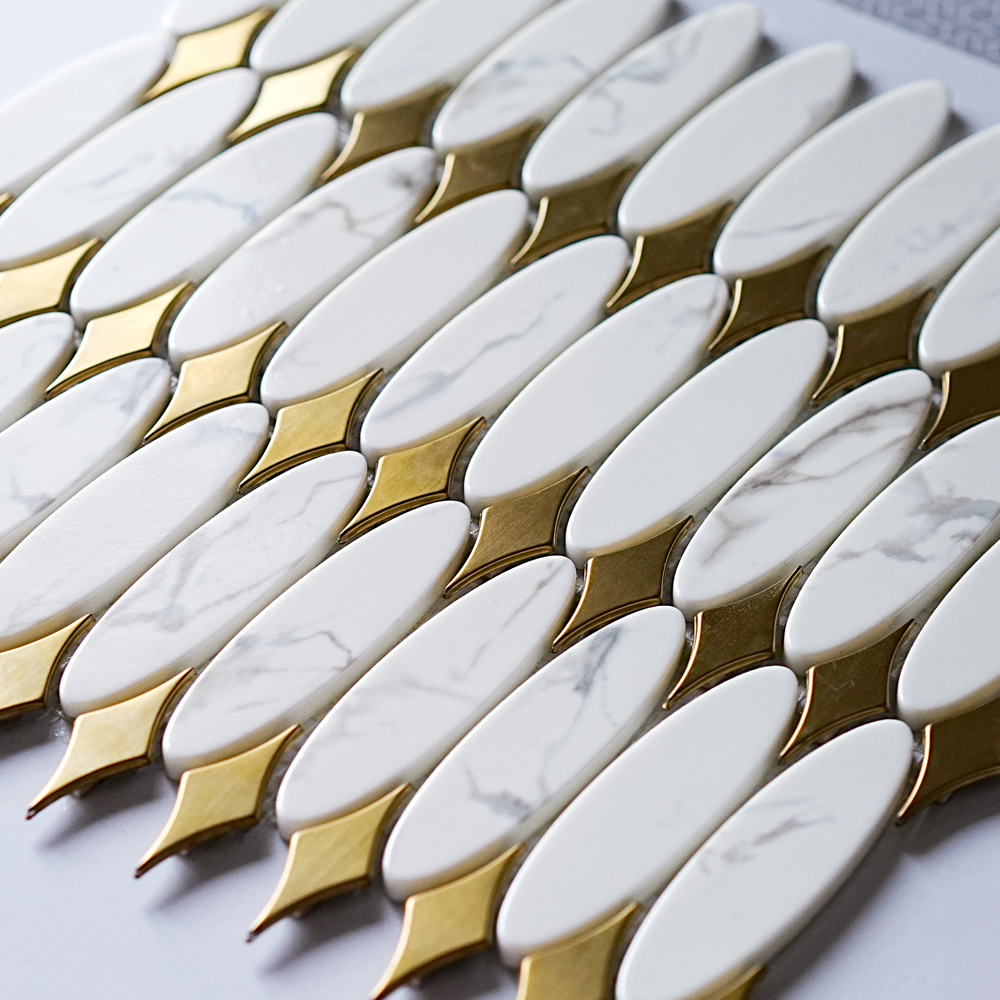
| Natural stone mosaic | Natural variation, tactile character, and timeless luxury | Lobbies, restaurants, bathrooms, decorative floors, and wall features | Sealing, staining, chemical sensitivity, finish, and maintenance requirements |
| Metal or gold-effect mosaic | Strong reflectivity and a premium visual accent | Reception walls, bars, columns, ceilings, and decorative details | Wet-area suitability, cleaning method, surface sensitivity, and substrate compatibility |
| Custom artistic mosaic | Original imagery, brand storytelling, and site-specific design | Landmark murals, feature walls, ceilings, entrances, and focal points | Artwork translation, color control, panel layout, mock-up quality, and installation planning |
Glass Mosaic
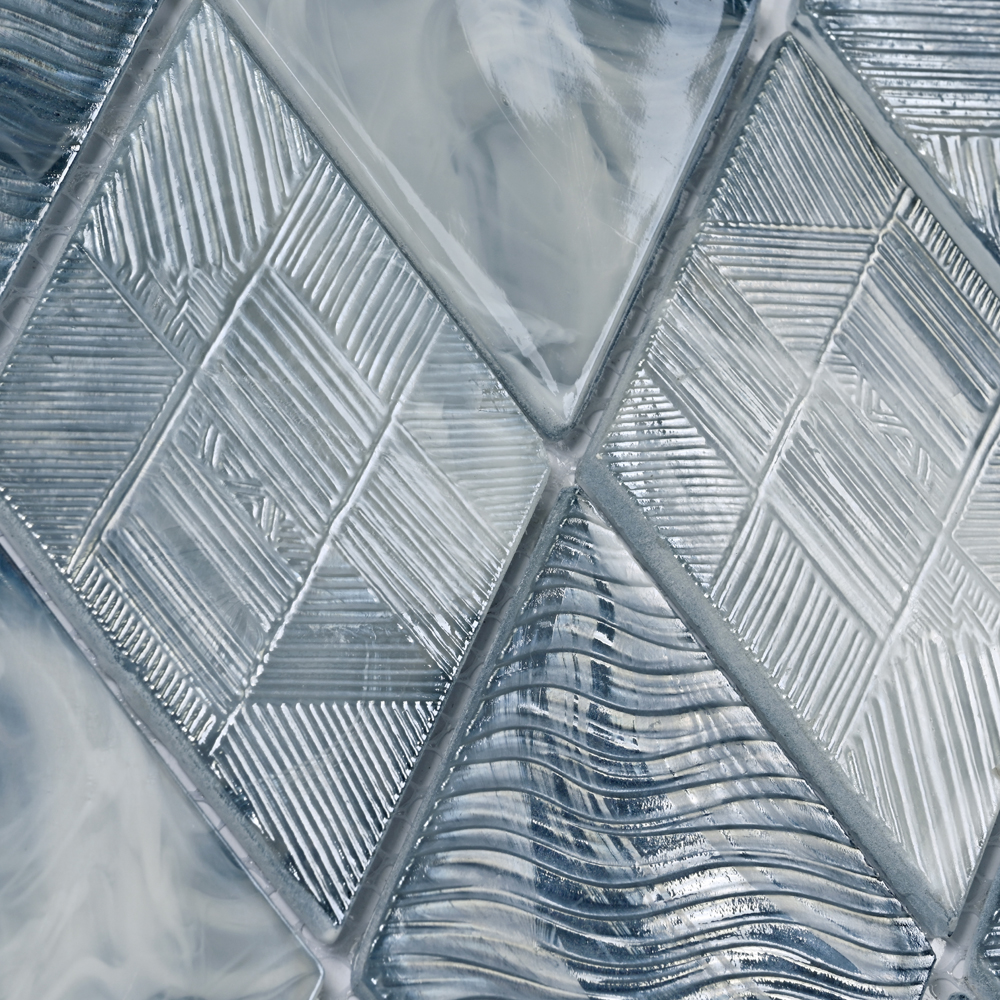
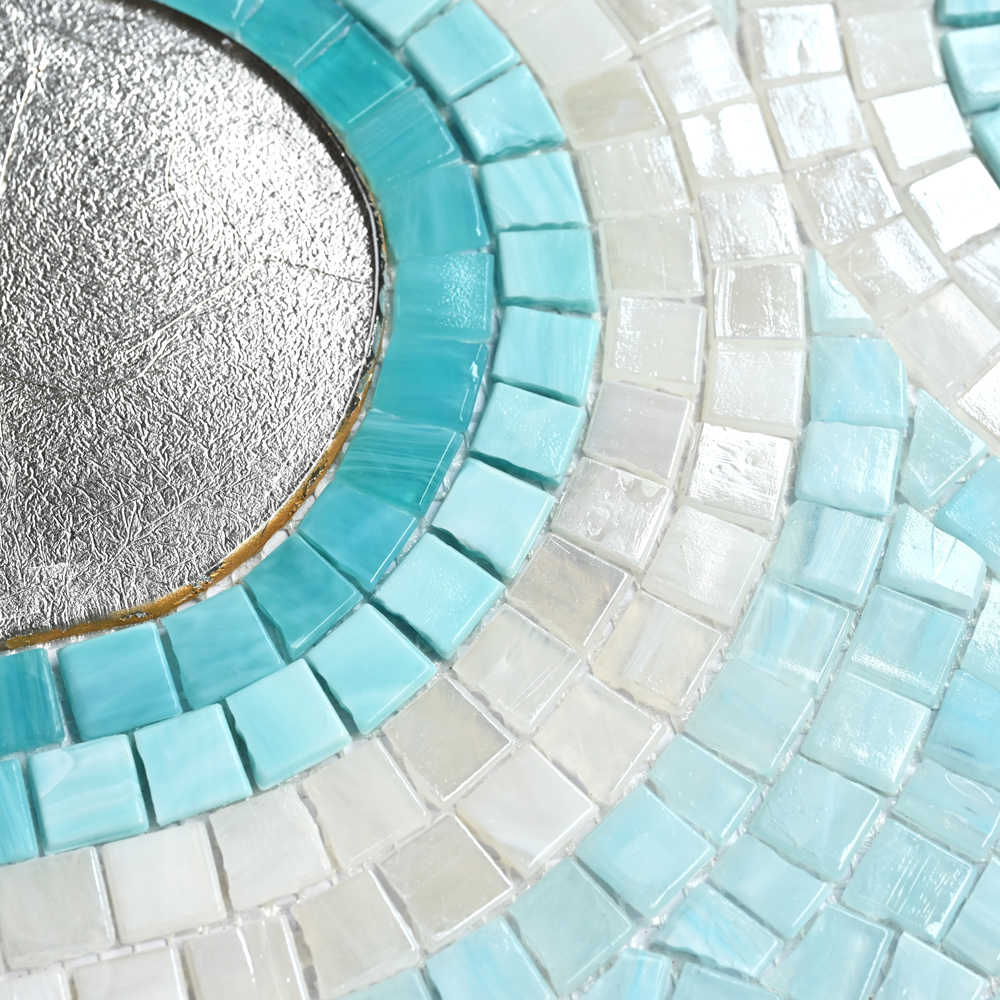
Glass is often selected for luxury hotel mosaic applications because it can reflect light and produce considerable color depth. It is especially effective around water and in spaces where lighting is part of the design. However, not every glass product is suitable for floors, submerged installations, or exterior conditions.
Porcelain and Ceramic Mosaic
Porcelain and ceramic mosaics offer versatile shapes and finishes. Certain products can provide a practical solution for high-use hotel areas, but their properties vary. The project team should review the data for the exact product instead of assuming that all ceramic or porcelain mosaics perform alike.
Natural Stone Mosaic
Marble and other natural stones introduce authentic variation that works well in timeless hotel interiors. Their maintenance needs must be considered early because some stones can react to acidic cleaners, absorb stains, or require periodic sealing.
Metal, Gold-Effect, and Artistic Mosaic
Metallic finishes and custom artworks are best used where their visual impact supports the hotel’s identity. For large or intricate installations, appearance is only one consideration. Production drawings, representative mock-ups, numbered panels, and installation planning are essential to achieving a consistent result.
Ultimately, the best material is selected by application—not by appearance or price alone.
How to Choose Hotel Mosaic Tiles by Area
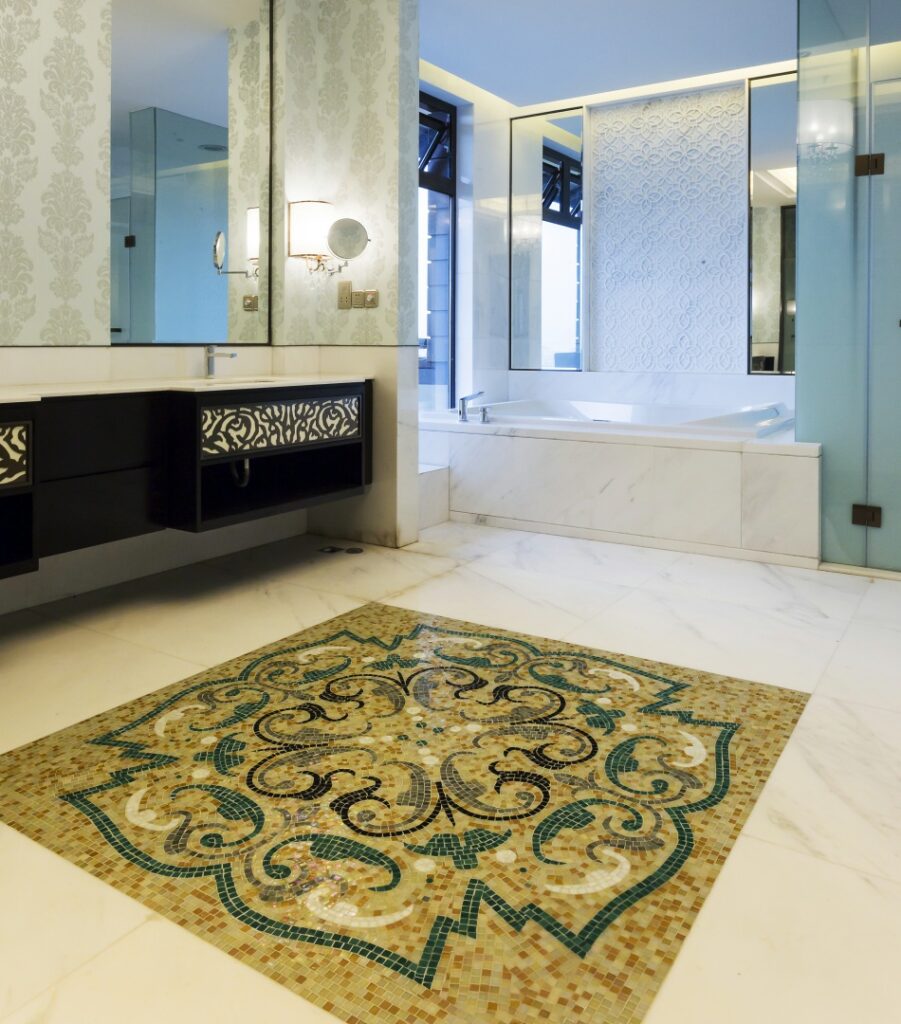
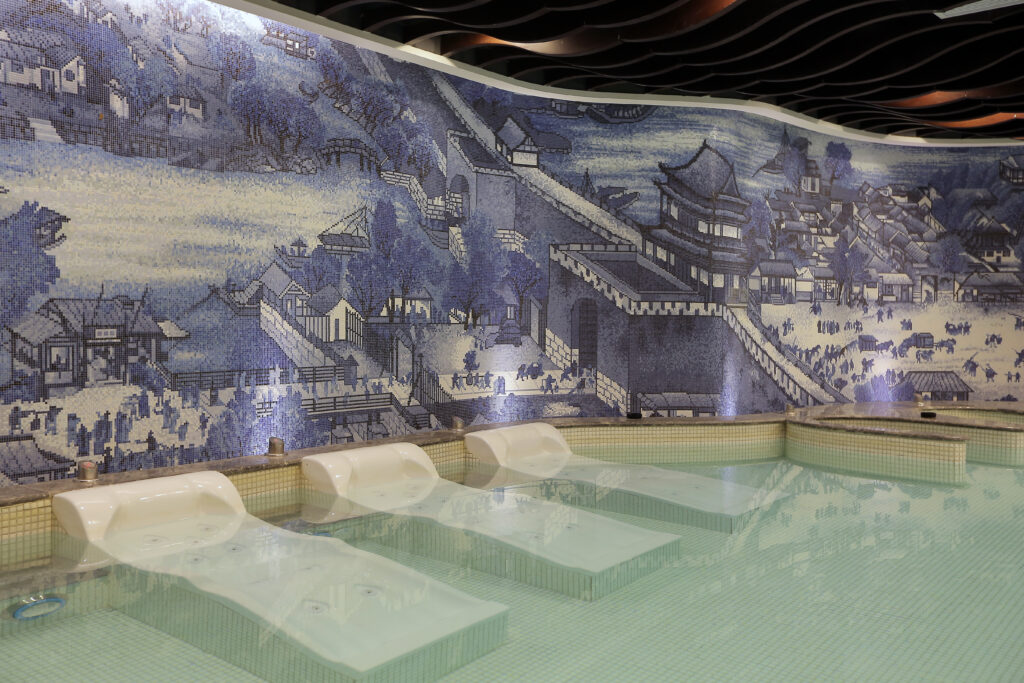
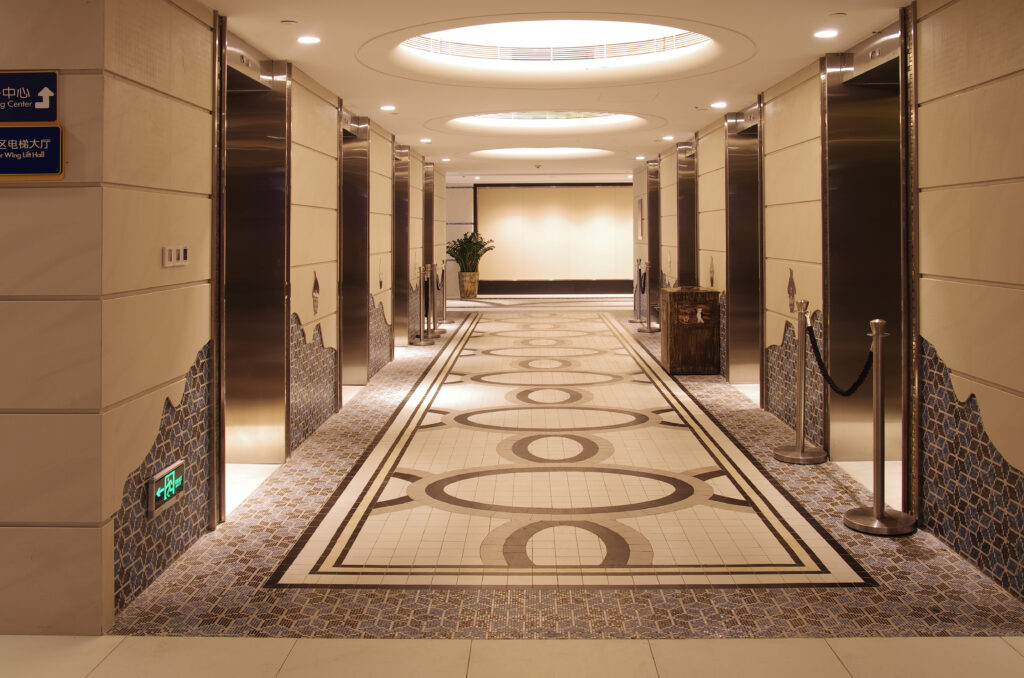
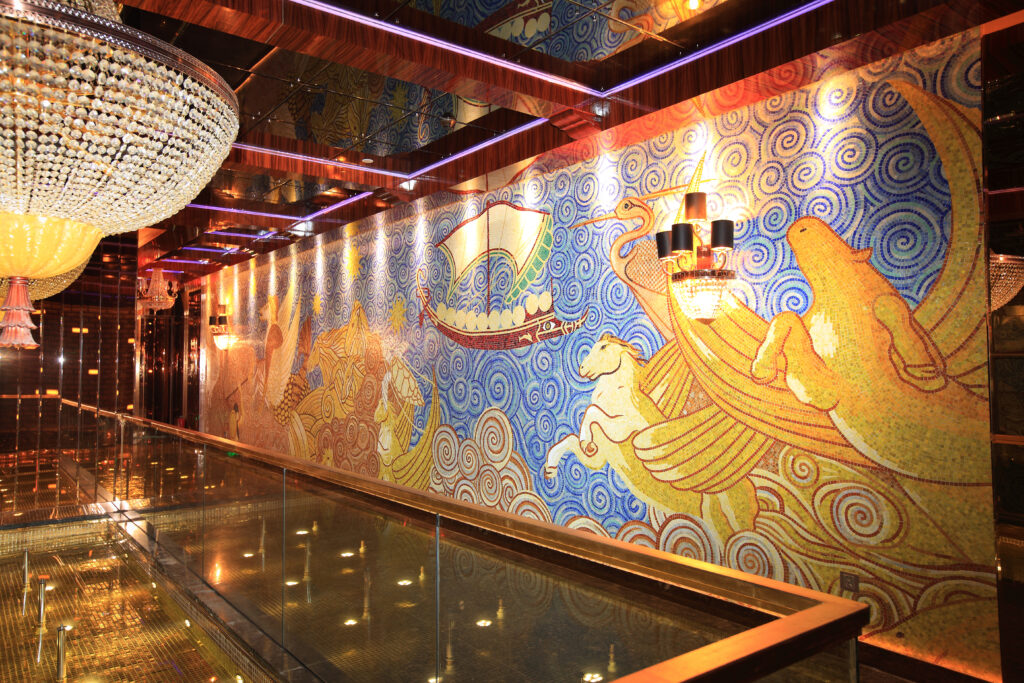
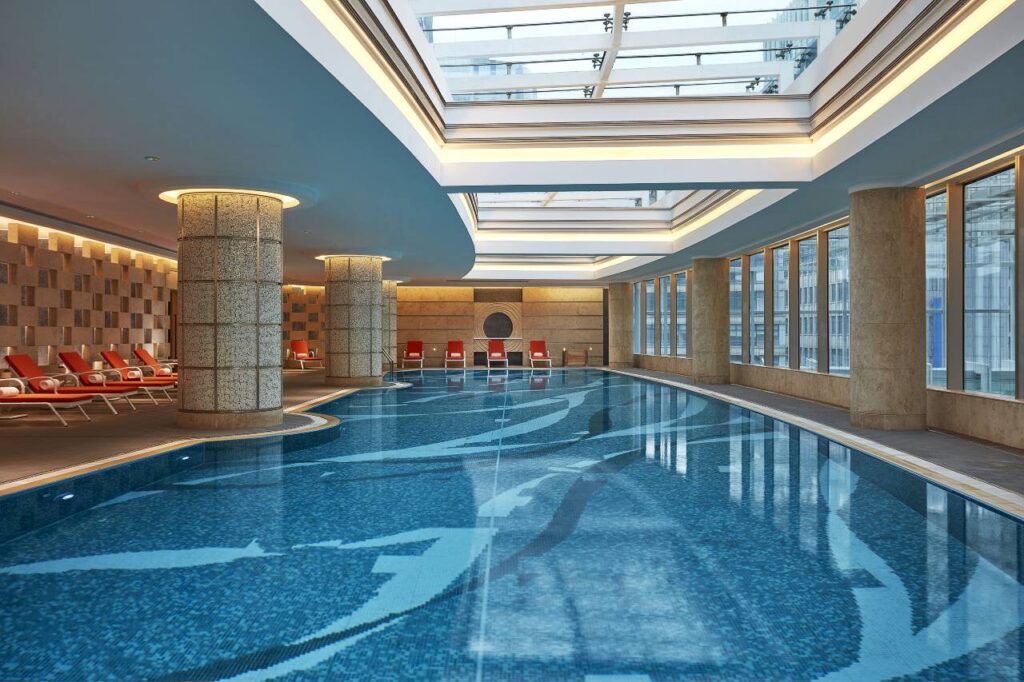
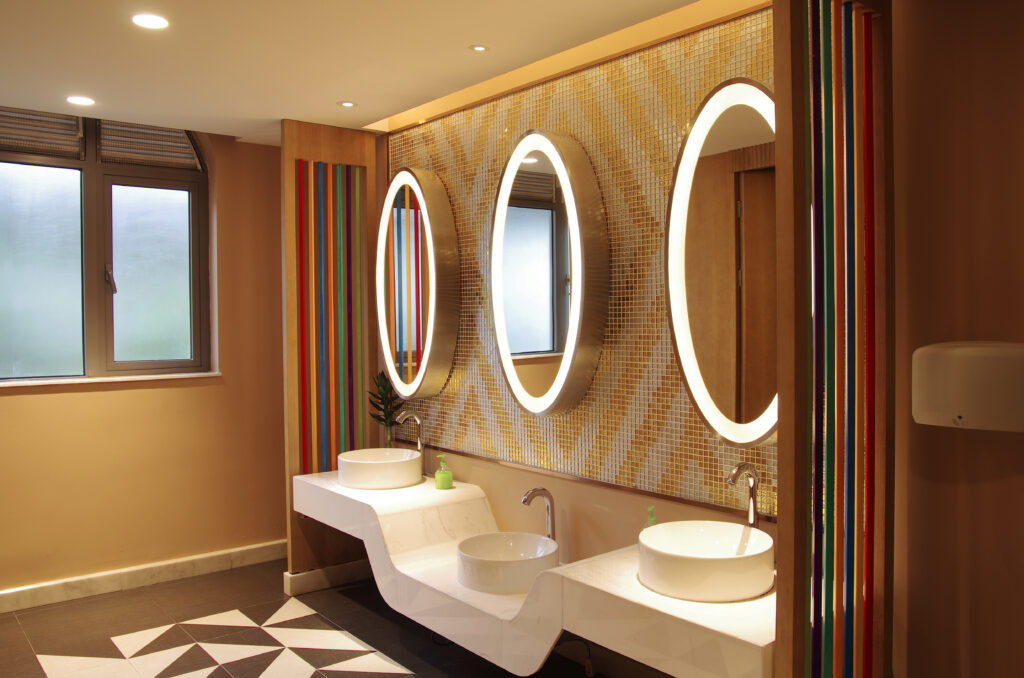
Each hotel area serves a different purpose and faces different operating conditions. Therefore, **hotel mosaic tiles** should be specified by location rather than applying one product throughout the property.
Lobby and Reception
The lobby establishes the hotel’s first impression. Custom murals, geometric compositions, metallic accents, and artistic **hotel wall mosaic** installations can communicate the brand story and create a recognizable focal point. For lobby floors, visual impact must be balanced with verified resistance to traffic, dirt, luggage wheels, and routine cleaning.
Guest Bathrooms
Guest bathrooms require a balance of comfort, cleanliness, water resistance, and easy maintenance. Mosaics can define shower walls, niches, vanity backgrounds, bathtub exteriors, or decorative borders. Smaller formats can also follow slopes and curved surfaces effectively. However, a mosaic suitable for a bathroom wall is not automatically appropriate for a wet floor. Slip performance, water exposure, grout, waterproofing, and cleaning requirements must be evaluated separately.
Restaurants and Bars
In restaurants and bars, mosaics can highlight counters, dining zones, columns, and feature walls while strengthening the atmosphere. Material selection should account for food stains, grease, chair movement, impact, and frequent cleaning. Reflective glass or metallic finishes can work particularly well behind bars, where controlled lighting enhances their depth.
Spas, Pools, and Wellness Areas
A successful pool or spa mosaic must deliver both visual continuity and reliable performance in wet conditions. Glass mosaics can produce rich underwater color and adapt to curves, steps, and pool edges. The exact product, adhesive, grout, waterproofing system, and substrate must be compatible with prolonged water exposure. Wet walking areas also require documented slip-performance review.
Corridors, Elevators, and Feature Walls
Corridors and elevator areas can use recurring colors, borders, or patterns to connect guest spaces with the main design concept. Because these areas are often narrow, the pattern scale should be carefully controlled. A restrained **hotel interior mosaic** can create continuity without making the space feel visually crowded.
The best results come from maintaining one coherent design language while adjusting the material, finish, and technical specification for each hotel area.
What Real Hotel Projects Teach Us About Mosaic Selection
Completed hospitality projects provide more useful guidance than isolated product samples. They show how mosaic selection must respond to brand identity, architectural conditions, lighting, and the practical demands of different spaces.
The Reverie Saigon: One Design Language Across Multiple Spaces
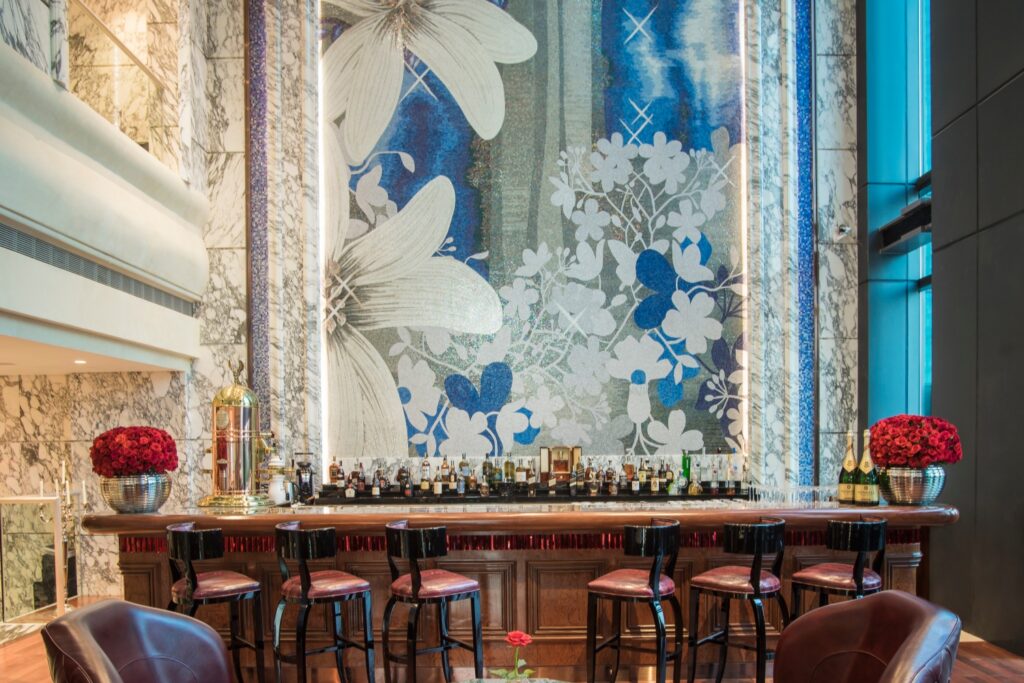
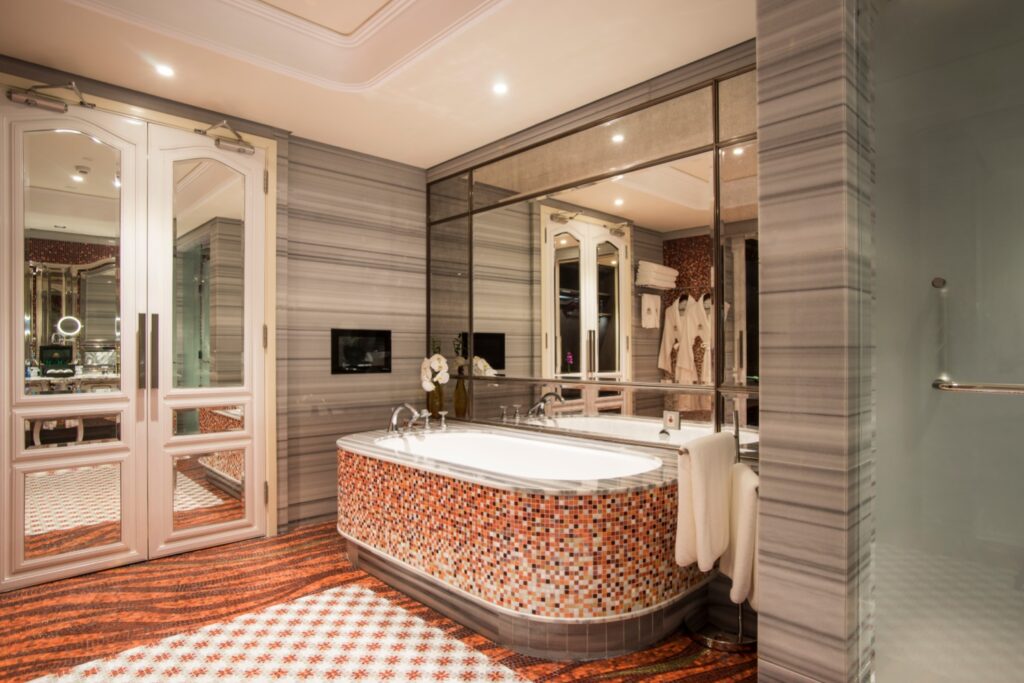
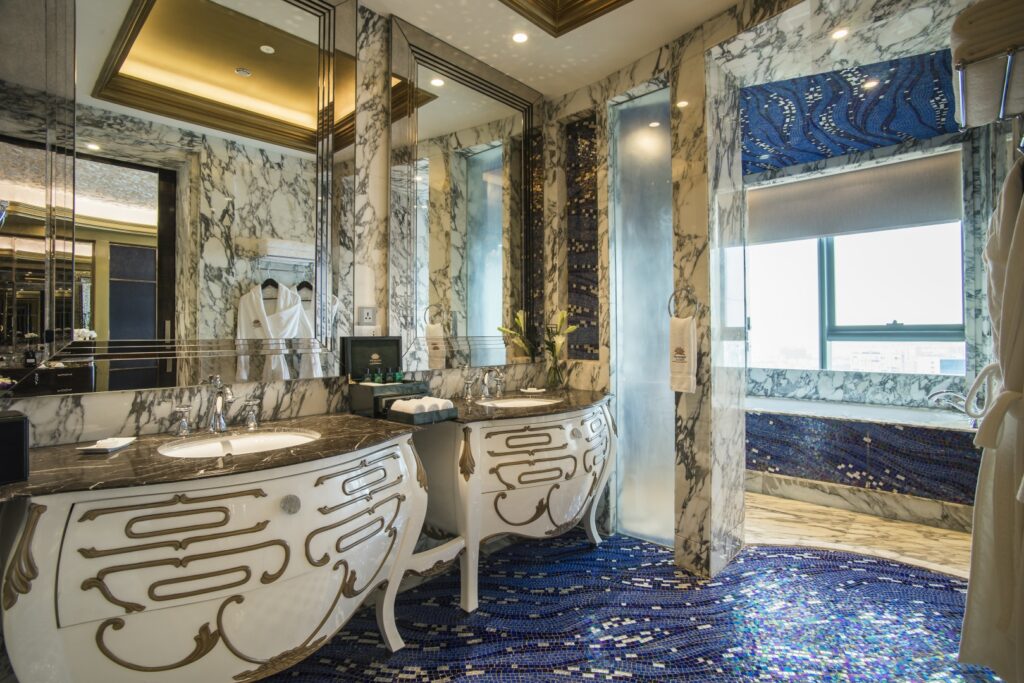
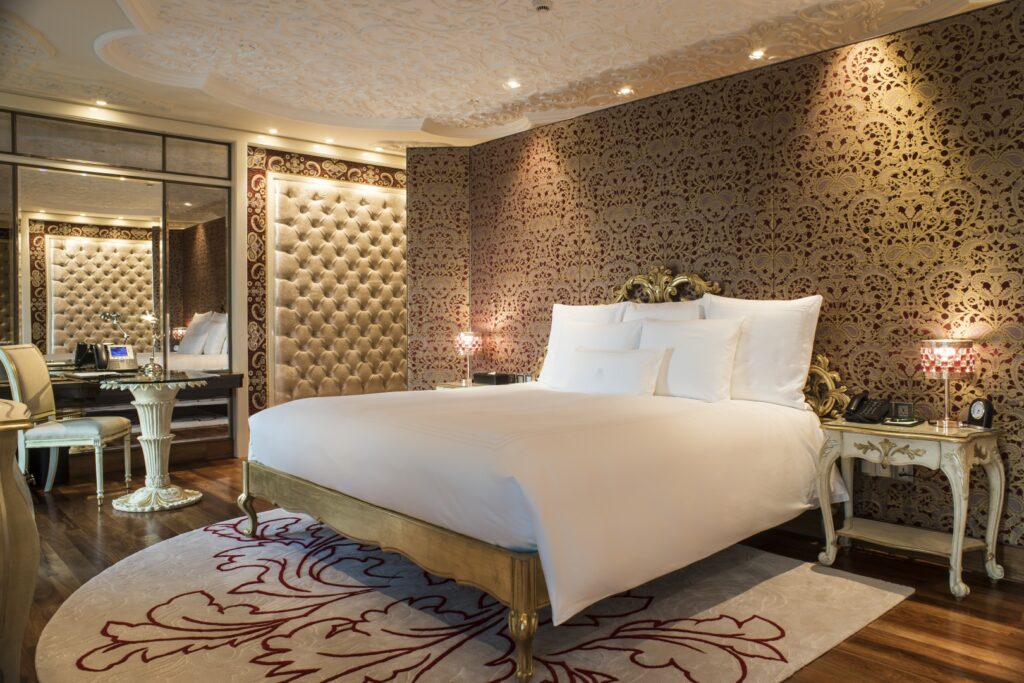
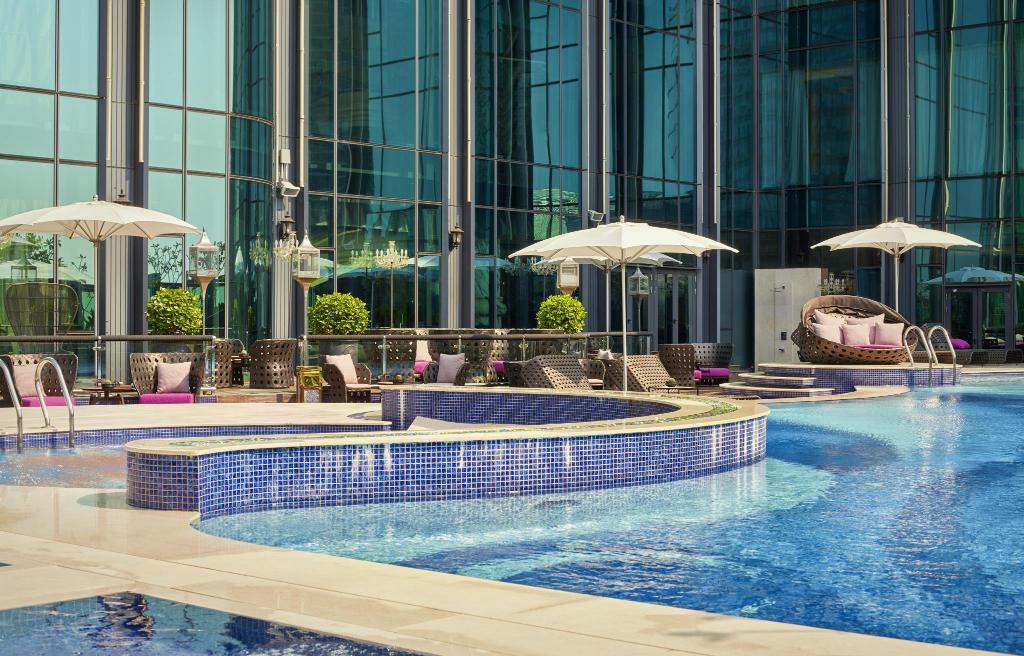
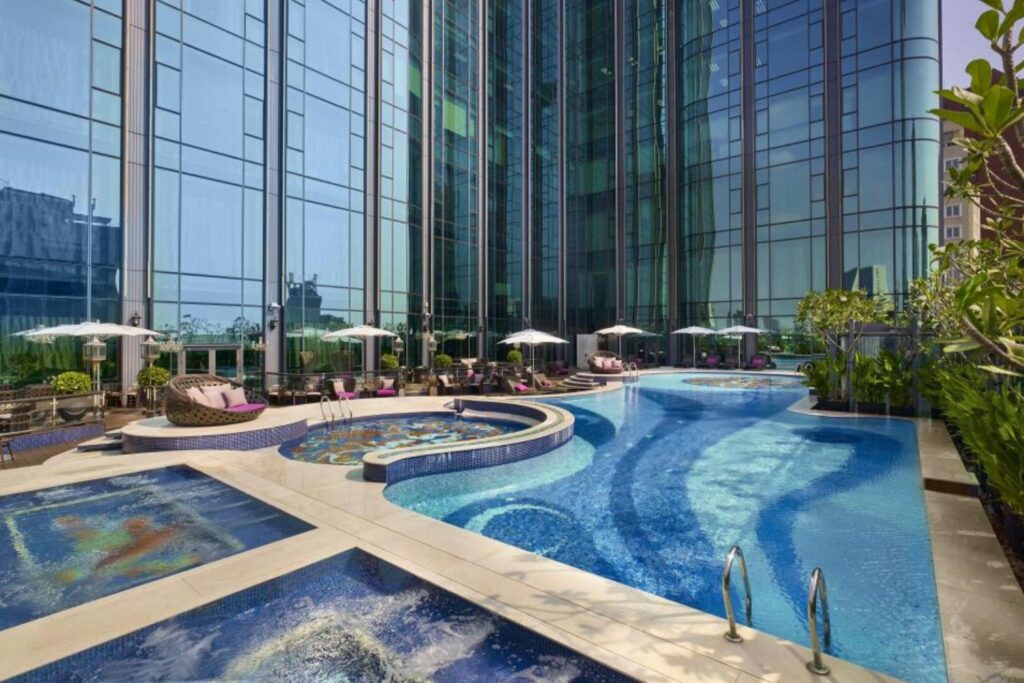
At [The Reverie Saigon](https://jnjmosaic.com/projects/the-reverie-saigon/), customized mosaics extend across 286 guest rooms and suites, as well as bars, restaurants, bathrooms, leisure areas, and the swimming pool. Applications include feature walls, headboard details, bathtub exteriors, floors, and ceilings.
The project does not rely on one identical mosaic throughout the hotel. Different colors, patterns, and finishes support the atmosphere of each area while contributing to a recognizable overall identity. The key lesson is to establish the hotel’s visual language first, then adapt the mosaic specification to the function and conditions of each space.
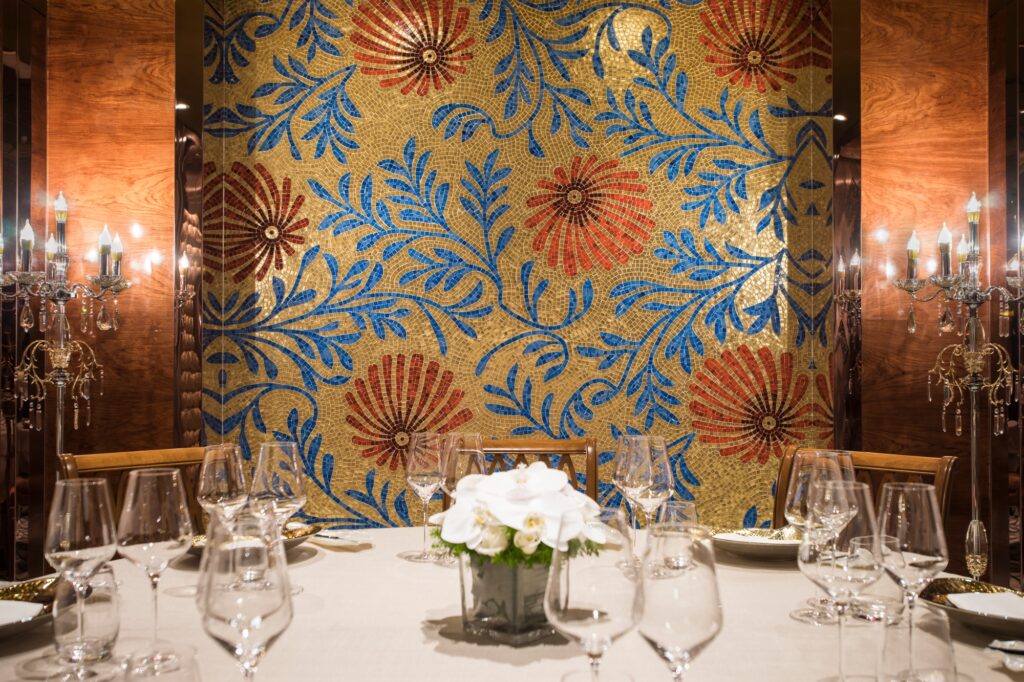
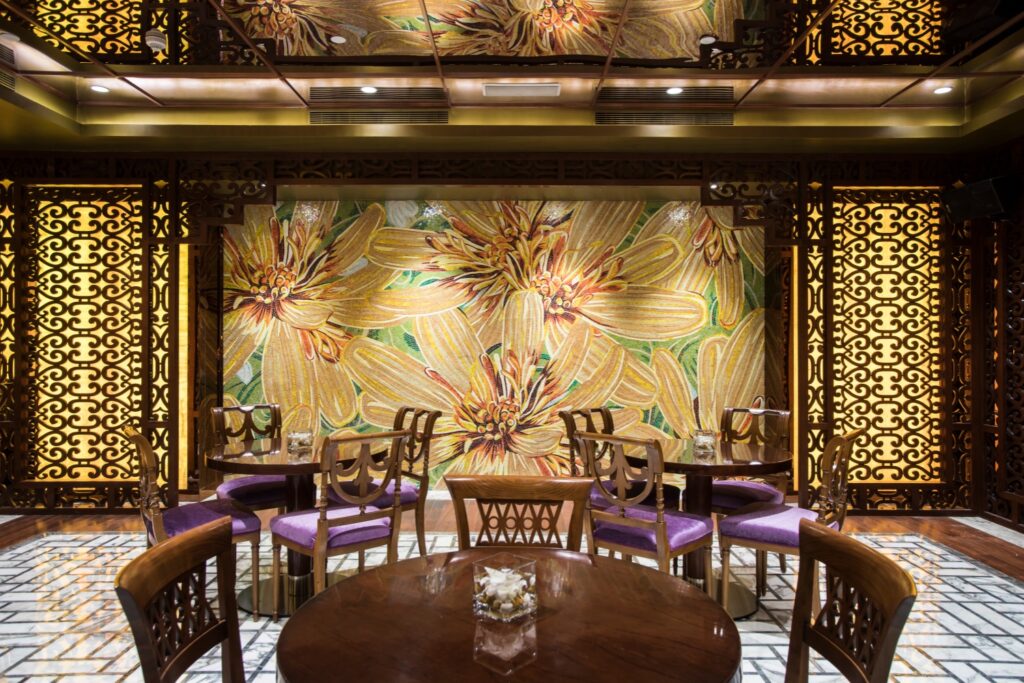
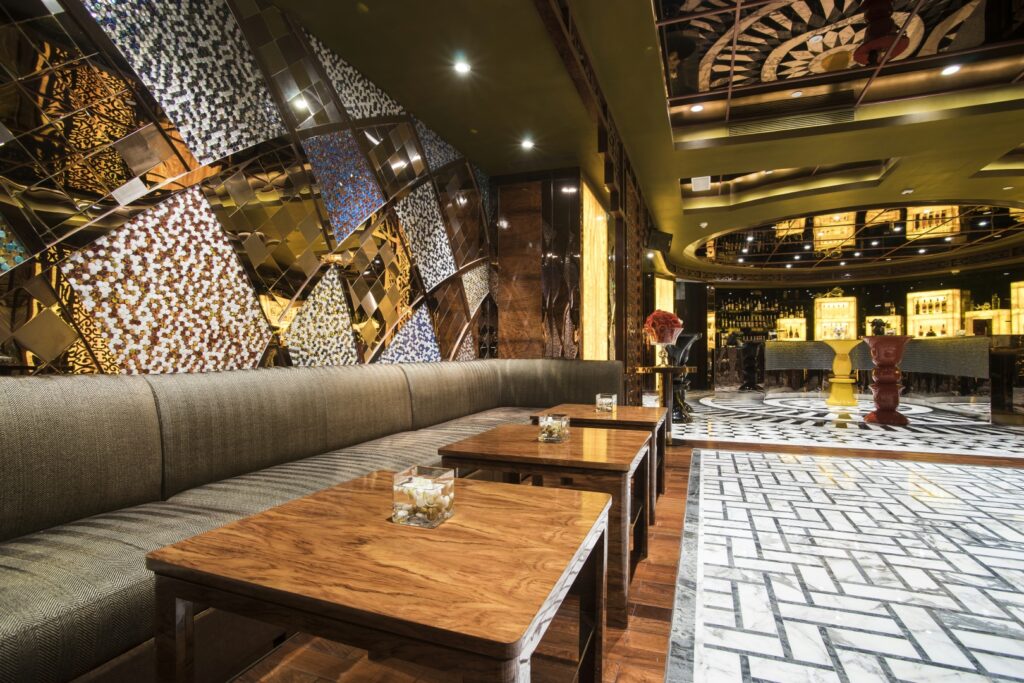
Fairmont Doha: Match Pattern and Finish to Place
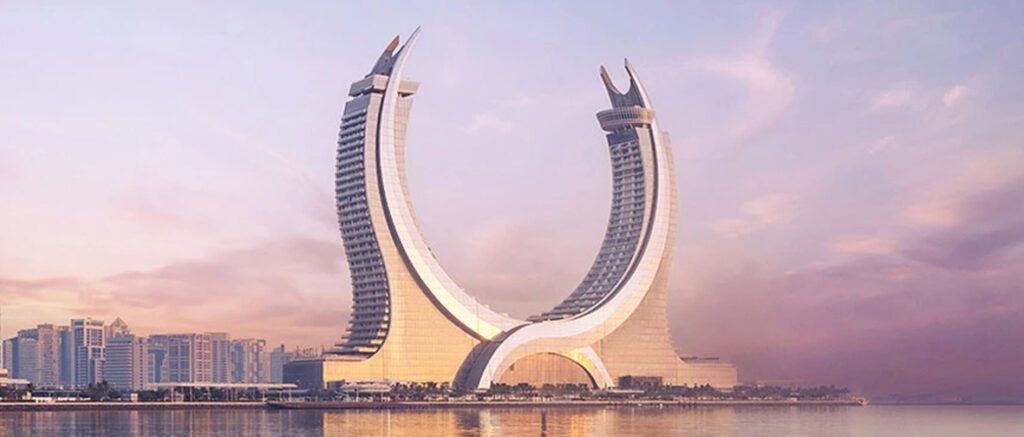
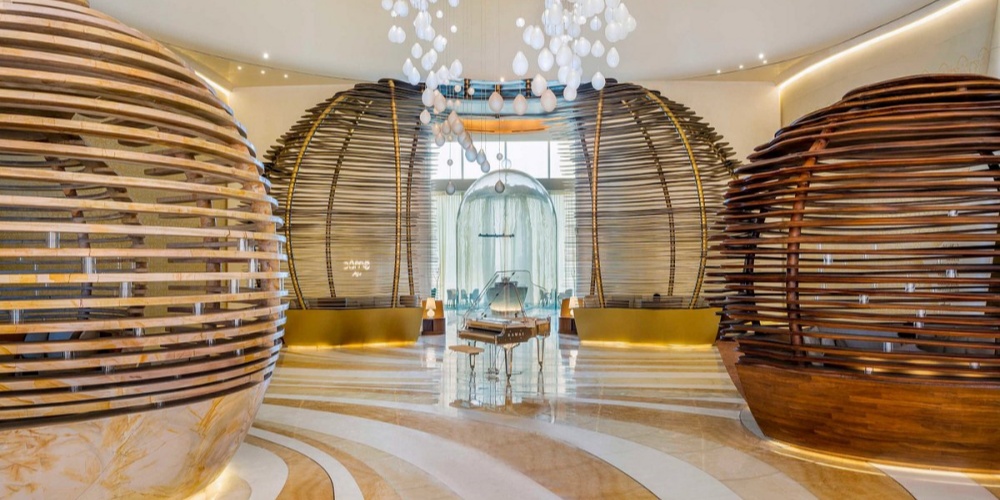
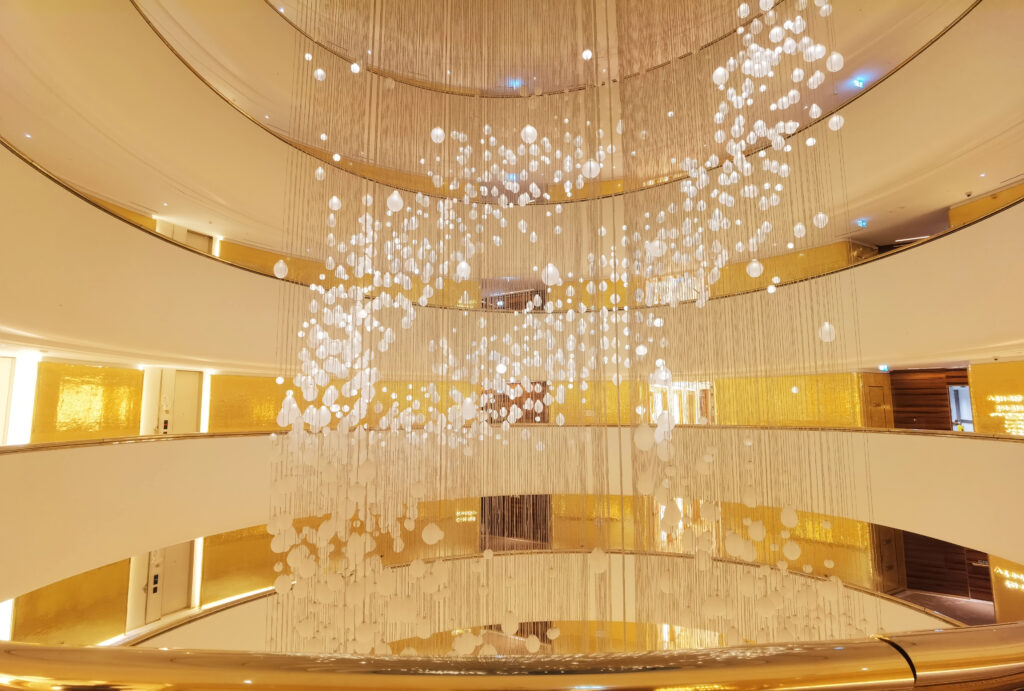
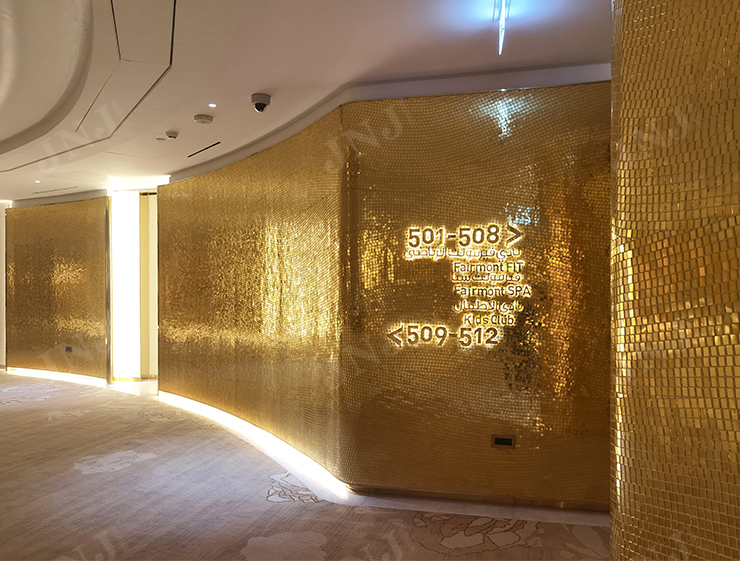
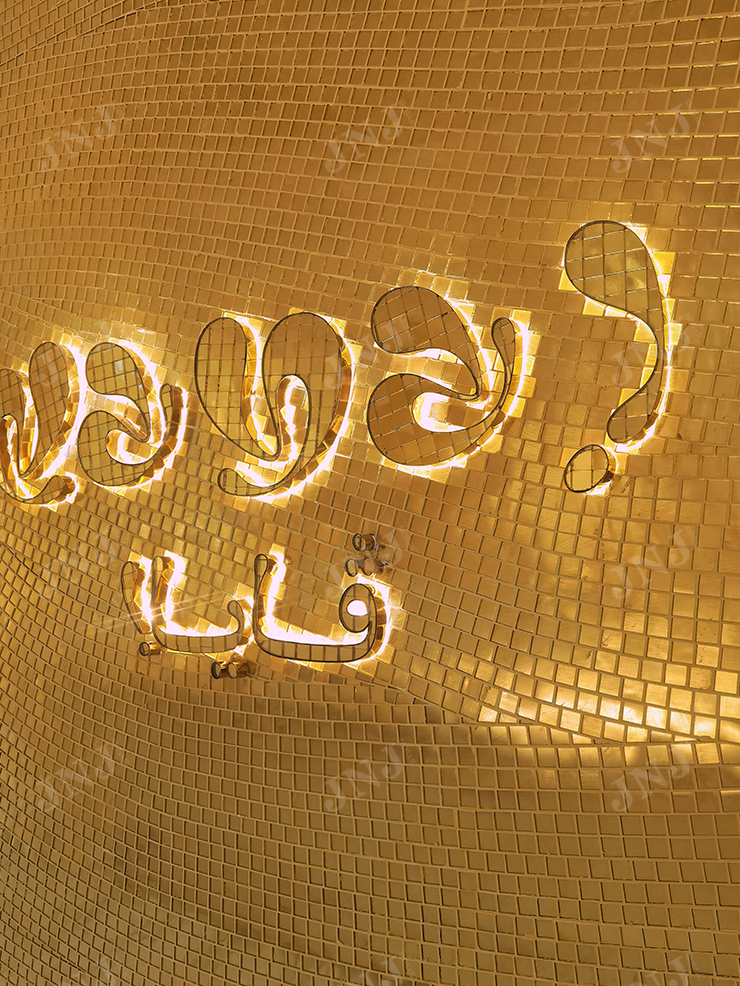
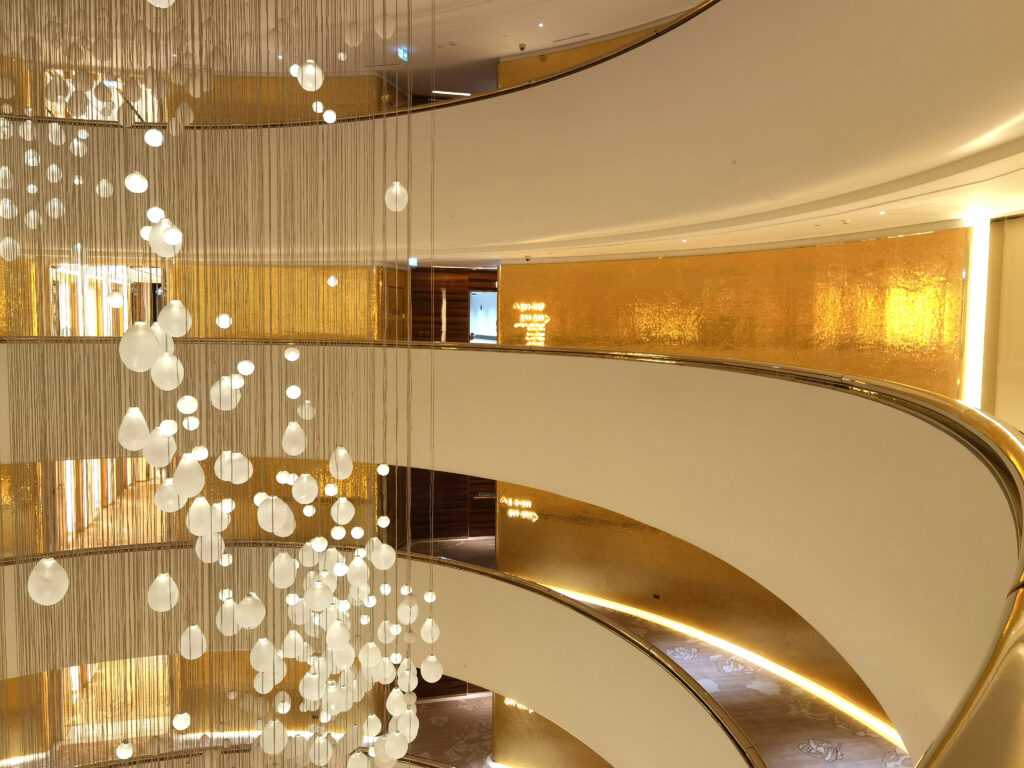
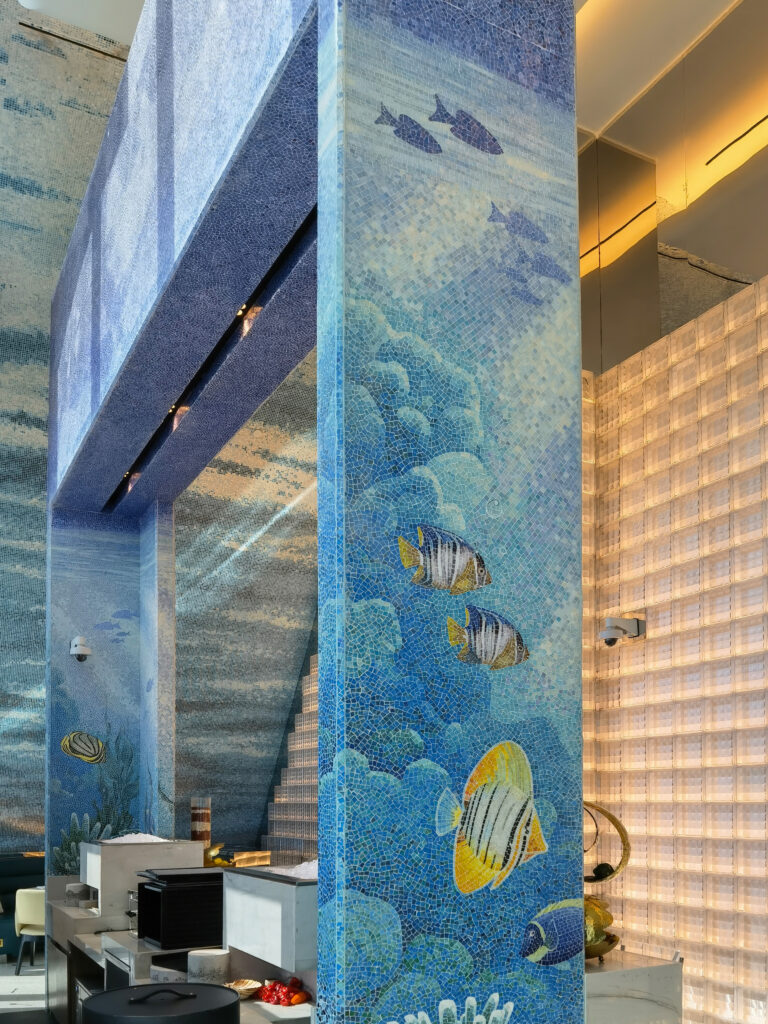
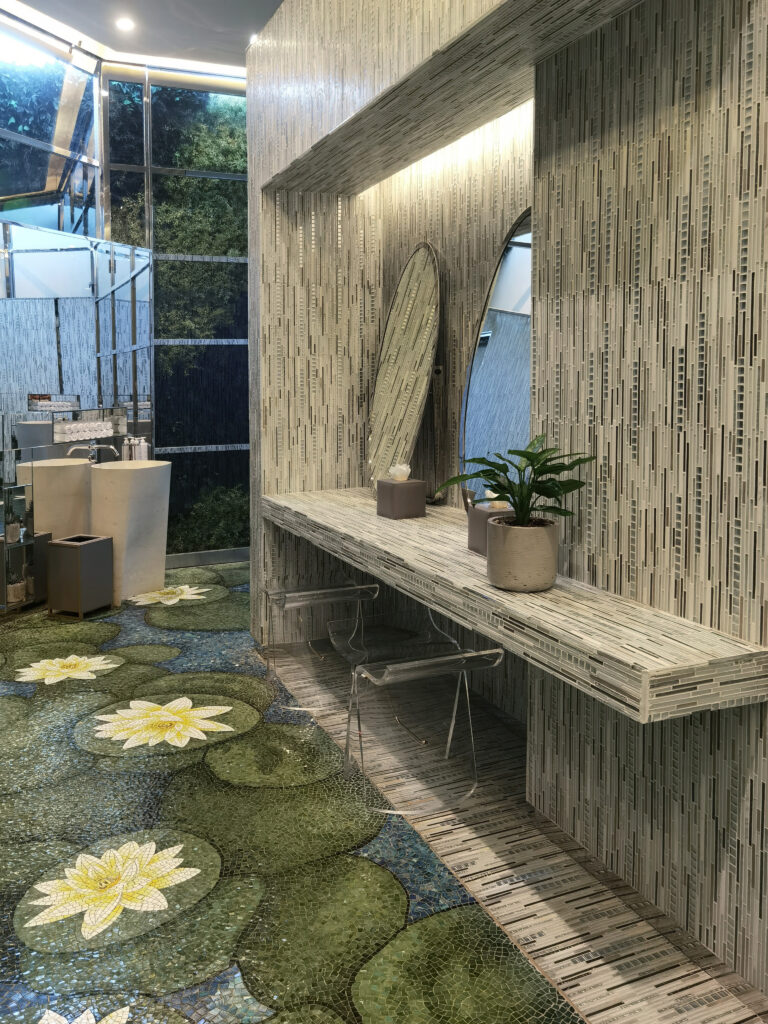
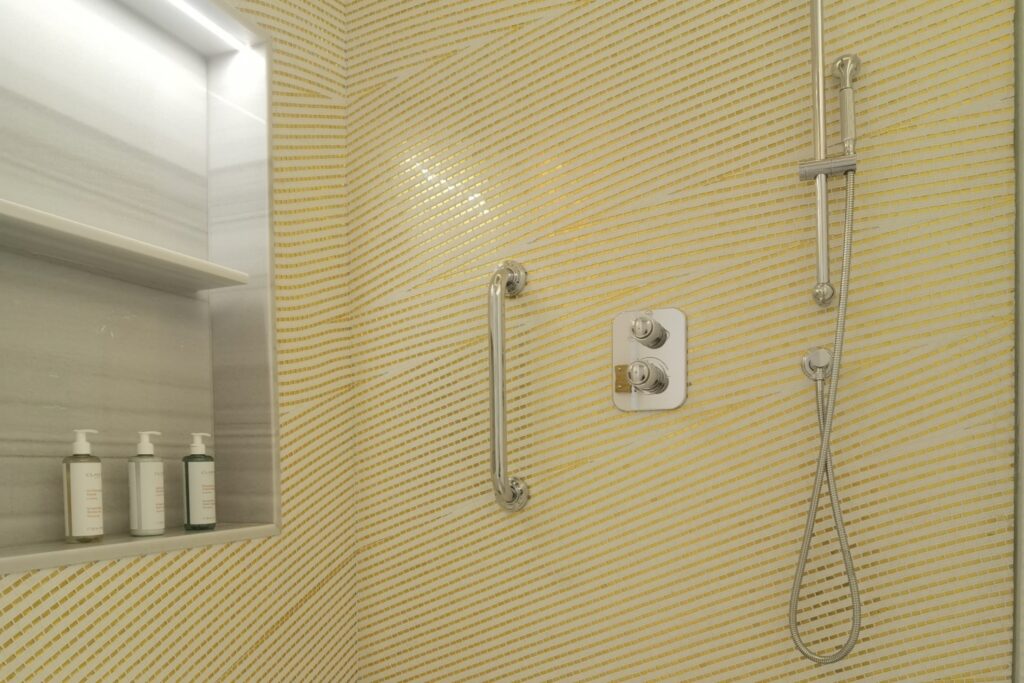
At Fairmont Doha in Katara Towers, mosaics appear across corridors, restaurants, bars, bathrooms, guest areas, and large architectural surfaces. Custom compositions interpret regional themes such as desert dunes, waves, lotus flowers, and marine life.
Each theme was developed in relation to its location rather than applied as a generic decorative pattern. Curved corridor walls, restaurant murals, bathrooms, and other surfaces required different approaches to color, scale, reflection, and layout.
Together, these projects demonstrate an important principle: successful luxury hotel mosaic selection is not about finding one impressive tile. It is about creating a coordinated material system that preserves the design story while adapting to each surface and application. More examples can be found in JNJMosaic’s global project portfolio.
A Seven-Point Selection Checklist
Before approving hotel mosaic tiles, use this checklist to confirm that the design and technical requirements have been considered together:
- Define the design purpose. Should the mosaic establish a first impression, express the brand story, connect spaces, or highlight an architectural feature?
- Identify the application. Confirm whether it will be installed on a wall, floor, curved surface, wet area, pool, or exterior façade.
- Assess operating conditions. Consider foot traffic, moisture, prolonged submersion, sunlight, temperature changes, cleaning chemicals, and maintenance frequency.
- Request relevant technical information. Verify that the exact material and finish are suitable for the intended application and local project requirements.
- Review the complete visual system. Evaluate tessera size, pattern scale, surface finish, grout color, lighting, and adjacent materials together.
- Approve a representative mock-up. Use it to confirm color, reflection, sheet joints, pattern alignment, grout relationships, and installation quality.
- Plan production and installation. Confirm final dimensions, panel divisions, numbering, packaging, drawings, substrate preparation, and installer responsibilities before manufacturing.
Once the mosaic specification is established, use JNJMosaic’s luxury hotel mosaic tile supplier guide to evaluate production and project-delivery capabilities.
Frequently Asked Questions
Why do luxury hotels use mosaic tiles?
Luxury hotels use mosaics to create distinctive interiors, express brand identity, introduce texture and light, and connect different guest areas through a consistent design language. Their small tesserae can also follow columns, curves, pools, and other complex architectural surfaces.
What are the best mosaic tiles for hotels?
The **best mosaic tiles for hotels** are those whose appearance and verified performance suit the intended location. Glass may work well for pools and feature walls, while porcelain, ceramic, natural stone, metallic, or artistic mosaics may suit other applications. There is no single material that is best for every hotel area.
Can the same mosaic be used in a lobby, bathroom, and pool?
Not automatically. A lobby wall, wet bathroom floor, and submerged pool surface have different requirements. The material, finish, substrate, adhesive, grout, waterproofing, maintenance conditions, and applicable local standards must be evaluated separately.
Are hotel mosaic tiles difficult to maintain?
Maintenance depends on the material, surface texture, grout, sealing requirements, and cleaning routine. Natural stone may require sealing, while reflective or textured finishes may need specific cleaning methods. The hotel’s operations team should review maintenance requirements before approval.
Should a hotel approve a full-size mosaic sample?
A representative mock-up is recommended for murals, gradients, curved surfaces, custom patterns, and prominent public areas. It helps confirm color, scale, reflection, grout, sheet joints, and installation quality before mass production.
Choose a Mosaic System, Not Just a Beautiful Tile
The right mosaic can give a luxury hotel a distinctive identity, connect its spaces, and create a memorable guest experience. However, successful selection requires more than choosing an attractive sample. Start with the application, align the design with the hotel’s story, verify technical performance, review lighting and grout, and approve a representative mock-up before production.
Most importantly, treat hotel mosaic tiles as part of a complete surface system that includes the substrate, adhesive, grout, waterproofing, production layout, and installation plan. Explore JNJMosaic’s hospitality mosaic solutions for hotels and resorts or share your drawings, dimensions, application conditions, and desired visual effect for an initial project review.