Explore 11 designs from JNJMosaic’s Infinity Series, where individual motifs and continuous backgrounds create different possibilities for interior walls.
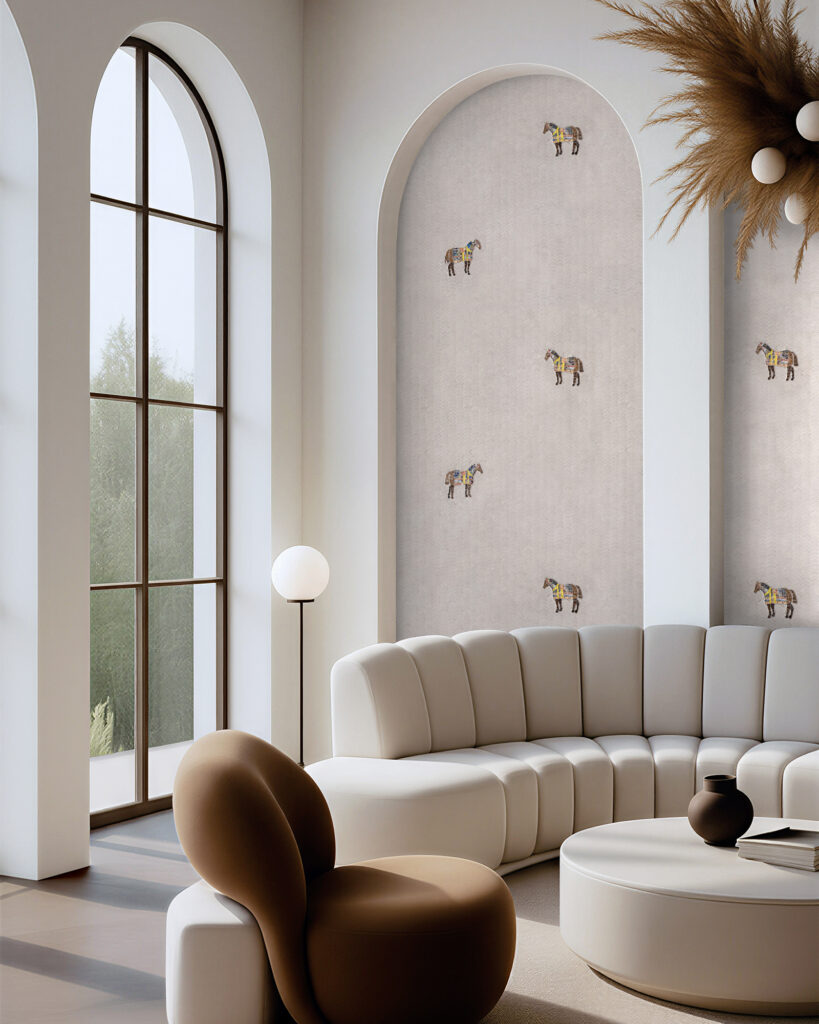
A small colourful horse repeats across a café wall. In a living room, the same motif sits within a series of tall arches. The image remains familiar, yet its relationship with the space changes.
This is one of the possibilities of working with mosaic tile patterns. A design begins with an individual motif, then develops through the space around it: the background, the distance between repetitions and the boundaries of the wall.
A few widely spaced motifs can give a surface a quiet decorative presence. Repetition can establish a stronger rhythm. Architectural elements, from mirrors to arched recesses, introduce another set of relationships.
JNJMosaic’s Infinity Series explores these possibilities through flowers, leaves, marine subjects and everyday imagery. Each design invites consideration at two scales: the detail of the individual pattern and the composition of the complete wall.
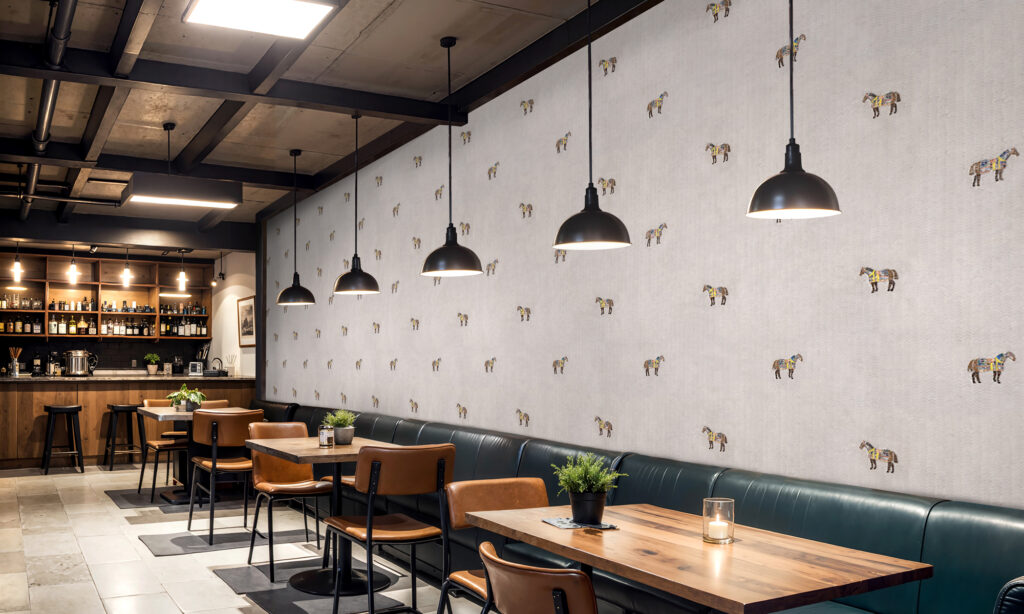
JP2513 shows how a small individual motif can establish a rhythm across a large interior wall.
The Motif and the Background Work Together
When choosing decorative mosaic tiles, the recognisable image often attracts attention first. A blue flower, a golden leaf or the outline of a seahorse gives the design its immediate identity.
The background deserves equal consideration.
In JP2513, a fine grey herringbone field provides a directional structure behind the colourful horse. The repeated geometry continues between the figures, connecting the wall into one surface.
JP2552 creates a different relationship. Its cup motif sits against pale blue lantern-shaped pieces. The softly curved geometry gives the background a decorative character of its own, while the cup introduces a familiar, playful image.
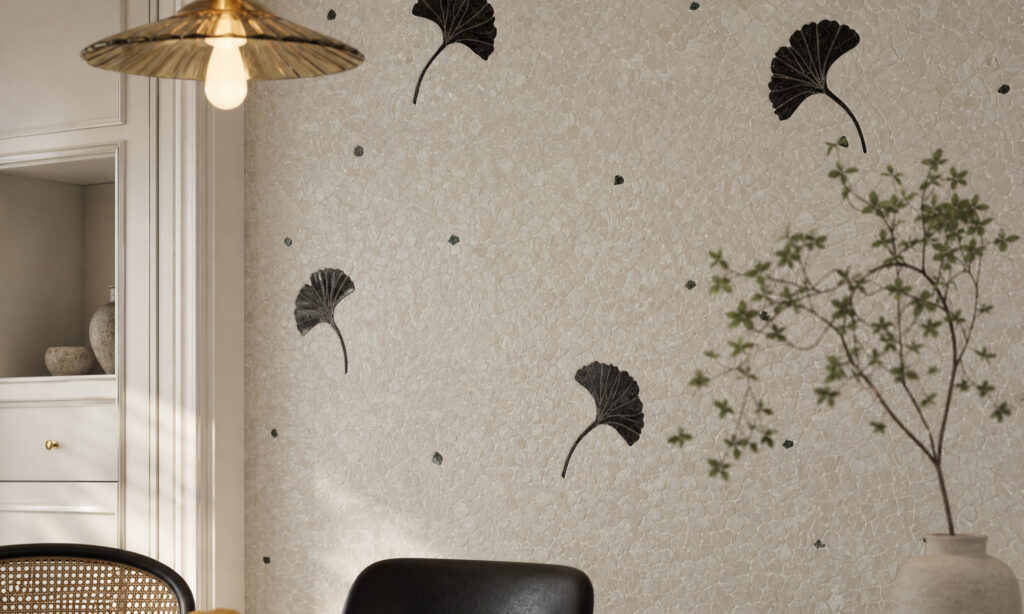
ZYSE-T002 pairs a black ginkgo leaf with a pale, irregular stone background. Here, the contrast between the dark silhouette and the fragmented field makes the leaf especially distinct.
These examples show why a mosaic wall should be considered as a complete composition. The motif provides a focal point; the background determines how that focal point belongs to the wider surface.
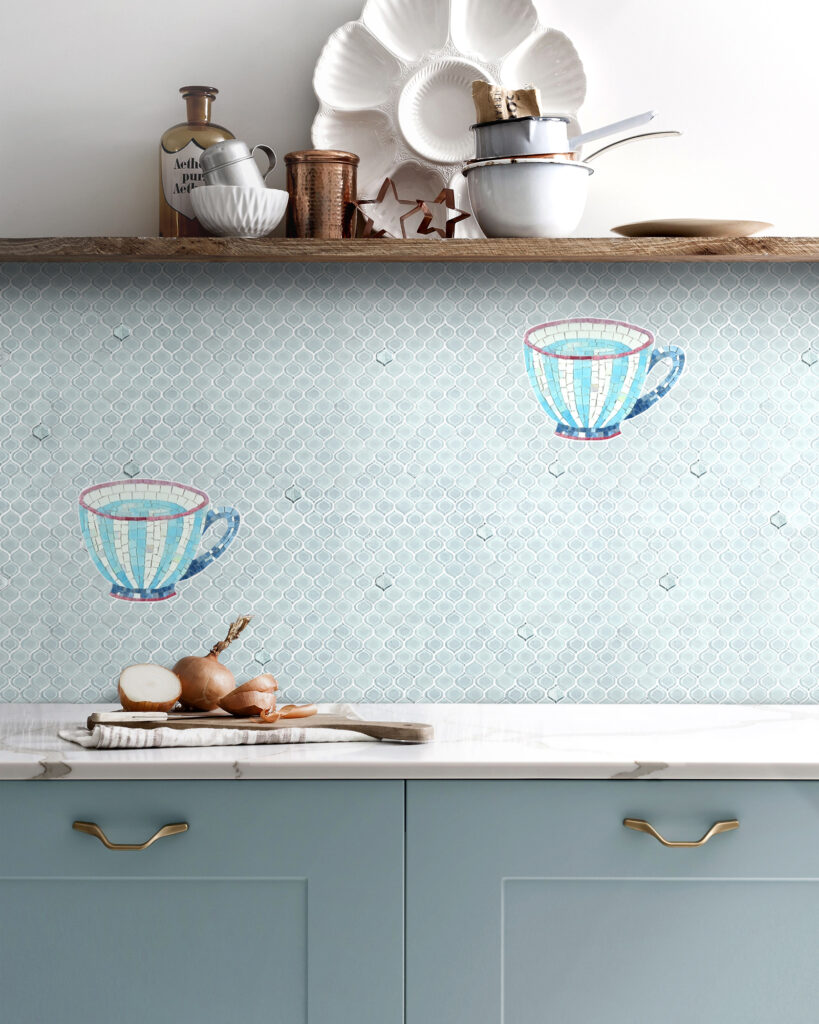
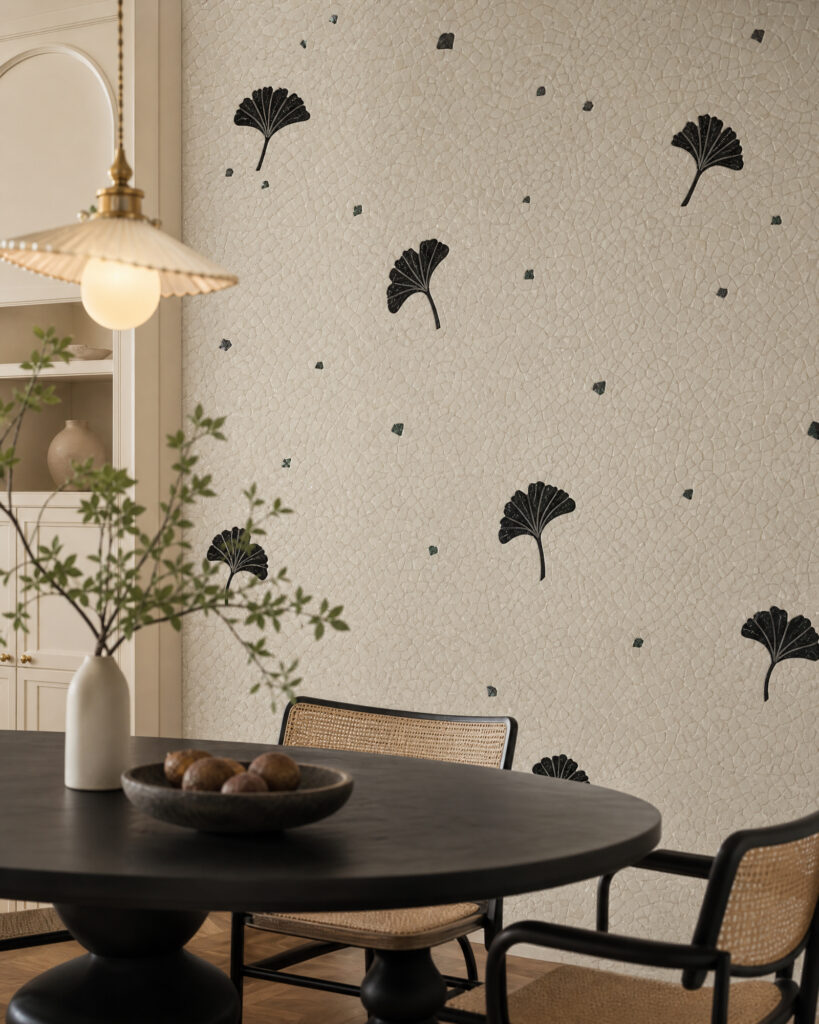
Different background geometries change the relationship between an individual motif and the surrounding surface.
One Pattern, Different Spatial Rhythms
The arrangement of a motif can influence a room as much as the motif itself. Spacing, repetition and architectural framing all affect how a mosaic wall is read.
Leave Space Between Motifs
A generous interval allows each image to remain distinct. It also gives the background more visual presence.
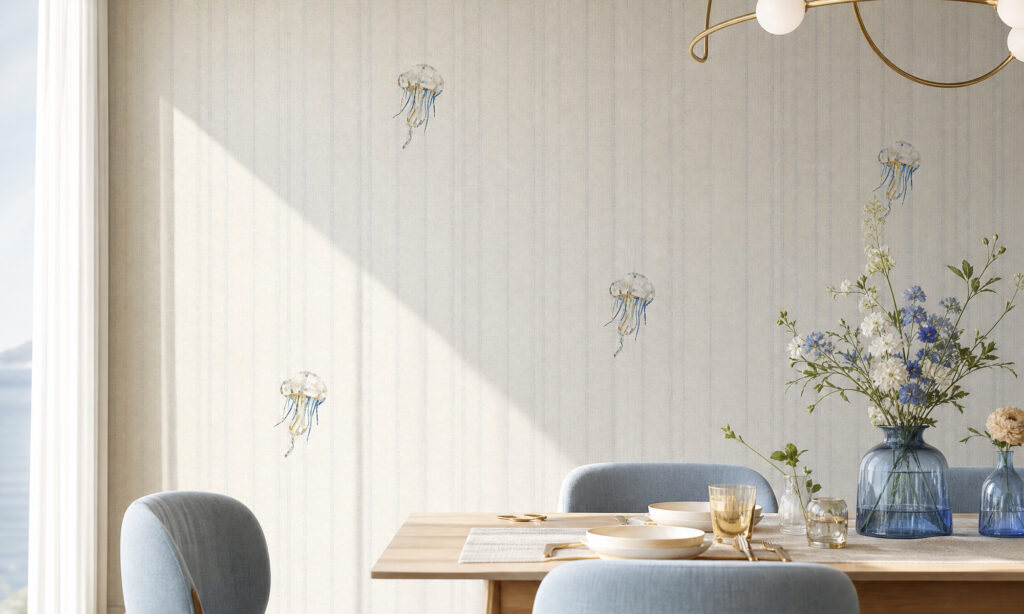
This approach is especially interesting with a motif that has an expressive outline. The trailing forms of JP2555 create a sense of drifting movement across a pale background. Space between the jellyfish allows those fine lines to remain legible.
The black ginkgo leaves of ZYSE-T002 work differently. Their strong silhouettes punctuate the lighter stone field. The surrounding background becomes part of the composition, creating pauses between the leaves.
In both cases, the amount of visible background helps determine the character of the wall.
Use Repetition to Establish Rhythm
Repeated motifs can guide the eye across a surface.
An evenly spaced arrangement creates a predictable cadence. An offset composition introduces variation while maintaining a connection between the images. The appropriate arrangement depends on the wall’s proportions and the effect being sought.
JP2513 illustrates this relationship clearly. Its small horse motif can repeat across a broad wall, while the grey herringbone background maintains continuity between the figures.
In a compact setting, fewer repetitions may be enough to carry the same design language. The complete wall elevation helps reveal whether the arrangement feels balanced.
Let Architecture Guide the Composition
Arches, corners, mirrors and cabinetry all influence where a motif will be seen.
In the JP2513 living-room rendering, the horses appear within tall arched wall sections. The arches frame the repeated imagery, giving each section its own composition while connecting the group.
A bathroom introduces different considerations. A shell or starfish may need to sit clear of a mirror, cabinet or shower fitting to remain fully visible.
Planning the layout around these elements helps the pattern feel integrated with the room.
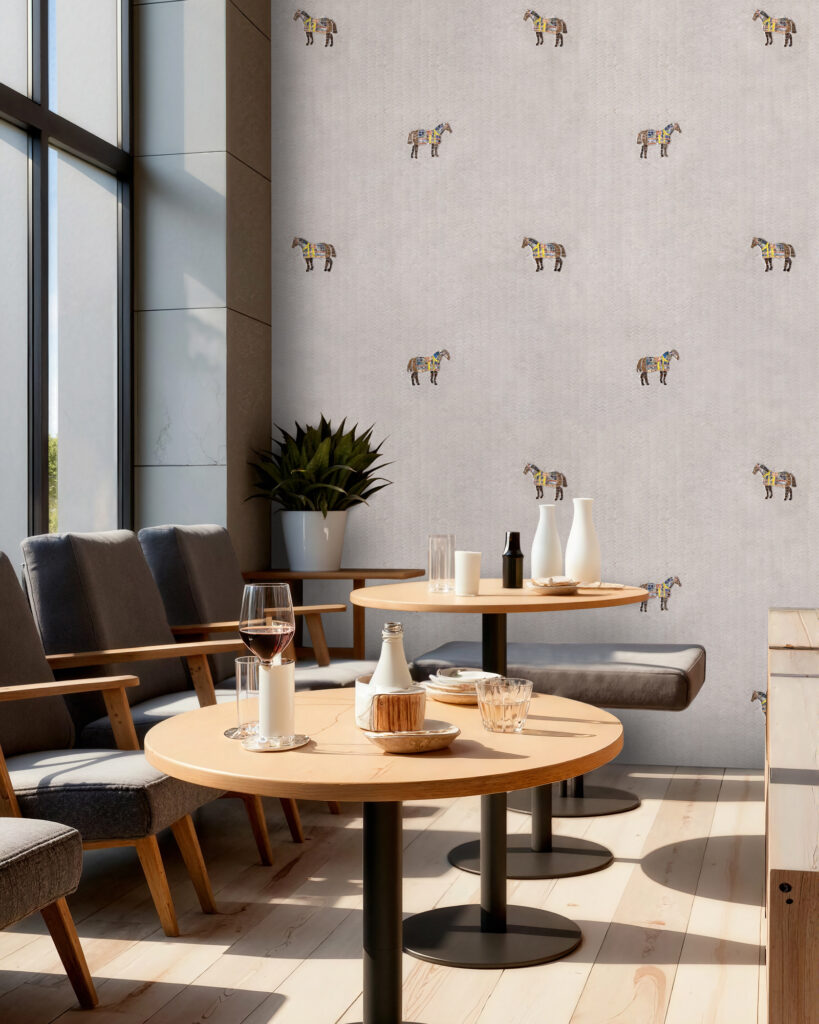
The same horse motif takes on a different presence when placed across an open wall or within architectural arches.
11 Mosaic Tile Patterns from the Infinity Series
The Infinity Series brings together several visual themes. Some rely on a strong silhouette, while others use fine outlines, colour or the direction of individual pieces.
Flowers and Leaves
JP2525: A Blue Flower on a Fragmented Ground
JP2525 places a layered blue flower against a pale, irregular background. A warm central accent draws attention to the middle of the bloom, while the surrounding fragments give the surface a varied texture.
Its application rendering shows flowers distributed along a kitchen and dining backdrop. The blue motifs create distinct points of interest within the long horizontal surface.
JP2526: The Lightness of a Golden Dandelion
JP2526 uses a golden dandelion motif against a pearl-white geometric background.
Fine radiating lines define the flower head, leaving visible space within its outline. This open structure gives the motif a lighter visual presence than a solid floral silhouette.
In the kitchen rendering, the pale background connects the wall around the cabinetry, while the golden forms provide decorative accents.
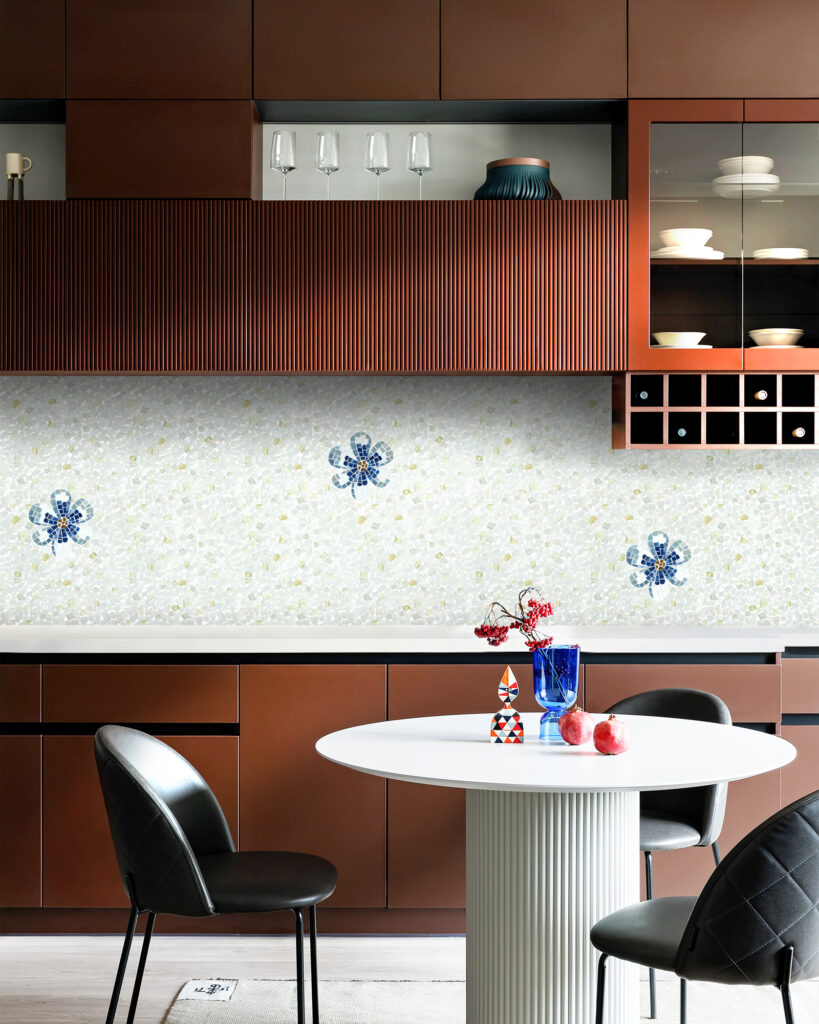
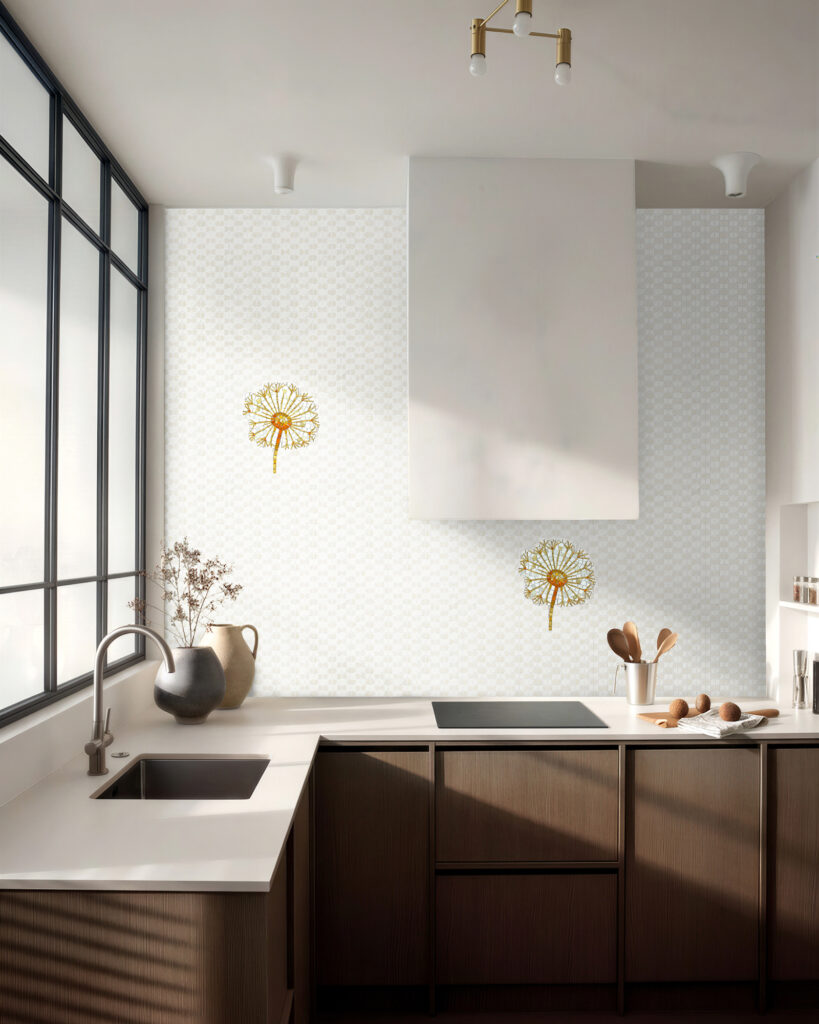
A layered blue flower and an open golden dandelion create two different approaches to floral mosaic patterns.
JP2556: Golden Ginkgo with a Geometric Background
JP2556 combines a gold ginkgo leaf with pale flat-hexagon pieces.
The leaf’s branching structure introduces a botanical form within an ordered background. Its warm colour provides a focal accent, while the repeating geometry continues across the surrounding surface.
This combination offers a useful reference for interiors that bring together natural imagery and structured detail.
ZYSE-T002: Ginkgo in Black and Pale Stone
ZYSE-T002 approaches the same botanical subject through a stronger tonal contrast.
A black ginkgo silhouette stands against a pale background of irregular stone fragments. The leaf is immediately recognisable, while the varied background creates detail at closer viewing distances.
Compared with JP2556, the contrast is more graphic. Seeing the two together demonstrates how the same subject can produce different visual effects through colour, material and background geometry.
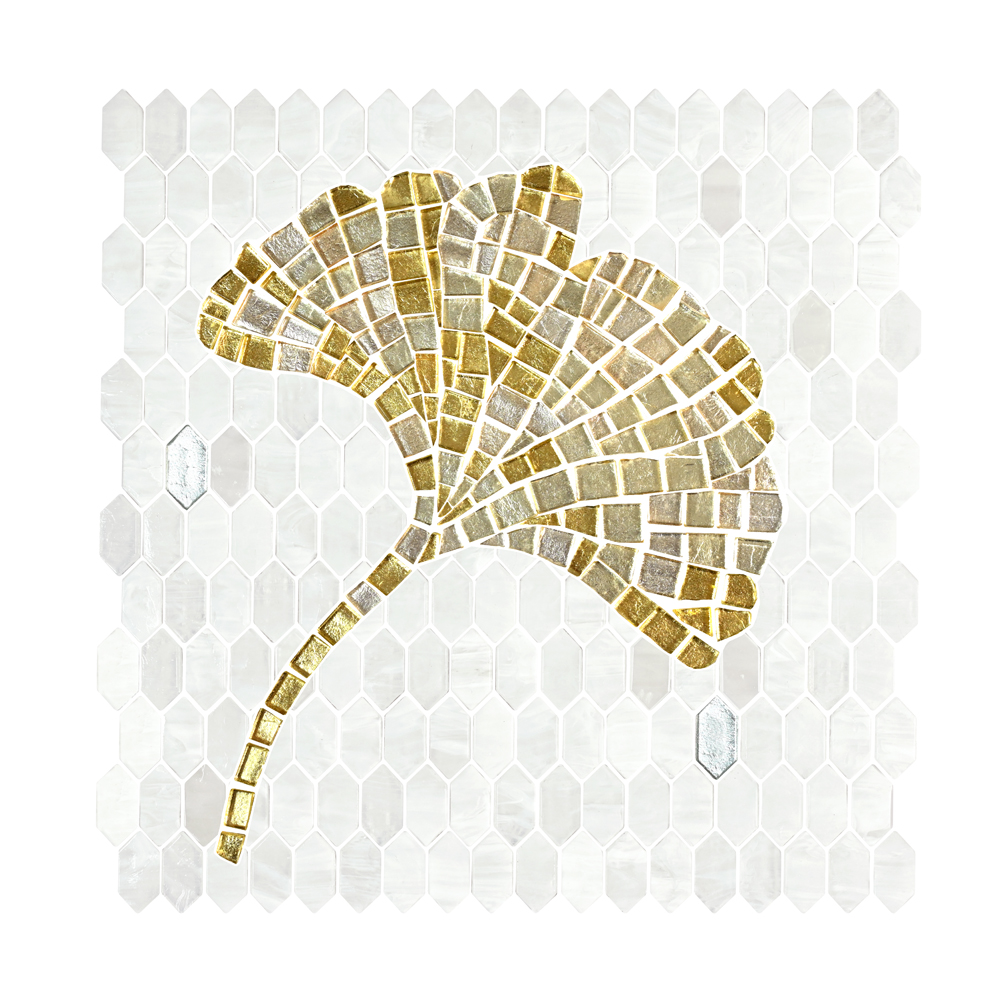
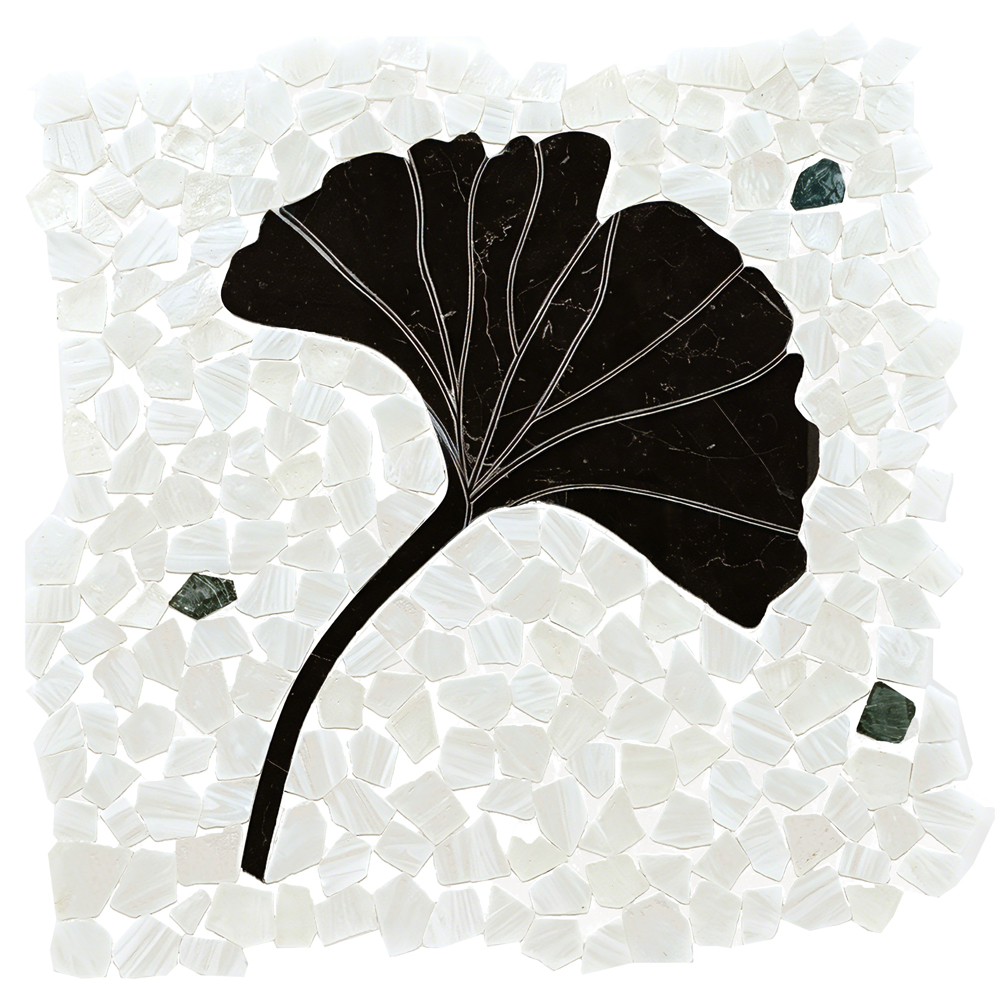
Two ginkgo designs: a golden leaf within a geometric field and a black silhouette against irregular stone.
Marine Motifs
JP2550: A Blue Seahorse with Warm Vertical Bands
JP2550 pairs a delicate blue seahorse with ivory and gold vertical bands.
The cool outline of the seahorse contrasts with the warmer background. The vertical arrangement adds direction to the surface, while the motif introduces a recognisable image within it.
Its kitchen rendering shows how marine imagery can become part of an everyday interior.
JP2551: A Shell in Blue and White
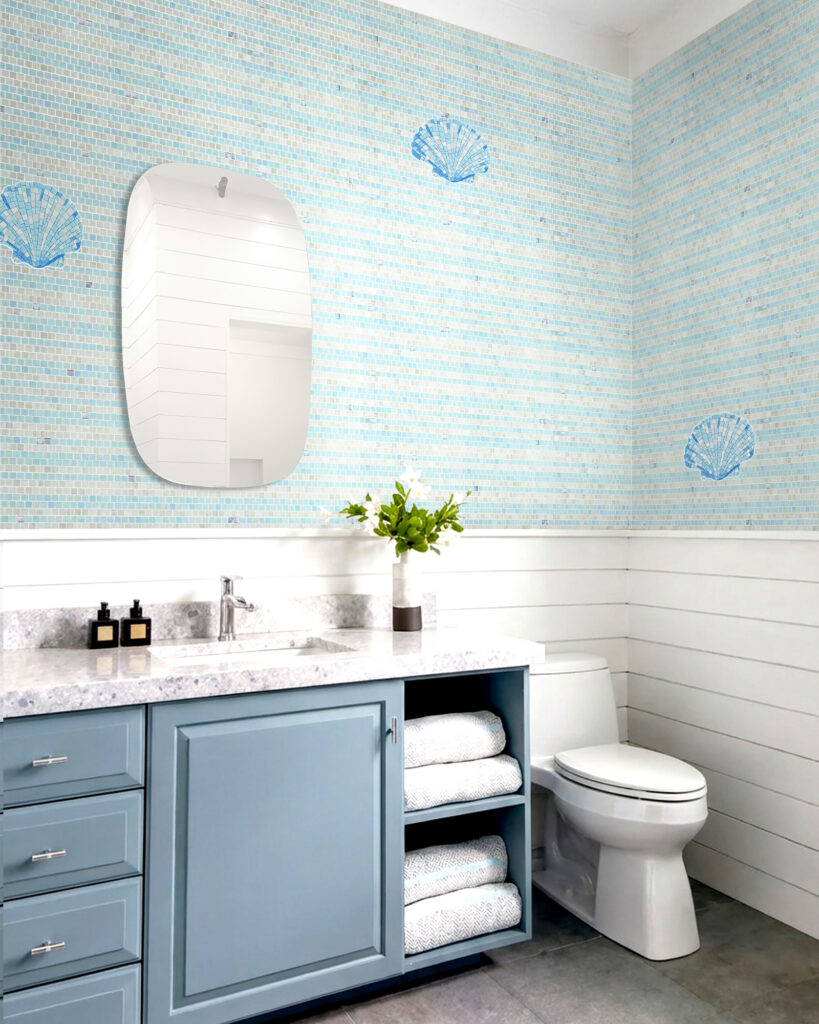
JP2551 features a fan-shaped shell on a softly striped blue-white background.
The shell’s radiating lines create movement within the motif, while the horizontal background carries the composition across the wall.
In the bathroom rendering, the shell motifs appear around the mirror and continue onto the adjoining wall, showing the value of considering corners and fixtures together.
JP2553: A Seashell within a Pale and Golden Field
JP2553 features a seashell motif against a pale background with golden accents and elongated hexagonal geometry.
The shell’s curved outline creates a gentle contrast with the structured background. Its subtle colours encourage a closer look, allowing the details of the motif and surrounding mosaic pieces to emerge gradually.
The application renderings illustrate how individual shell motifs can be positioned within narrower wall areas.
JP2554: A Clear Blue Starfish
JP2554 places a blue starfish within a pale elongated-hexagon background.
The five-pointed shape is easy to recognise. Blue tones connect the motif with the surrounding surface while preserving a distinct outline.
The bathroom renderings show how a small number of motifs can punctuate a wall without covering the entire background with imagery.
JP2555: The Drifting Lines of a Jellyfish
JP2555 combines a pale striped field with jellyfish rendered in blue, grey and amber details.
The rounded upper form and trailing tentacles create a flowing silhouette. In the dining and living-space renderings, the motifs appear suspended across the wall, introducing movement within a light interior palette.
This design is particularly useful for discussing how spacing affects the reading of an individual image.
Everyday Objects and Animal Motifs
JP2552: A Cup with a Playful Outline
JP2552 brings a familiar object into the wall composition.
Its cup motif combines blue and white sections with a contrasting rim, set against a pale blue lantern-shaped background. The outlined form gives the design an informal, illustrative quality.
The kitchen rendering connects the image with its setting: a decorative cup sits below a shelf of everyday tableware.
JP2513: A Colourful Horse on Grey Herringbone
JP2513 combines a multicoloured horse with a restrained grey background.
At a distance, the horse reads as a small decorative figure. Closer inspection reveals the individual coloured pieces and the directional structure of the herringbone field.
Its range of application renderings makes it a strong example of how one mosaic pattern can participate in different spatial compositions.
Mosaic Wall Pattern Ideas for Different Spaces
A useful starting point is to consider how the wall will be viewed and which elements will share the composition.
Kitchens and Bar Backsplashes
A backsplash often forms a long, relatively shallow strip. Cabinetry, shelves and appliances divide the available surface.
The renderings of JP2525, JP2550 and JP2552 provide references for this type of composition. In each, the background connects the wall, while individual motifs create points of interest.
A wall elevation helps establish whether those motifs remain visible above the counter and clear of outlets or other interruptions.
Bathroom Feature Walls
Mirrors, vanity units and shower fittings can occupy a significant part of a bathroom wall.
The application images for JP2551, JP2554 and JP2556 show different ways botanical and marine motifs can be positioned around these elements.
Visual planning and technical specification should be considered together. Suitability for a particular wet area depends on the selected product, installation system and project requirements.
Dining Rooms and Living Spaces
In a dining room, a wall may be viewed for long periods from a seated position. Furniture height and lighting therefore become part of the composition.
JP2555 offers a reference for a light, flowing arrangement, while ZYSE-T002 creates a stronger contrast between motif and background.
Tall walls and arched sections introduce another opportunity: repeating a motif across separate architectural areas can create a shared visual language.
How to Choose a Mosaic Tile Pattern for Your Project
Begin with the wall itself. Record its dimensions, openings, corners and the positions of fixed furniture or fittings.
Next, decide what role the mosaic should play. A strongly contrasting motif will draw attention differently from one that sits close to the background palette.
Consider the motif and background together. A small product image can establish a direction, but a complete wall layout is needed to assess repetition, spacing and edge conditions. The proportion of patterned areas to background areas is especially important.
Finally, review physical samples under the intended lighting. Colour, sheen, texture and joint appearance all contribute to the final surface.
Where a project calls for changes to motif dimensions, colours or materials, those options should be assessed with the design and production team before the layout is finalised.
One Motif, More Possibilities
Mosaic tile patterns develop their character through the relationship between individual images and the space around them.
A horse can repeat across a café wall or sit within an architectural arch. A ginkgo leaf can appear as a warm golden accent or a strong black silhouette. Marine motifs can introduce a recognisable image while leaving much of the background visible.
The Infinity Series offers 11 starting points for exploring these relationships. The next step is to consider how a chosen motif belongs to a particular wall, room and viewing experience.
Explore JNJMosaic’s mosaic collection, or share your wall dimensions, space photographs and preferred patterns with our team to discuss a layout for your project.