A closer look at the decisions between a reference image and a finished mosaic.
A crane’s feather can look effortless in a drawing. In mosaic, someone has to decide where each piece begins and ends.
The curve needs to read clearly. The colors need to hold together. A detail that works on a screen may need a different treatment when it is made from glass and viewed across a room.
That is where custom mosaic design becomes interesting: in the decisions that turn an image into something physical.
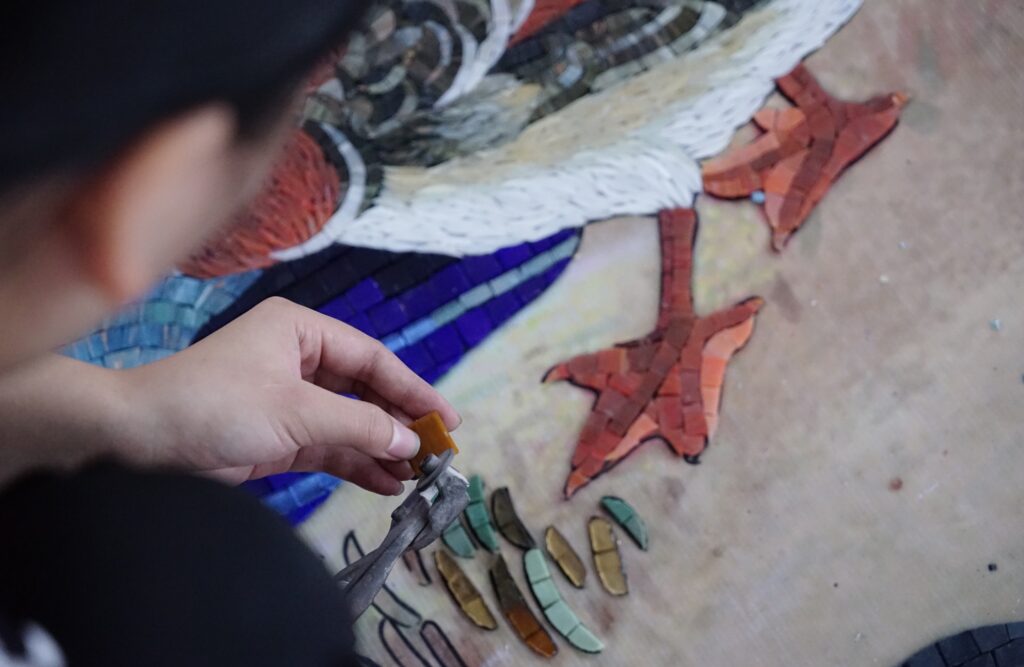
JNJMosaic’s production photographs for Song He Lian Nian, an artwork featuring cranes and pine trees, offer a useful view of this process. The series follows material selection, sample cutting and assembly, conversations between designers and craftspeople, adjustments to the complete work, and preparation for packing.
Seen together, these images explain something a finished project photograph rarely can: how much interpretation happens between the first design and the final piece.
A Reference Image Opens the Conversation
People arrive at a custom mosaic project with different starting points. Some have an artwork they want to develop. Others find an existing mosaic design and want it adapted to their space.
JNJMosaic’s design workflow accommodates both approaches.
An original commission begins with a discussion about the client’s preferences, the intended space, and the direction of the artwork. An adaptation begins with an existing design, followed by a review of what needs to change.
For either route, the initial inquiry starts with four things:
- A reference image
- Site dimensions
- The installation location
- The required quantity
These details give the team enough context to begin assessing the request. A picture communicates the visual idea; the dimensions and location explain what that idea needs to become.
The scope of customization is then reviewed for the individual project. Materials, colors, dimensions, and production methods need to be considered together before a workable proposal can take shape.
The Wall Changes the Composition
One of the earliest questions in custom mosaic design is also one of the easiest to overlook: how should the image occupy the space?
Imagine moving a landscape composition from a wide wall to a narrow vertical panel. The subject may still fit after resizing, but its balance will change. A focal point may become too small. Background areas may take up more space than intended. Cropping may remove the part that made the original image appealing.
These are composition decisions, and they belong in the design discussion.
The overall width and height provide a boundary. Within that boundary, the designer needs to consider the size of the subject, the space around it, and its relationship to edges, corners, or openings.
This is why updated site measurements matter. A change in dimensions can affect the artwork itself, even when the difference seems modest on a drawing.
Color Becomes a Material Decision
On a screen, choosing a color can take a click. At the workbench, it involves selecting an actual material.
The difference becomes visible in the selection photographs: the design is considered alongside physical pieces, bringing color, texture, and reflection into the same conversation.
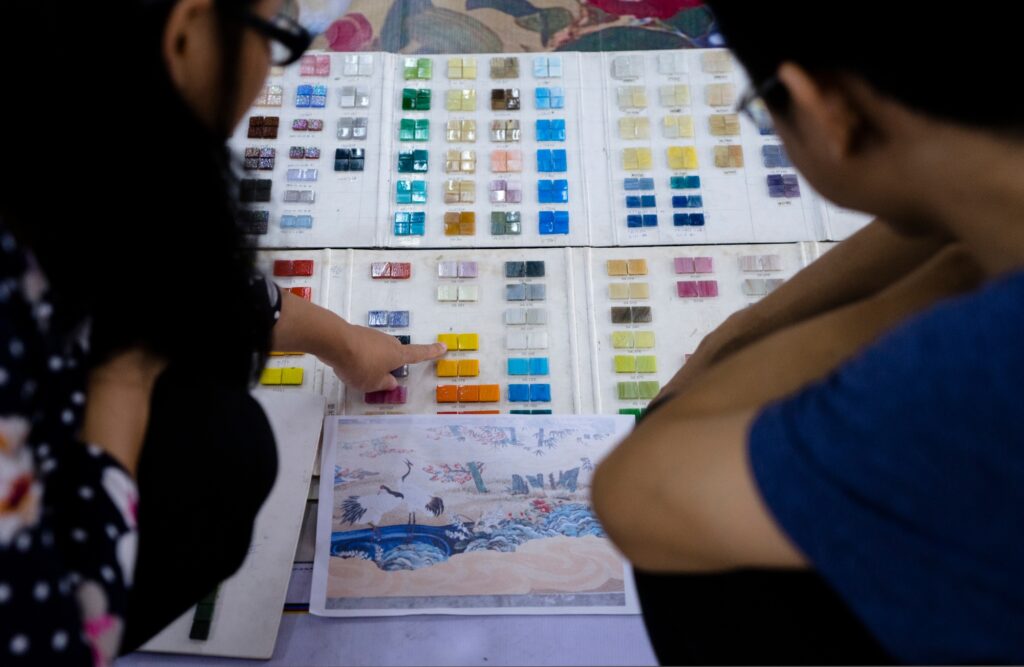
A digital proposal remains useful for discussing the overall palette. Physical materials introduce qualities that the proposal cannot fully convey. Two pieces with similar colors may contribute differently to the finished surface because of their appearance under light.
Production technique adds another layer of interpretation. JNJMosaic’s process archive includes sieve-board assembly, fine cutting, and waterjet cutting. Each offers a different way of building an image.
The choice depends on the design and the project assessment. It helps determine how shapes are formed, how details are handled, and how the composition is assembled.
For a hospitality project, these decisions also sit within the wider choice of materials for the space. JNJMosaic’s guide to choosing mosaic tiles for luxury hotels explores that application context in more detail.
A Sample Gives the Discussion Something Solid
A sample changes the nature of a design conversation.
Instead of discussing an impression on a screen, the client and production team can look at how selected materials and techniques work together. They can examine a line, a color transition, or a small area of detail and decide what needs adjusting.
The Song He Lian Nian photo series includes cutting and assembly during sampling, followed by discussion between designers and production technicians. It shows the point where an idea is tested through making.
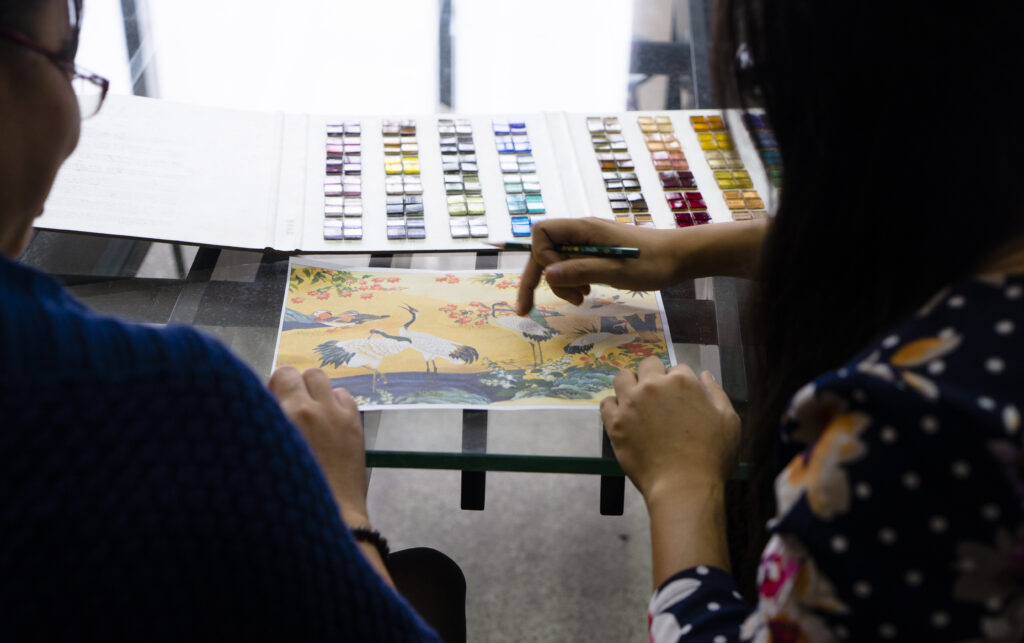
Useful feedback at this stage is specific. Which shape needs more definition? Does the color balance feel right? Is an important detail still legible?
A sample also has a particular scope. It may demonstrate a selected detail very well while leaving the overall composition to be reviewed through the design proposal and the assembled work.
JNJMosaic’s original-design workflow includes sampling and adjustment. For adaptations of existing designs, the sampling route depends on the changes and the client’s requirements. A change in materials, colors, or technique may introduce questions that need a new sample.
The Whole Work Needs Its Own Review
During mosaic production, attention moves between individual pieces and the larger image.
In a fine-cut work, the shape and placement of a small piece contribute to a line or a patch of color. Across the surface, those local decisions build the subject.
The production record for Song He Lian Nian includes a stage of overall adjustment after the work has been laid out. That stage matters because an image assembled from many parts needs to be considered as a whole.
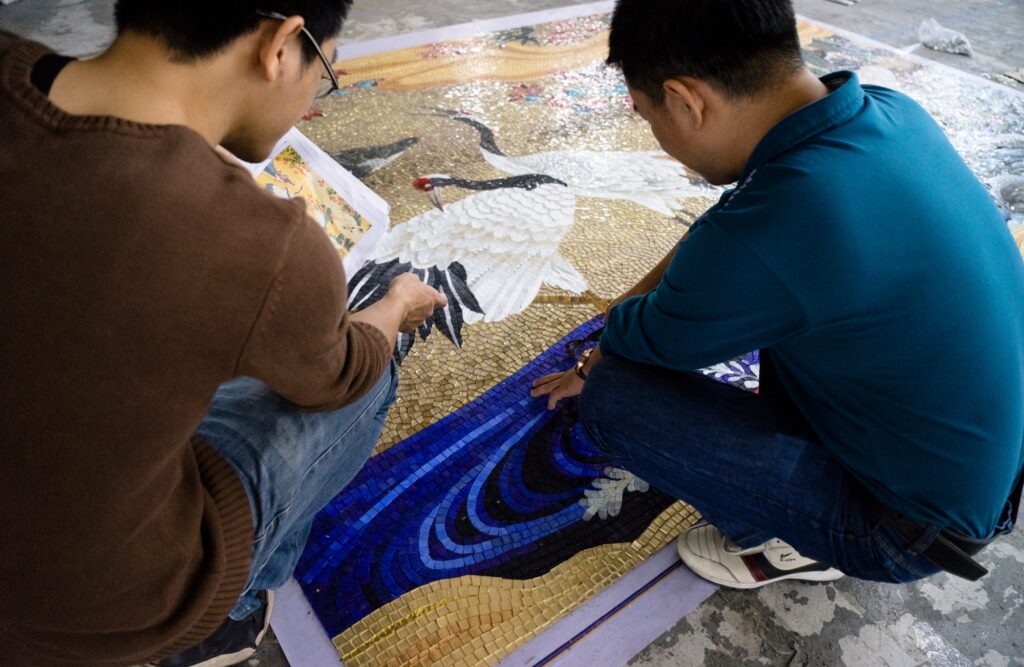
A detail may look convincing close up while carrying too much visual weight in the complete composition. An area may need adjustment to sit more comfortably beside the next.
The photographs make this part of the process visible. They also give the article’s title—“from design to production”—a less rigid meaning. Design decisions continue to be tested as the work takes shape.
The Final Decisions Concern Installation
A large mosaic still has work ahead of it after the image is complete.
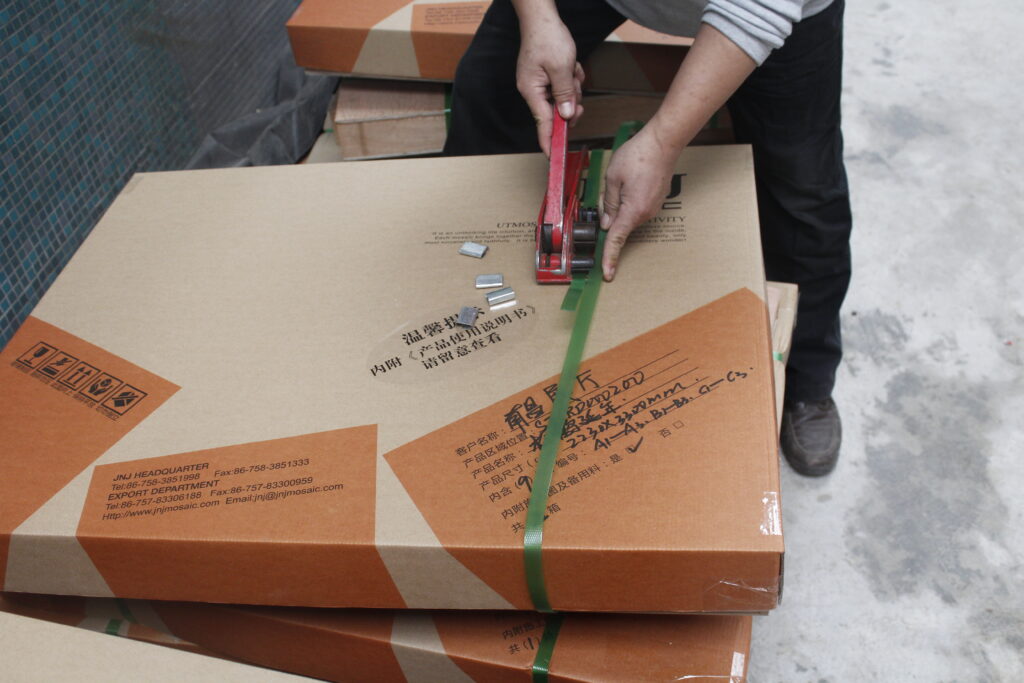
It needs to be prepared for handling, packing, and installation. The documented fine-cutting sequence includes protective film, backing preparation, section cutting, identification, and packaging.
One photograph shows labels placed on the assembled crane artwork, with codes and directional markings. It is a small, practical detail with a clear purpose: individual sections need to retain their relationship to the complete image.
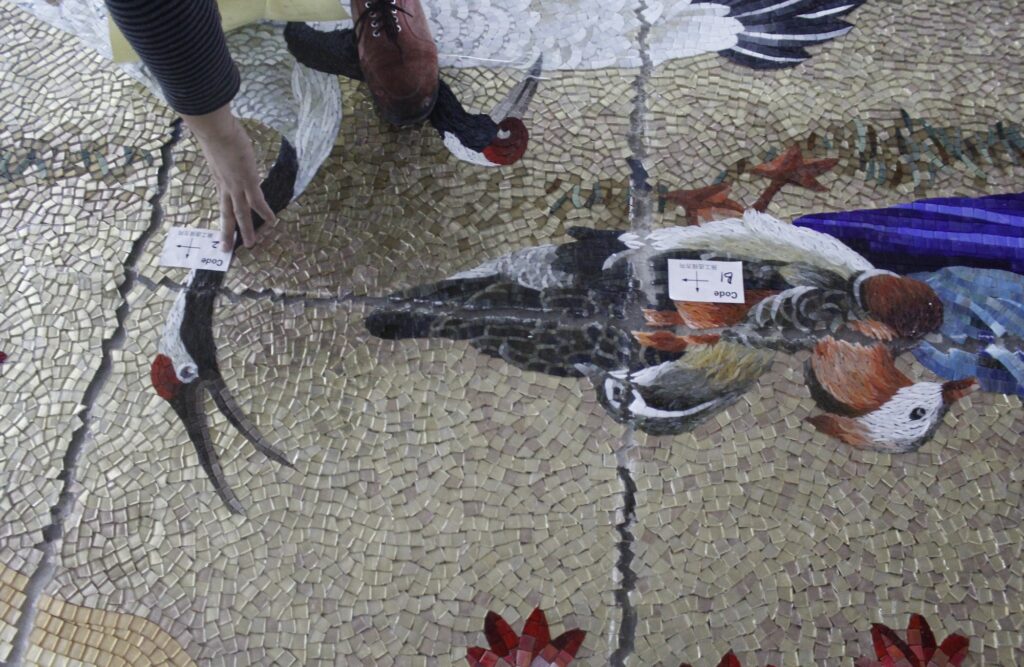
For a custom order, the section arrangement, identification method, packaging, and accompanying information should be confirmed before dispatch. These decisions connect the finished work in the workshop with the team receiving it on site.
What to Bring to Your First Conversation
If you are considering custom mosaic tiles, you do not need to arrive with a finished production plan.
Bring the image you want to discuss, the dimensions of the space, the installation location, and the quantity. Explain which parts of the reference matter most to you. If the measurements are preliminary, say so.
That gives the team a useful starting point for assessing feasibility and developing the next questions.
The finished mosaic will be shaped by many decisions: some made in the design proposal, some at the material table, and others while the pieces are being assembled. Understanding those decisions makes it easier to participate in the process—and to recognize the work behind the finished surface.