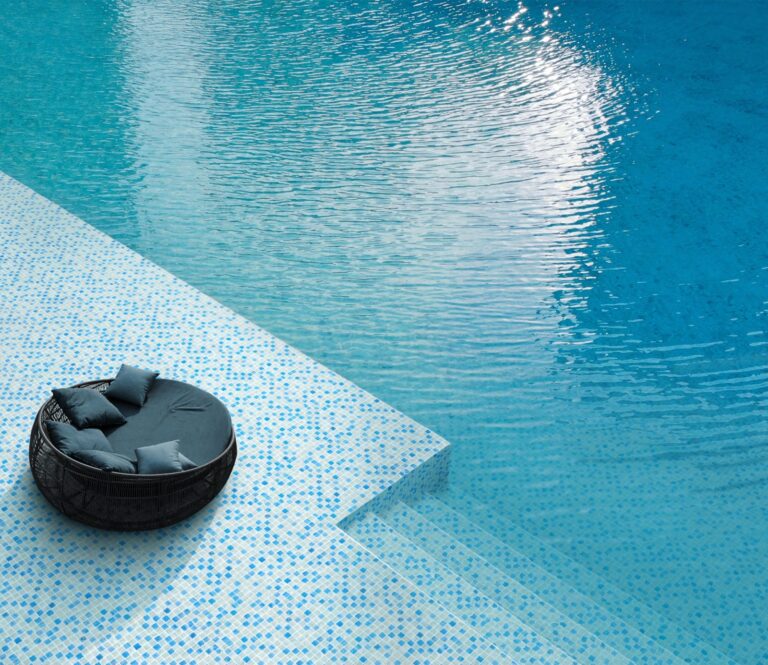
A swimming pool is rarely seen as a tiled surface alone. We see colour beneath the water, reflections moving across the floor, and the relationship between the pool and its surroundings.
Pool mosaic tiles help shape that experience. A pale finish can create a soft, open impression, while a richer blue gives the water a more pronounced visual presence. Green tones connect naturally with planted landscapes, and a gradual colour transition adds movement without introducing a separate motif.
For architects, designers and project teams, choosing a mosaic means considering both the individual tile and the surface it will become. This guide explores the main colour directions, material choices and design questions to consider.
Start with the Colour of the Whole Pool
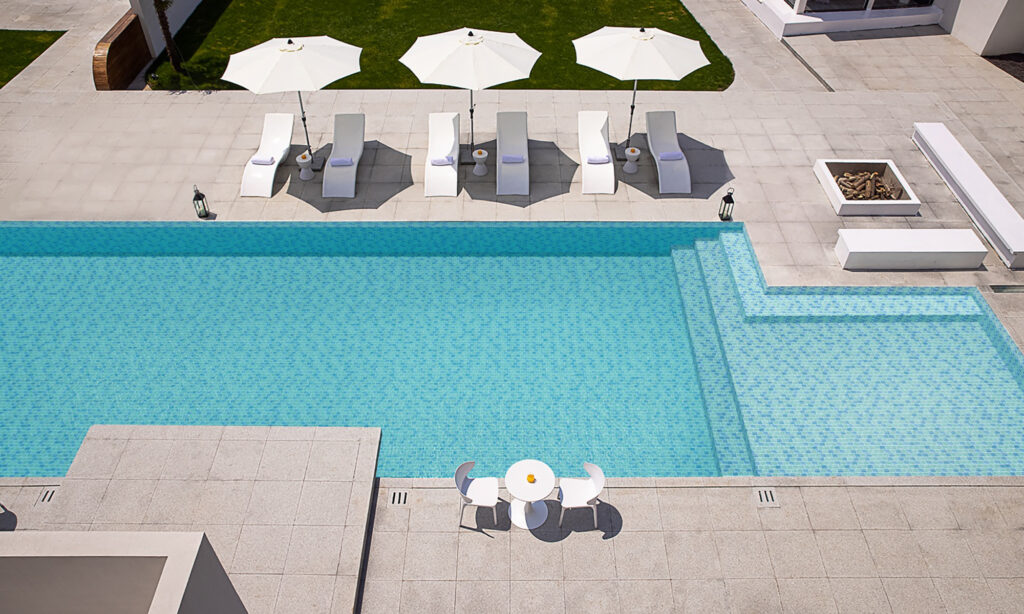
A tile sample offers a starting point, but the finished pool introduces other variables. Water depth, daylight, artificial lighting and surrounding reflections all influence how the surface appears.
Before selecting a shade, consider the atmosphere you want to create. Should the pool feel bright and understated, rich and immersive, or closely connected to the surrounding garden?
Blue Pool Mosaic Tiles
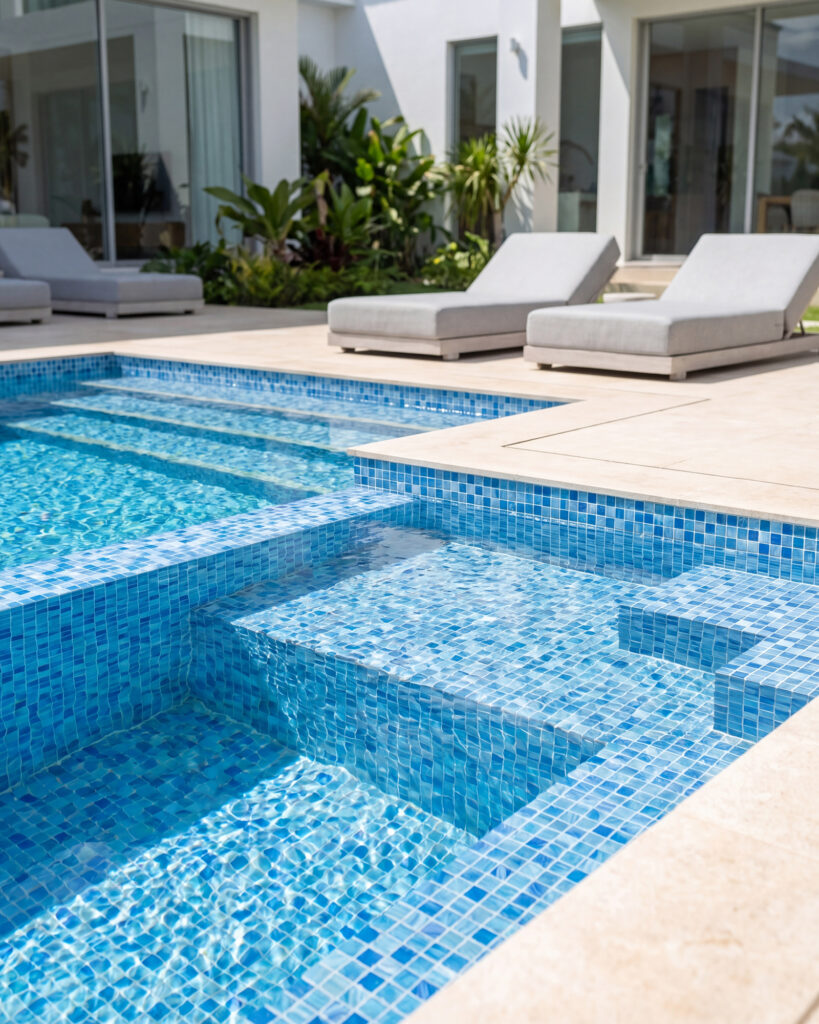
Blue offers a broad range of expressions, from pale aqua to saturated ocean tones.
Lighter blues can support an airy architectural setting, particularly alongside pale paving and simple building forms. Stronger blues create a clearer contrast with the pool edge and make the water a more prominent part of the composition.
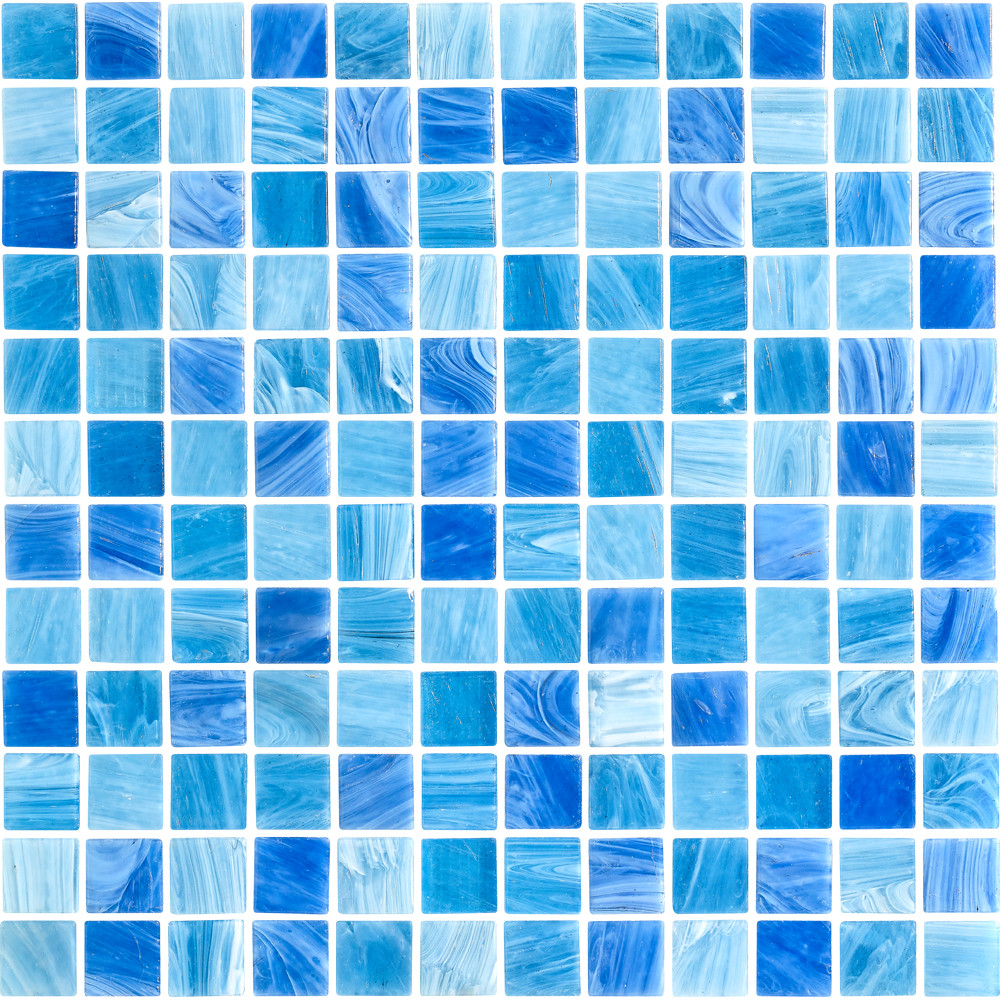
A blend of related shades introduces variation across the surface. Rather than reading as a single block of colour, the mosaic reveals small differences as light moves across the water.
Within the JNJMosaic collection, MXGR-006 provides an example of a blue square mosaic with varied tones. Its compact grid creates a different visual rhythm from a rectangular format.
Green Pool Mosaic Tiles
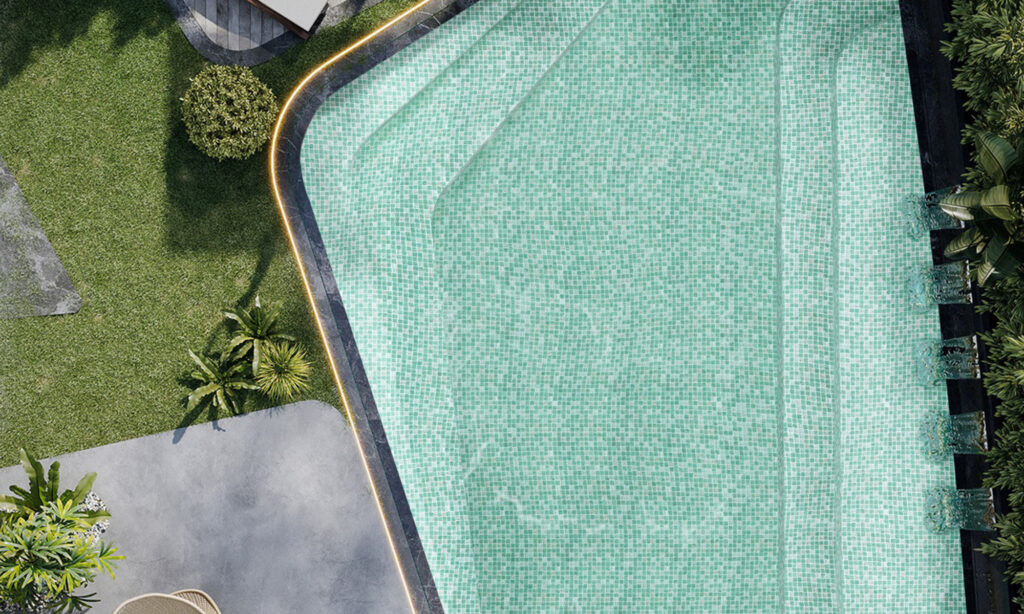
Green tones offer another direction for pools surrounded by trees, planting or natural materials.
Pale aqua-green shades can create a gentle transition between water and landscape. More pronounced greens bring additional colour into the architectural palette and can be explored alongside warm stone, timber and garden walls.
The relationship between blue and green is often subtle. Compare shortlisted samples beside the proposed coping and paving, rather than judging each colour in isolation.
JNJMosaic’s MXGR-009, for example, shows a green-toned square mosaic blend that provides a useful comparison with the blue palette.

White and Neutral Pool Mosaic Tiles
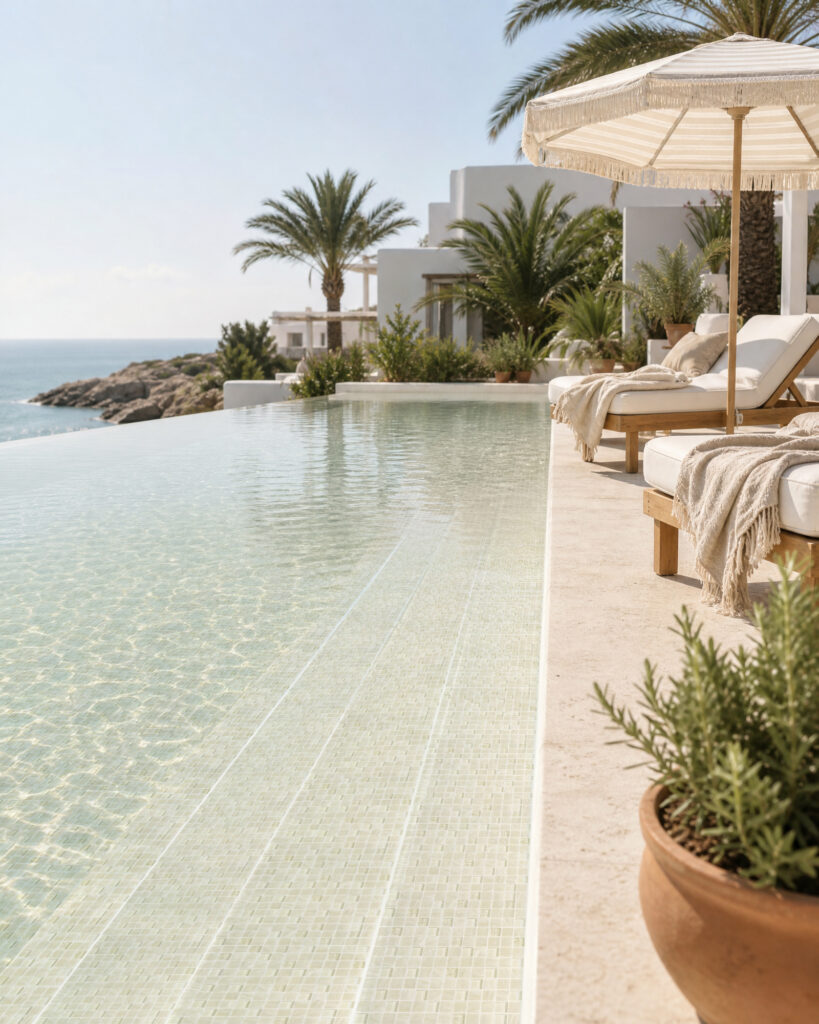
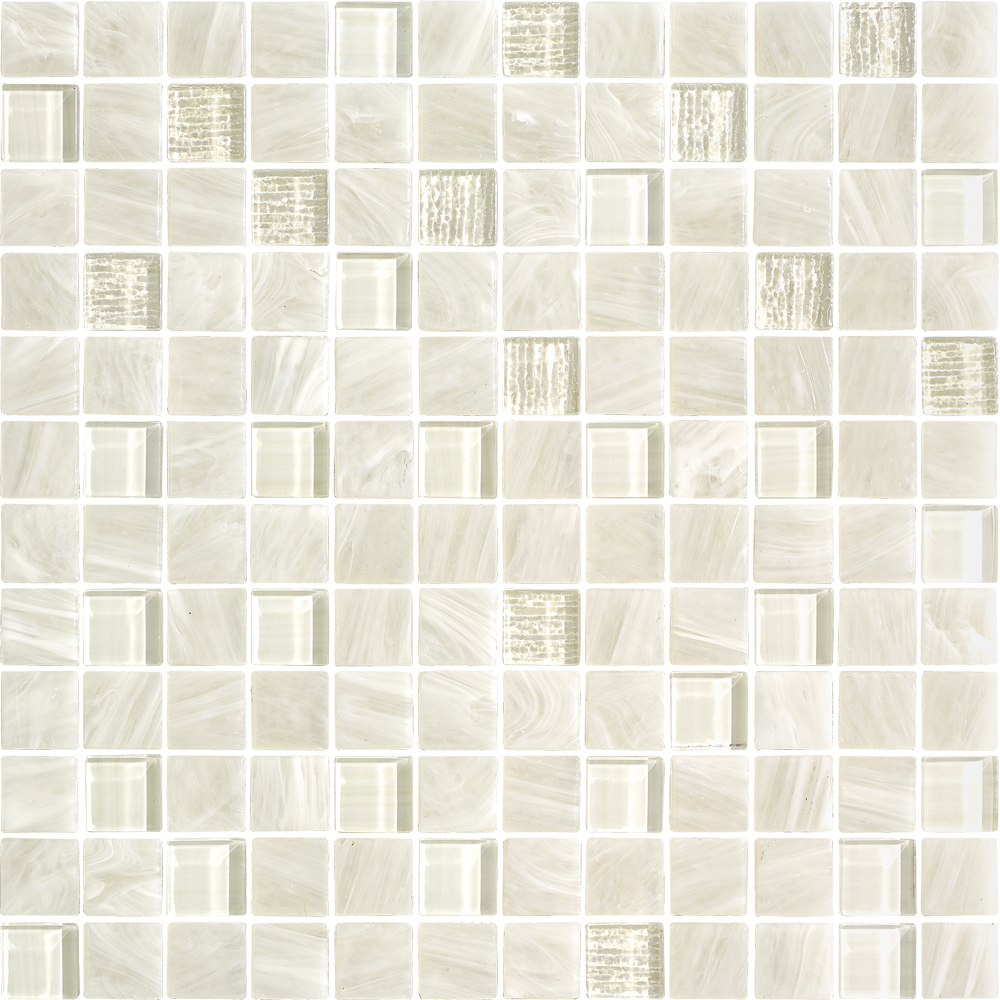
White, ivory and pale neutral mosaics create a quieter starting point.
These colours allow reflections, moving water and surrounding materials to become a larger part of the visual experience. They are worth exploring when the design calls for a restrained pool surface that sits comfortably within the wider architecture.
A light mosaic does not mean the filled pool will appear white. Its underwater appearance depends on the setting, so a dry sample or digital rendering should be treated as one part of the selection process.
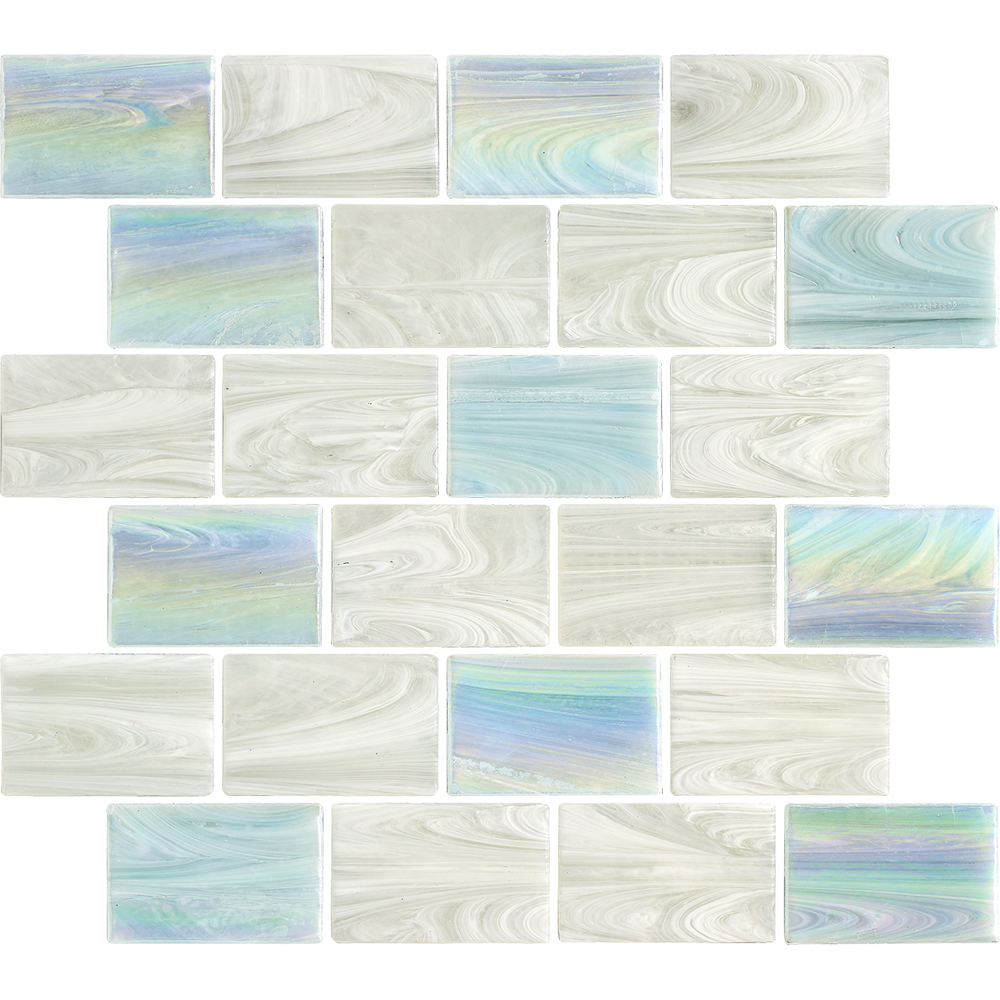
MXGR-008 illustrates a pale, neutral square mosaic, while MXGR-010 offers a light-toned rectangular composition.
Gradient Pool Mosaic Tiles
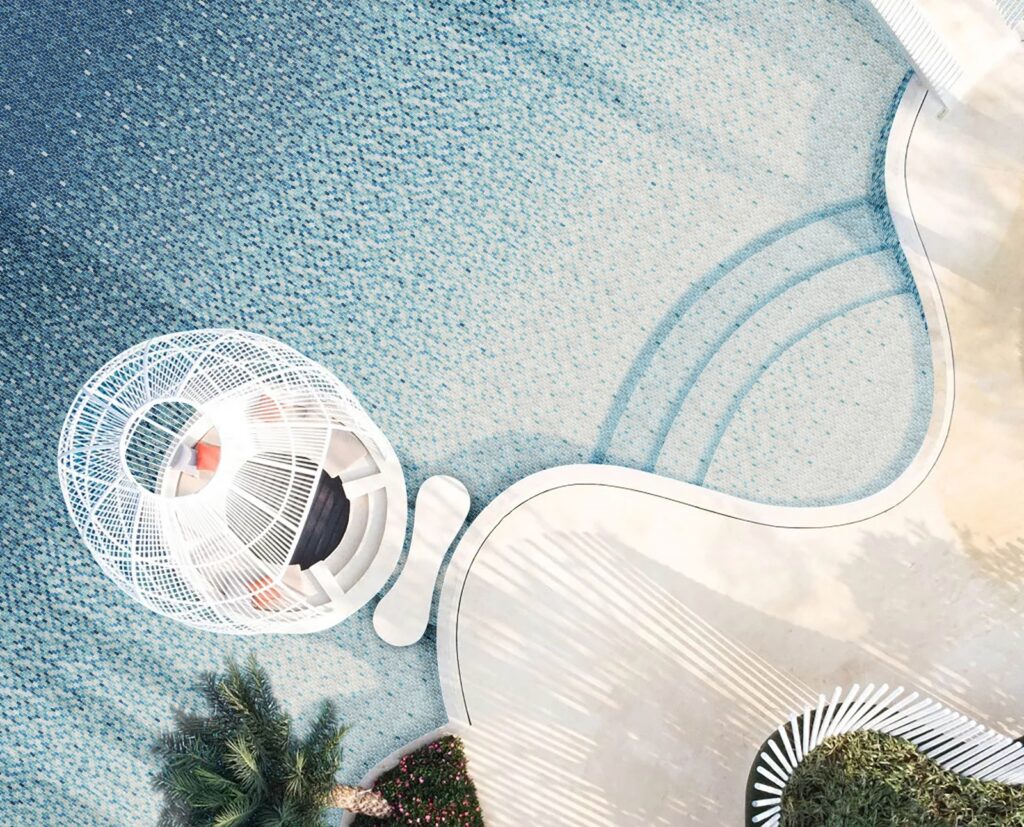
A gradient introduces an organised transition between shades.
The effect can be subtle, moving from pale tones into deeper colour, or more pronounced, with a clearly visible progression across the surface. It offers a design direction for projects that need more variation than a regular blend while maintaining a continuous visual field.
JNJMosaic’s MXGR-012, MXGR-013, MXGR-014 and MXGR-015 demonstrate different gradient compositions, including square and rectangular formats.
For a project using gradients, plan the direction and extent of the transition early. The arrangement should respond to the pool’s dimensions, steps, corners and main viewing positions.
Look Beyond Colour to Material and Format
Two mosaics with similar colours can produce different surfaces.
Transparency, texture, finish and the proportions of each piece all affect how a mosaic reads. A close-up reveals these qualities, while a wider application view helps explain how they work together.
The supplied JNJMosaic pool materials include Hot Melt, Crystal and Opal series. Compare individual products within these collections through a combination of tile details, application images and physical samples. A series name alone does not describe every finish or format within it.
Tile shape also changes the composition:
- Square mosaics establish a regular, compact grid.
- Rectangular mosaics introduce a stronger sense of direction.
- Mixed formats create a more varied surface rhythm.
Consider the viewing distance as well. A fine mosaic may appear almost continuous from a terrace, then reveal its individual pieces at the water’s edge.
For the final selection, review more than a single loose tile. A larger sample makes it easier to assess colour distribution, joints and the overall balance of the blend.
Choose Between a Regular Blend and a Custom Pattern
A regular mosaic blend allows colour and material to carry the design. It can be a suitable starting point when the pool’s shape, surroundings or view already provide a strong focal point.
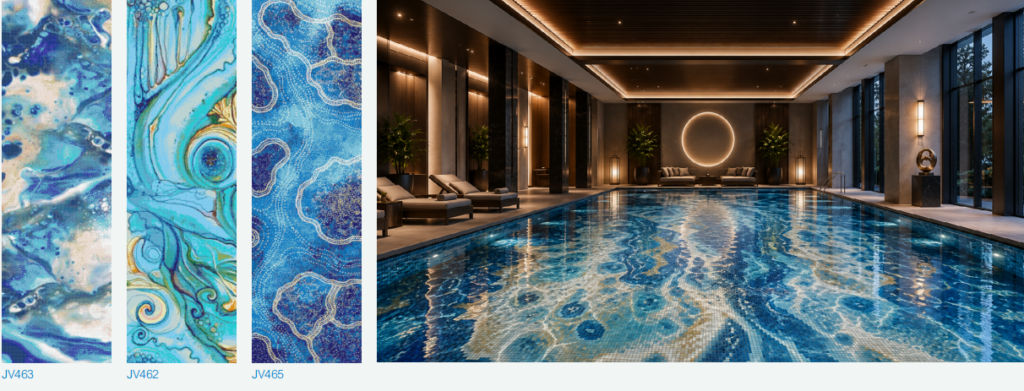
Custom pool mosaics introduce a more explicit visual composition. Flowing lines, geometric arrangements, botanical subjects and abstract patterns can give the pool a distinct identity.
The key question is how the artwork will be seen.
A pool viewed from upper floors may call for a composition that reads clearly from above. A smaller residential pool may benefit from a quieter pattern that remains comfortable at close range. Steps, fittings and changes in depth should be considered when positioning the artwork.
For custom designs, share the pool plan together with reference images. This helps establish the scale, orientation and relationship between the pattern and the pool’s actual geometry.
Explore the broader design possibilities through JNJMosaic’s Pool & Spa Mosaic Solutions.
Review Pool Mosaic Tiles as Part of an Installation System
Appearance is one part of the specification. The selected tile, sheet mounting and setting materials must also work together for the intended application.
For submerged glass mosaics, mounting requires particular attention. Backing materials or mounting adhesives can affect the bond between the tile and setting mortar, so the proposed combination should be checked with the relevant manufacturers.
Ask the supplier and installation team to review:
- Suitability of the selected product for the intended pool area.
- The proposed sheet mounting method.
- Compatibility with the specified installation materials.
- Details around steps, corners, fittings and transitions.
- The approved layout for blends, gradients or custom artwork.
This review is especially useful when a project combines several mosaic formats or finishes. Resolve these details alongside the design, before the material order is finalised.
Build a Clear Project Brief
A useful enquiry gives the supplier enough information to connect the design direction with the project’s practical requirements.
Include the following where available:
| Information | What to share |
|---|---|
| Project type | Hotel, private residence, rooftop pool, spa or other setting |
| Project location | Country and city |
| Pool drawings | Plans, sections, dimensions and depth changes |
| Tiled areas | Pool floor, walls, waterline, steps and associated areas |
| Design direction | Preferred colours, product codes and reference images |
| Scope | Regular mosaic, gradient arrangement or custom artwork |
| Programme | Expected material requirement date |
Clearly identify which areas are included. Pool floor dimensions alone do not describe the full tiled surface when walls, steps and other features form part of the scope.
If the design is still developing, a rough plan and a small selection of references can provide a practical starting point.
Find the Right Mosaic Direction for Your Pool
The most useful starting point is the relationship between water, architecture and landscape.
Choose a colour direction, compare material and format, then review how the surface will work across the actual pool. A blue blend, a pale neutral palette and a custom composition each offer a different way to shape the space.
Browse JNJMosaic’s Pool & Spa Mosaic Collection, or send your drawings, preferred colours and project location to project@jnjmosaic.com to discuss suitable options.
FAQs
What colour pool mosaic tiles should I choose?
Start with the surrounding architecture and the atmosphere you want to create. Blue, green and pale neutral palettes offer different design directions. Compare physical samples alongside the proposed pool edge and paving before making the final choice.
Will pool mosaic tiles look the same underwater?
Their appearance can change with water depth, lighting, reflections and viewing angle. Use application images for inspiration, then assess samples under conditions relevant to the project.
Can I use a custom mosaic pattern in a swimming pool?
A custom design can be developed around the pool’s dimensions and intended viewing positions. Provide drawings and reference images so the pattern’s scale, placement and material selection can be reviewed together.
Is every glass mosaic suitable for a pool?
Suitability should be confirmed for the specific product and installation system. Check the intended application, mounting method and compatible setting materials before specifying it.