CERSAIE 2026 has ended, but many of the conversations that began in Bologna are now moving into their next stage—from material selection and sample development to quotations and custom visualizations.
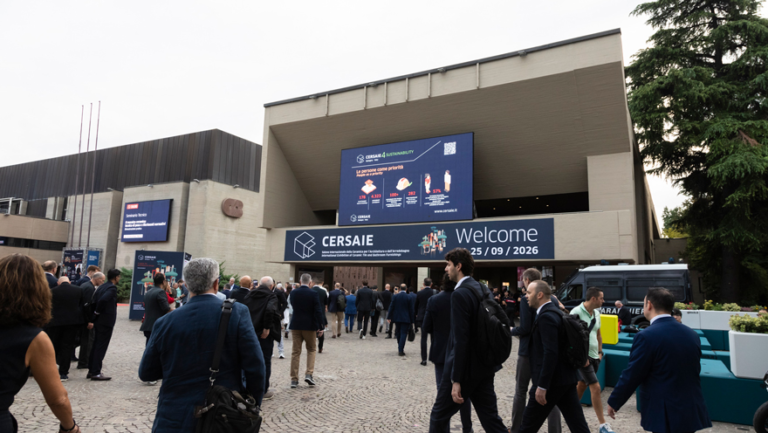
Held at BolognaFiere from September 21 to 25, the 43rd edition occupied 16 halls and 145,000 square meters. It brought together 595 exhibitors, including 233 international companies from 24 countries, and recorded 92,352 visitors. International attendance reached 44,500, representing 48.2% of the total, according to the official final figures published by Confindustria Ceramica.
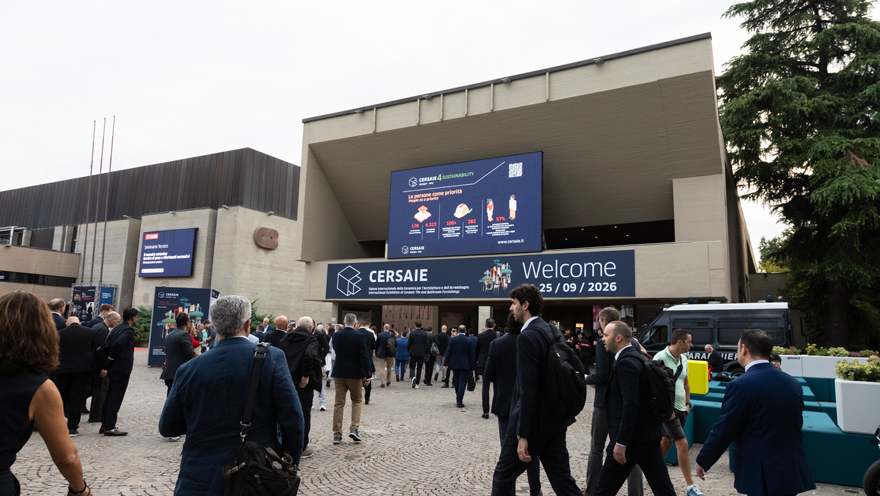
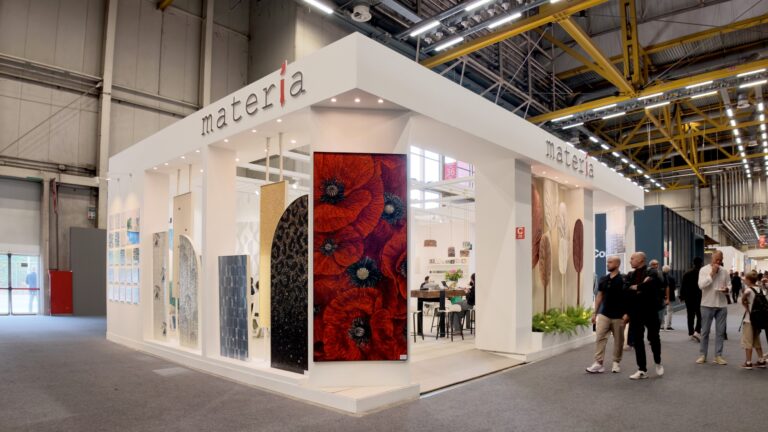
For JNJMosaic, the value of the exhibition was not only the opportunity to present new surfaces and artistic works. It was also the chance to observe what designers, architects, distributors, contractors and developers needed to know before moving a mosaic from visual inspiration into a real project.
Across conversations at the JNJMosaic booth, several priorities appeared repeatedly: material and price, minimum order quantity, logistics, installation, and the relationship between a sample and its eventual application. Together, these questions reveal where the mosaic conversation is heading after Bologna.
Art Attracted Attention; Project Questions Came Next
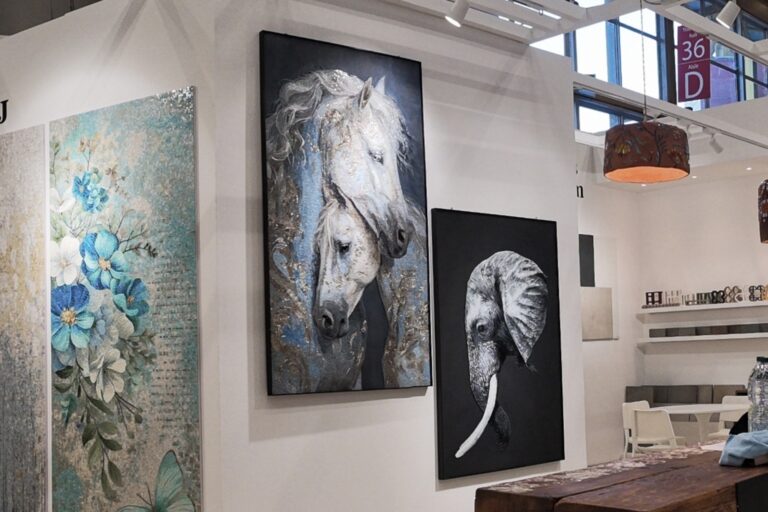
Large artistic mosaics gave visitors an immediate way to experience the expressive potential of the material. Two works discussed frequently were Sacred Connection, depicting a mare and foal, and Silent Strength, built around the restrained monochrome presence of an elephant.
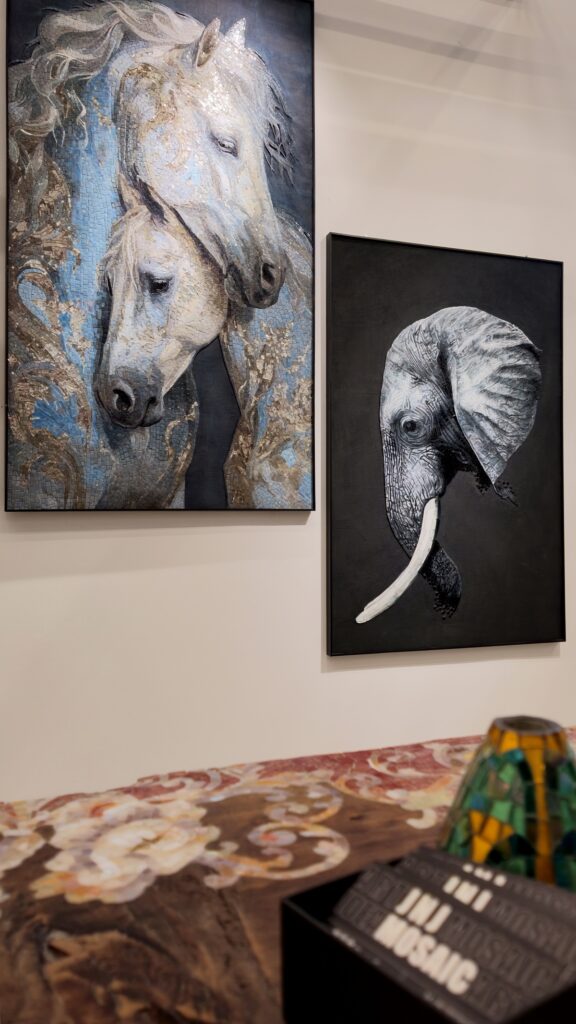
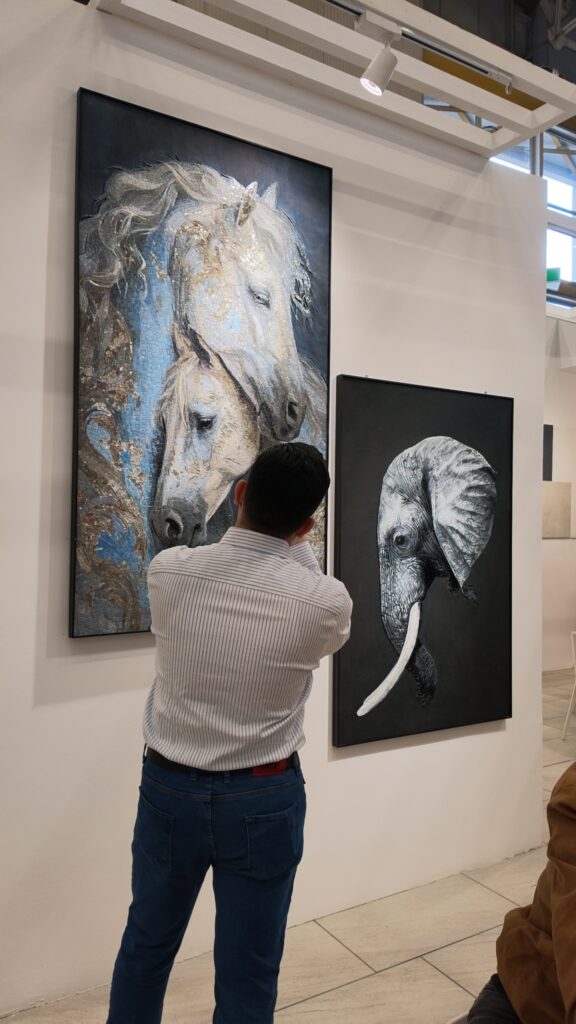
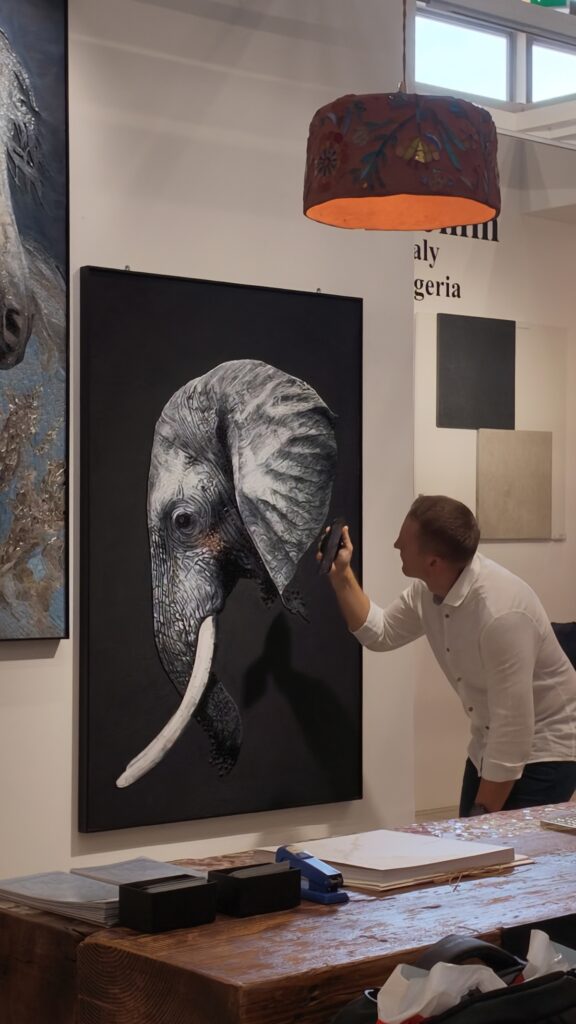
Their impact came from more than subject matter. Visitors could approach the works closely and see how individual pieces, tonal transitions, reflective details and changes of texture formed a complete image. From a distance, each work read as a strong composition; from nearby, it became a study in material, assembly and light.
The artistic panels also led to practical questions. Visitors wanted to understand what the works were made from, how a cut and assembled mosaic artwork would be installed, and what its price and delivery requirements might be. This progression—from visual interest to technical discussion—is important. A successful custom mosaic must work both as an image and as a buildable surface.
JNJMosaic approaches this transition through material selection, digital image translation, sample development, fabrication and project coordination. For a bespoke artwork, design intent must eventually be translated into manageable sections, a clear assembly logic and information that supports installation on site.
Which Materials Were Examined Most Closely?
Alongside the artwork, visitors repeatedly handled and discussed modular samples. The attention was not limited to one finish or shape; it centered on products that combined a clear geometric format with visible relief, texture or compositional flexibility.
Among the pressed mosaic samples receiving closer attention were:
- 48 × 148 mm white relief pieces;
- three-dimensional rectangular pressed pieces;
- 100 × 100 mm flat pressed pieces;
- narrow 15 × 148 mm formats;
- 73 × 100 mm pieces with cross and herringbone-inspired textures;
- small-format mosaics for swimming-pool applications.
Visitors also examined second-generation mini glass-ceramic formats, particularly elongated pieces, cross-shaped modules, fan shapes and herringbone arrangements.
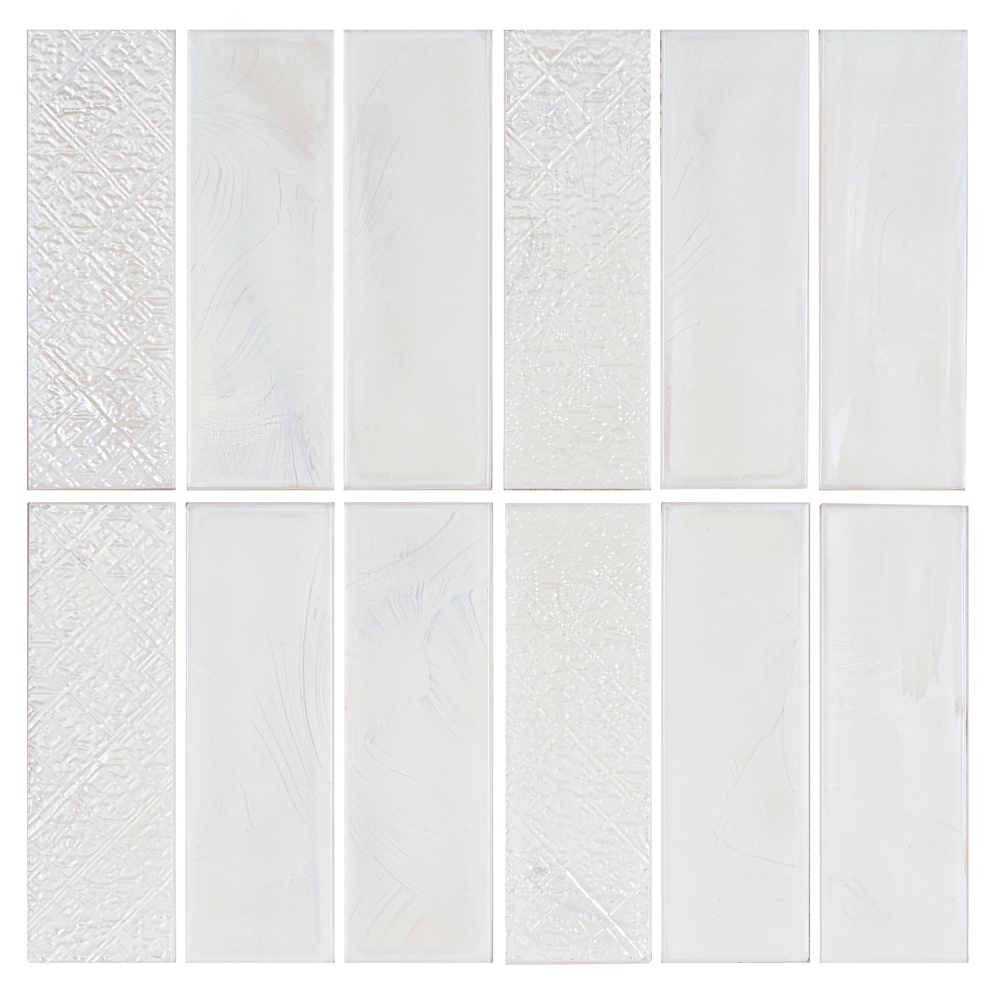
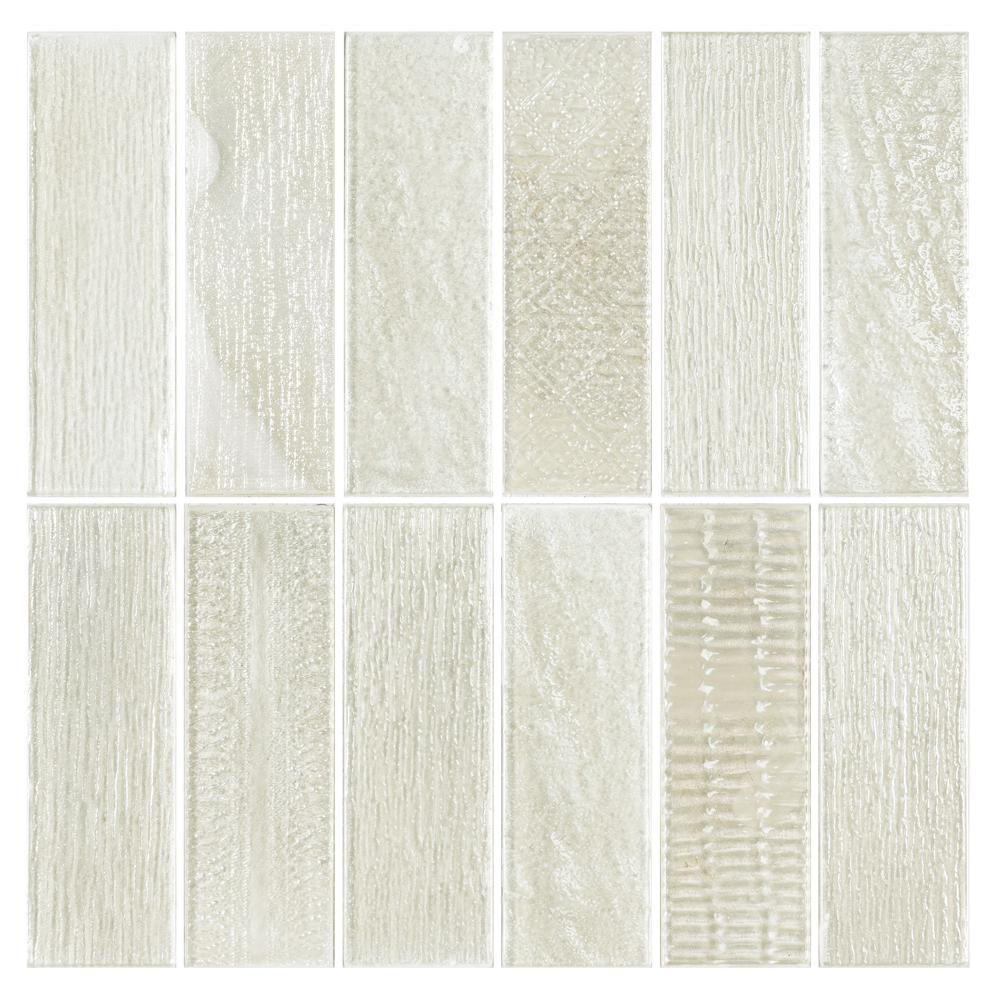
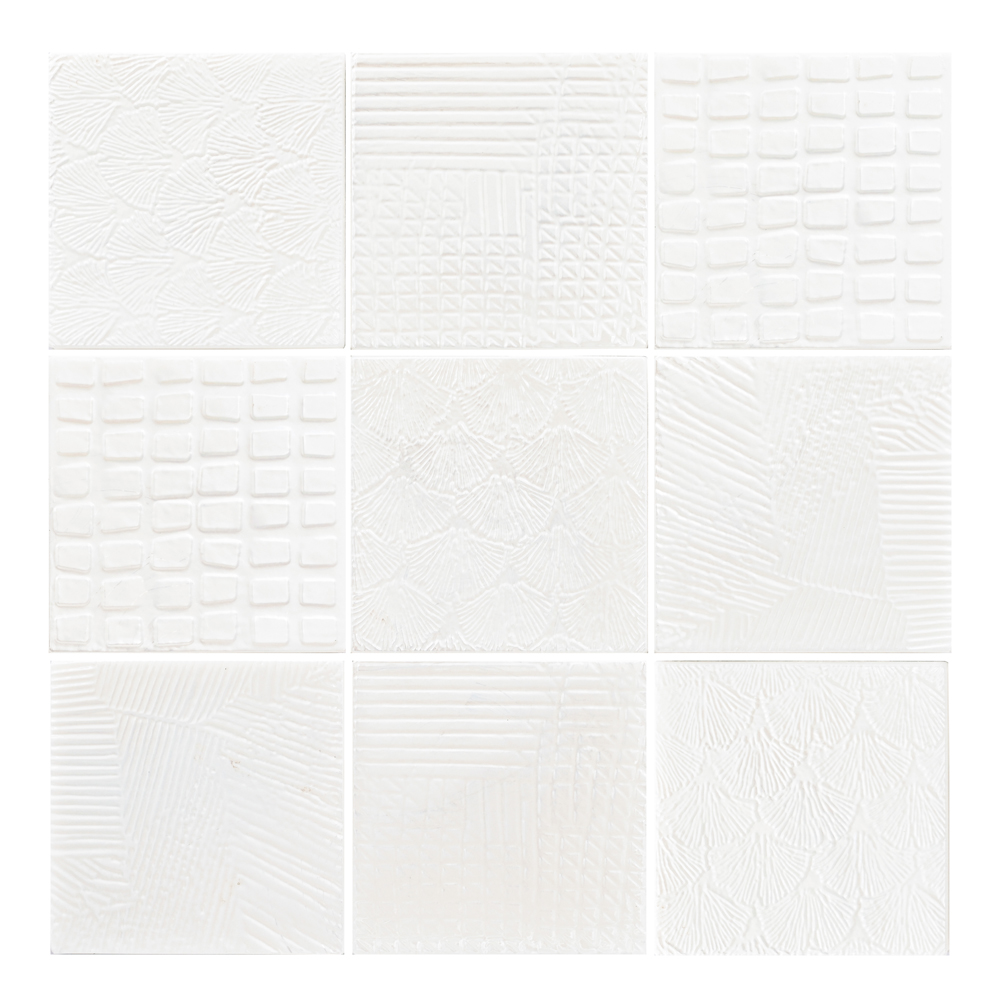
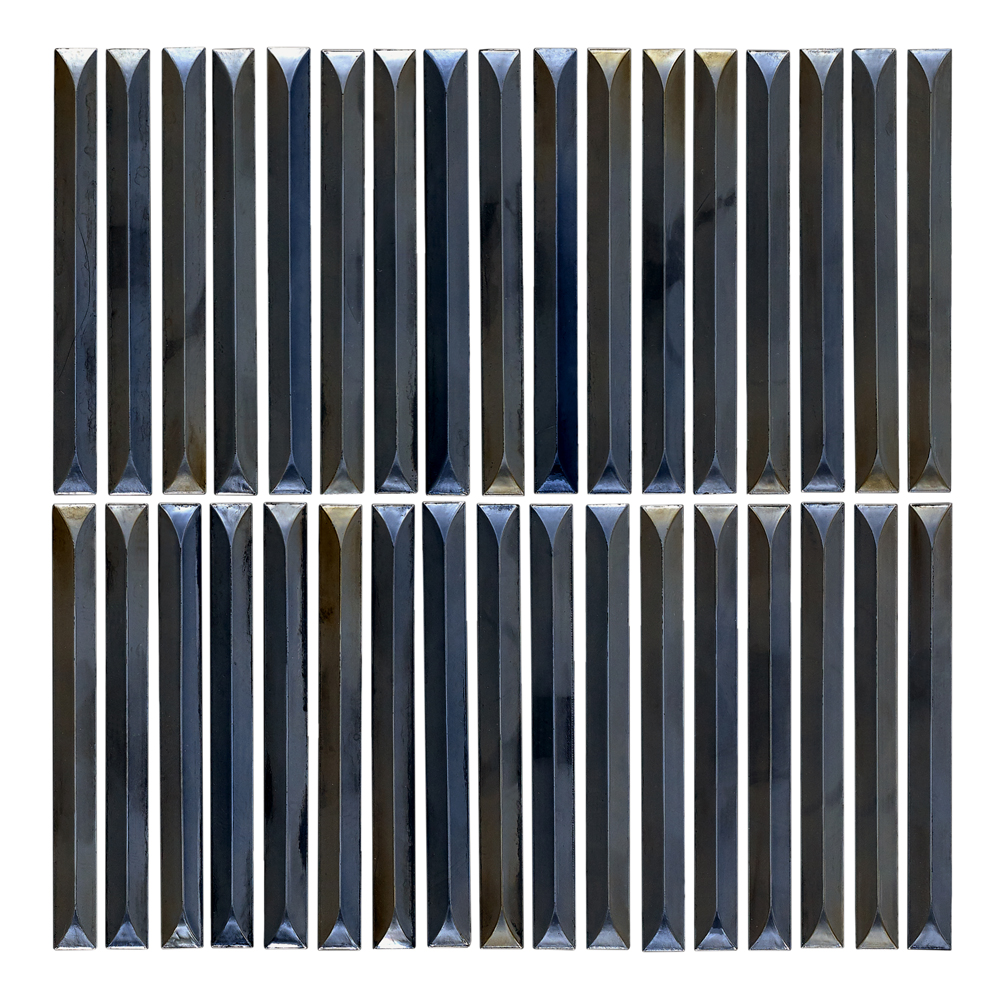
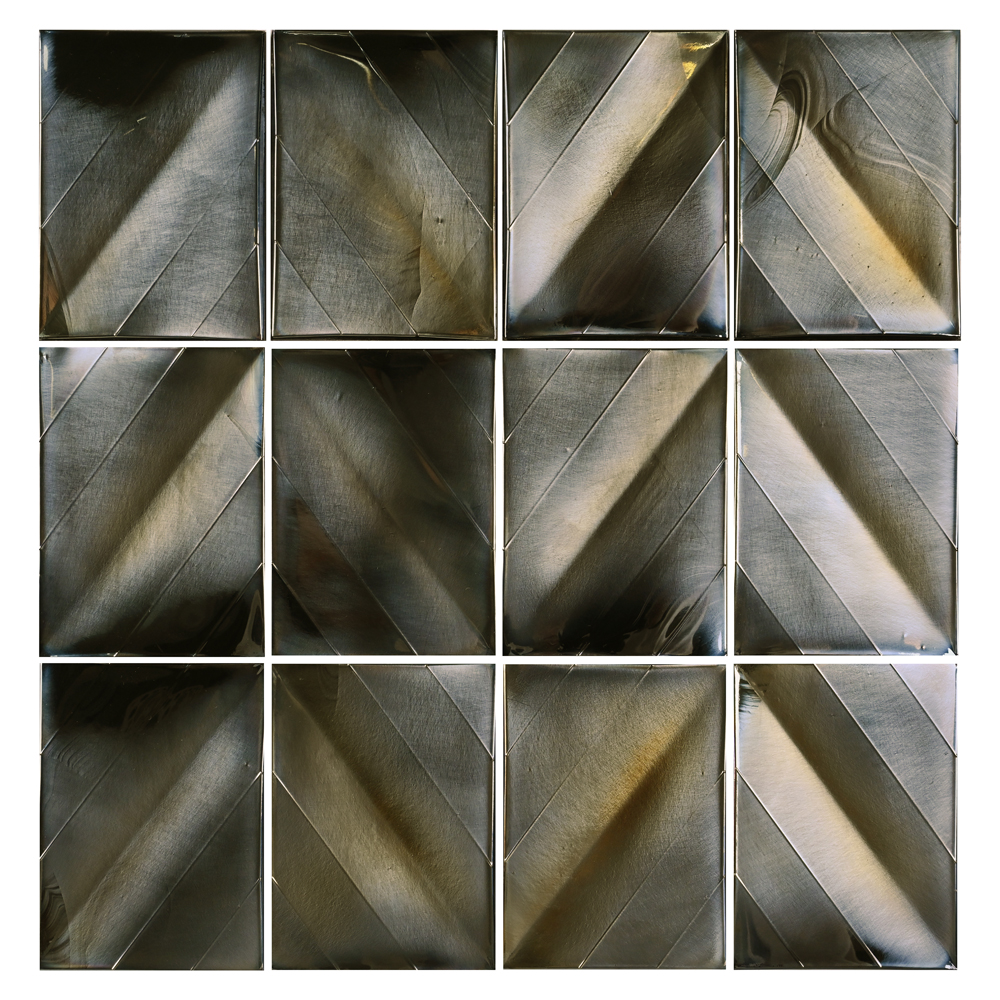
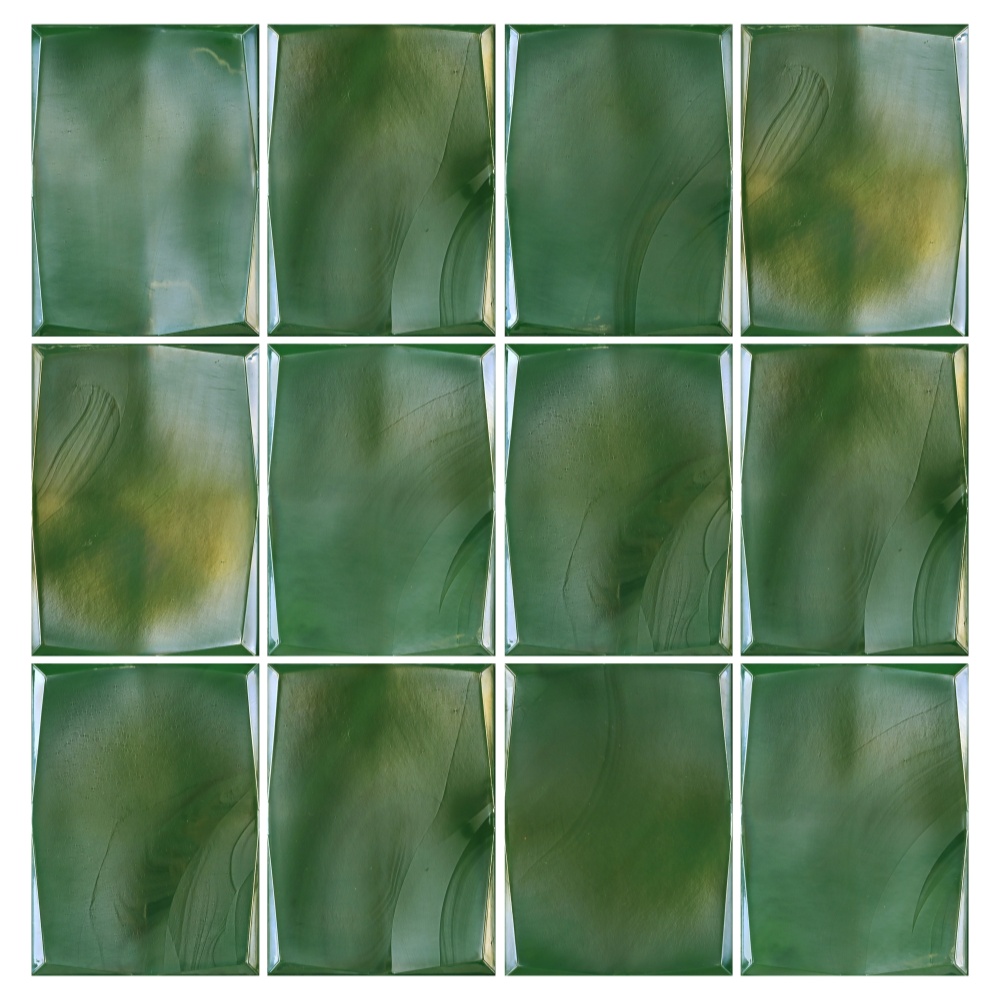
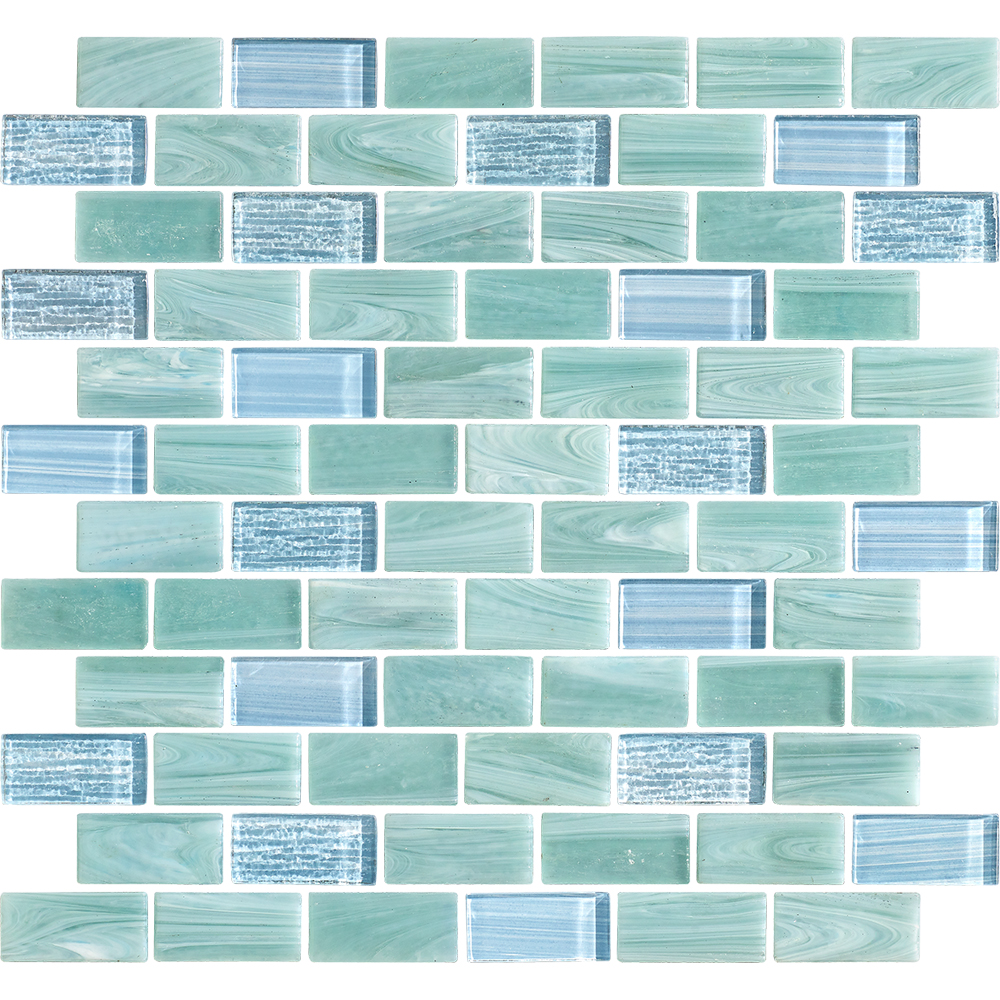
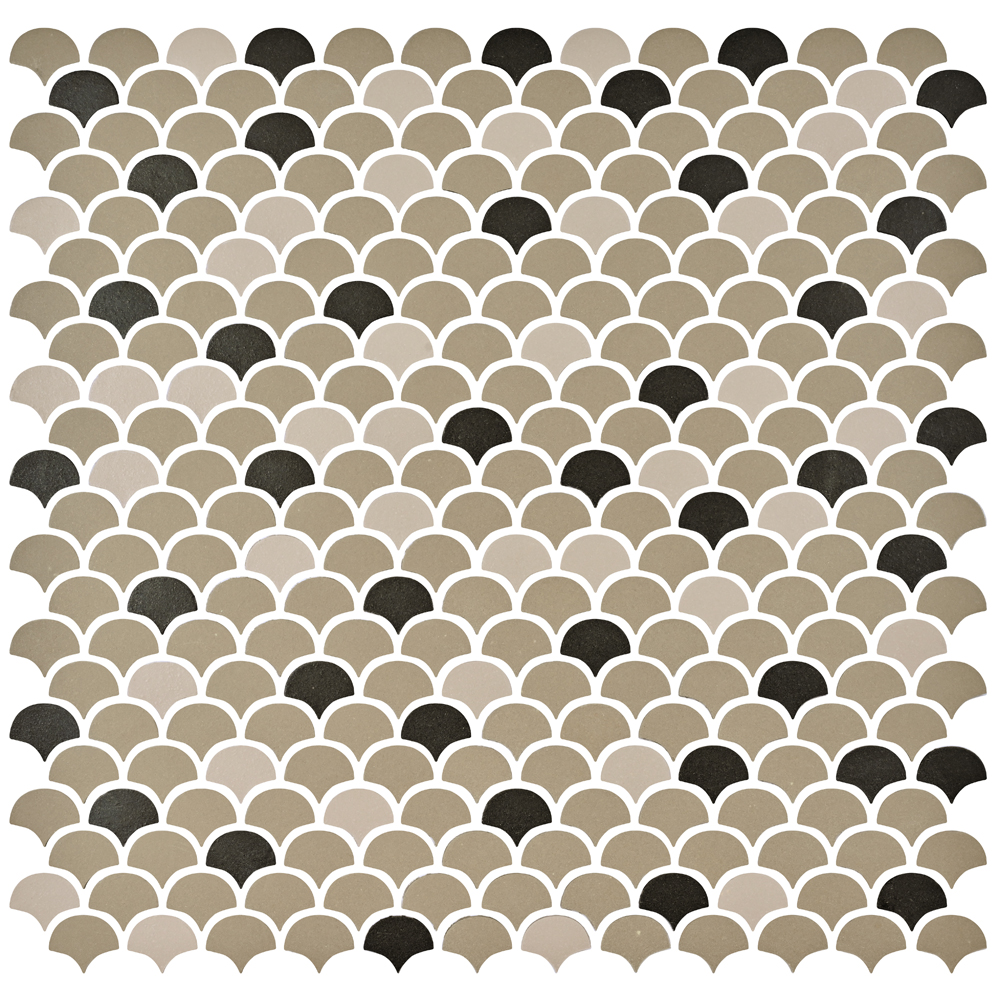
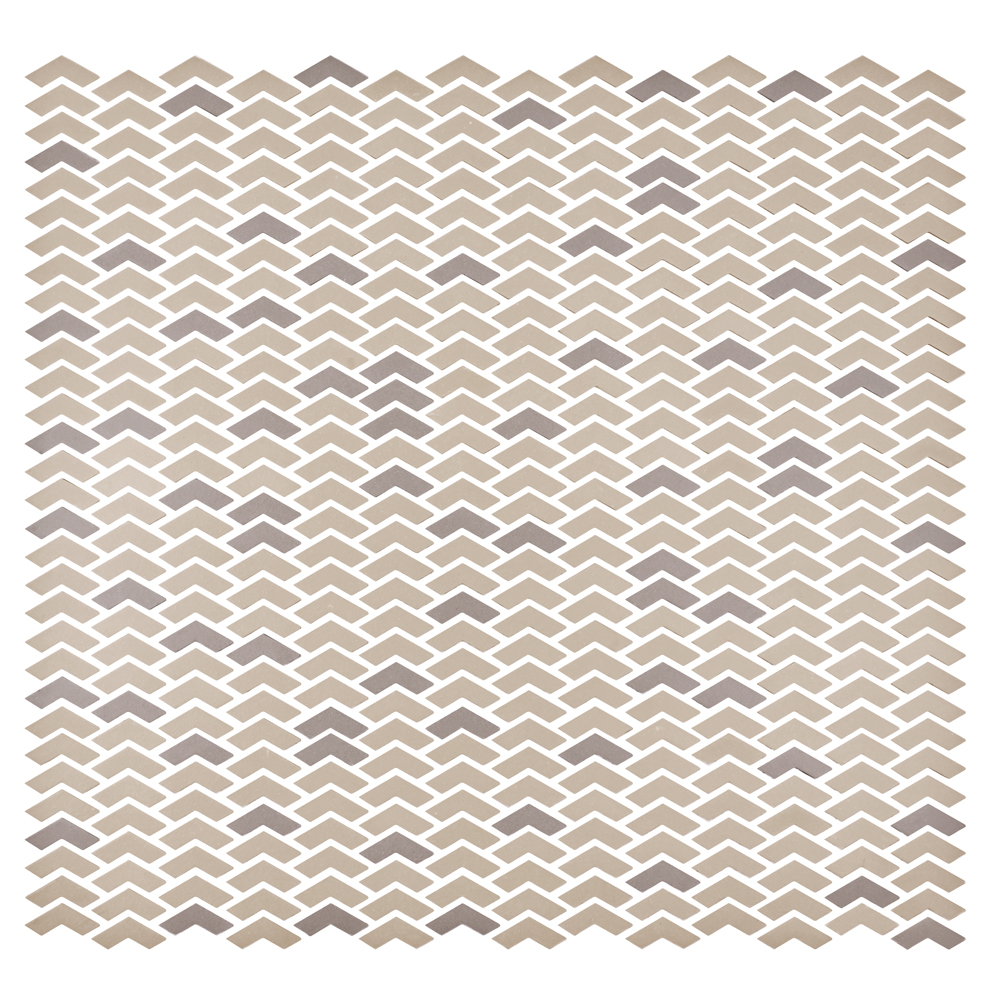
These preferences point toward a wider design direction. Architects and interior designers are looking beyond color alone. They are comparing scale, relief, joint rhythm, reflectivity and the way repeated modules behave across a larger area. A sample may be compact, but it allows the designer to assess how a surface could establish movement, structure or atmosphere within a room.
This interest also reflects one of the broader signals from CERSAIE 2026: small and modular formats continue to have an important role alongside large architectural surfaces. Their value lies in adaptability. They can respond to curved forms, wet environments, focal walls and detailed transitions in ways that a single large slab cannot.
The Intended Spaces Were Already Taking Shape
The conversations were not purely exploratory. Visitors connected the materials to recognizable project settings, including swimming pools, hotel lobbies, living rooms, private residences and showroom displays.
Each application places different demands on mosaic.
In a hotel lobby, the surface may need to establish identity at architectural scale and remain visually legible from multiple viewing distances. In a living room or private residence, color, reflectivity and texture must work with furniture and changing daylight. In a swimming pool, the perception of color is transformed by water, depth, movement and underwater illumination. A showroom sample must communicate enough of the product’s character to support future specification.
The range of visitors reflected these different priorities. JNJMosaic met interior designers, architects, distributors, hotel and residential contractors, and smaller real-estate developers. Some approached the booth through an artistic work; others began by comparing modular samples. In both cases, the discussion increasingly moved toward how the material would function in a defined space.
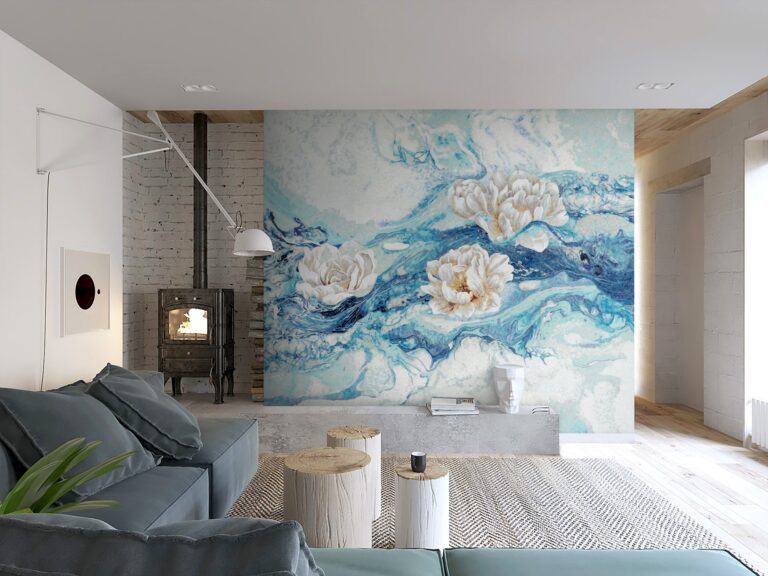
That is why JNJMosaic presents mosaic not simply as a decorative product, but as a project material whose palette, scale, finish and pattern can be coordinated with the architecture around it.
From Material Selection to Project Planning
The questions asked most consistently at the booth were highly practical:
- What is the material?
- What is the price?
- Is there a minimum order quantity?
- Would the order ship from China, or is collection in Europe possible?
- Does JNJMosaic have an agent or warehouse in Europe?
- What transport costs and import duties should be considered?
- How is a custom cut mosaic artwork installed?
These questions are not separate from design. They are part of specification.
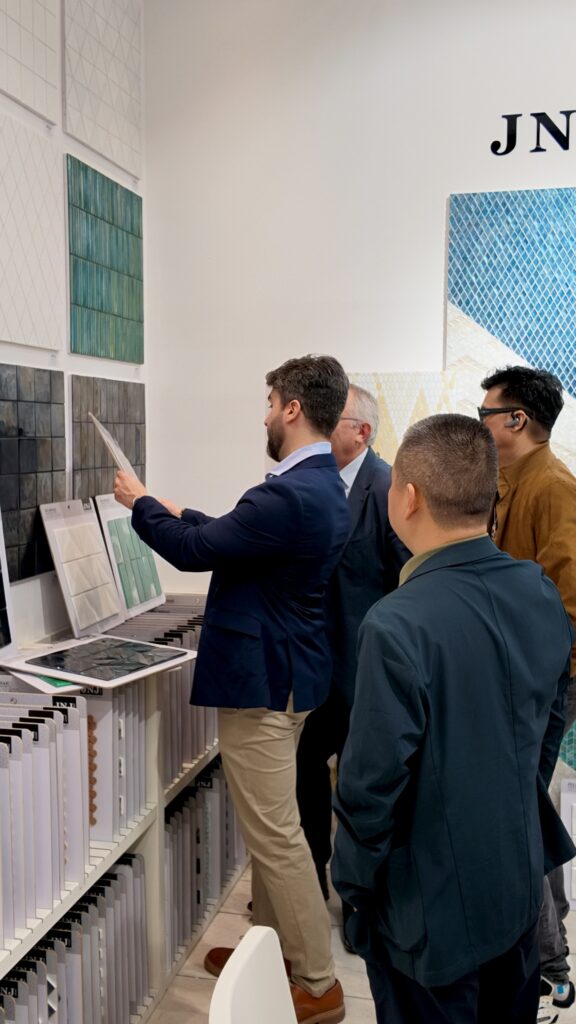
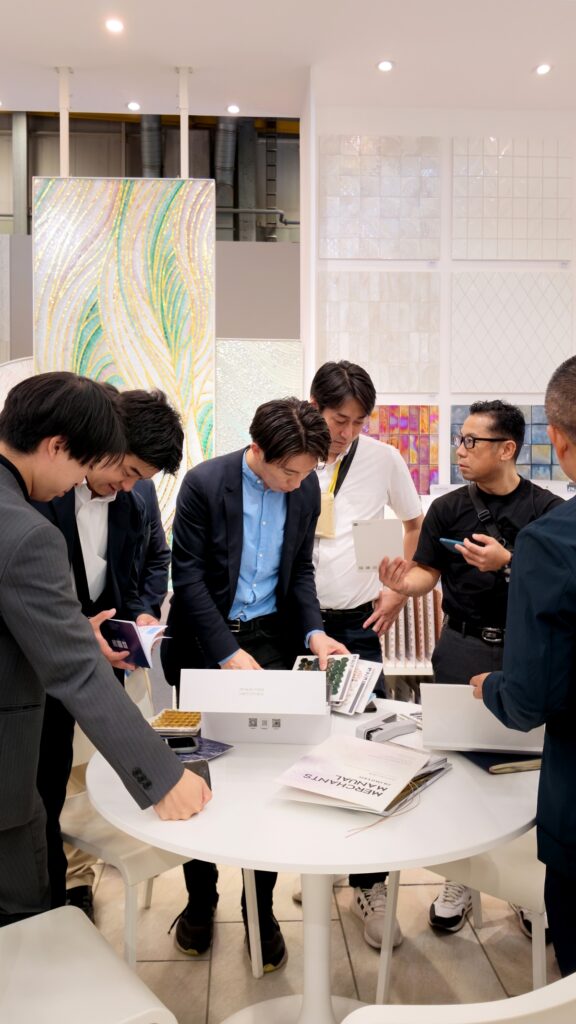
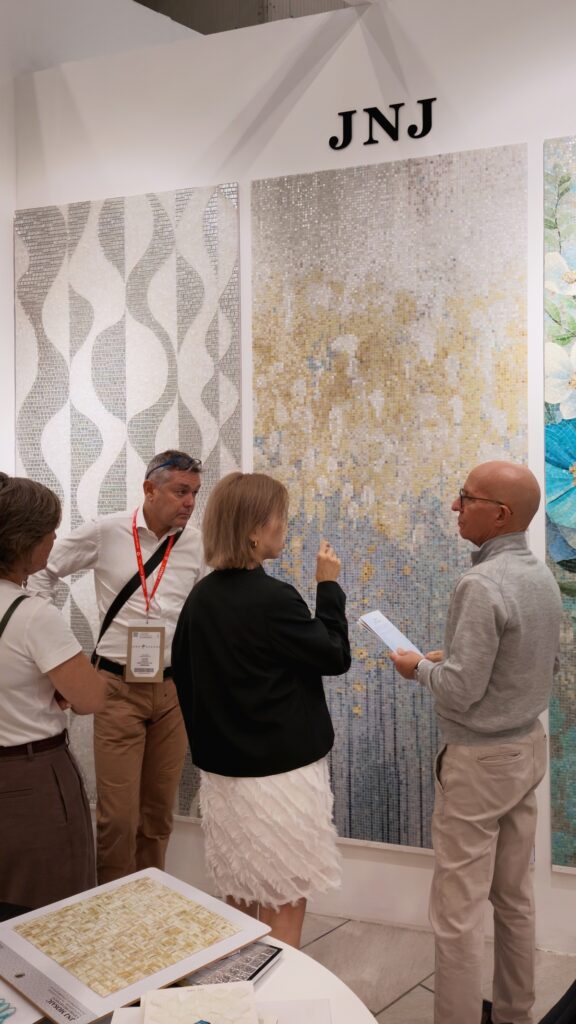
For international projects, the product price is only one part of the decision. Order quantity, packaging, transport route, import requirements, installation preparation and project timing all affect whether a selected material is suitable. The appropriate answer may also differ between a standard modular mosaic, a sample order and a large custom artwork.
JNJMosaic therefore reviews project requirements individually. Product type, quantity, destination and customization level need to be established before accurate commercial and logistics information can be prepared. Where import duties are concerned, requirements depend on the destination and should be confirmed for the specific shipment rather than presented as a universal rate.
The recurring questions heard in Bologna suggest that clear project information is becoming just as important as an inspiring product presentation. Designers and buyers need a path from sample to quotation, and from quotation to delivery and installation.
Installation Is Part of the Design Decision
Custom cut mosaics were among the products visitors liked most, but installation and construction cost were also common concerns.
That response is understandable. An artistic mosaic contains far more visual information than a standard repeating sheet. The final result depends not only on the quality of the artwork, but also on how it is divided, labeled, packed, positioned and installed. The substrate, alignment between sections, adhesive and grout selection, site conditions and installation sequence can all influence the finished surface.
For this reason, installation should be considered early rather than after the artwork has already been produced. Dimensions, viewing distance, wall condition and access to the installation area can inform how the design is scaled and prepared. Clear section mapping and installation guidance help the contractor understand how the individual parts reconstruct the full composition.
This is where a mosaic supplier’s role can extend beyond manufacturing. JNJMosaic’s custom mosaic craftsmanship and manufacturing service includes design analysis, prototype and sample confirmation, production control and installation support. The objective is to preserve the visual intention while making the work practical to deliver and assemble.
Color Signals Worth Following After Bologna
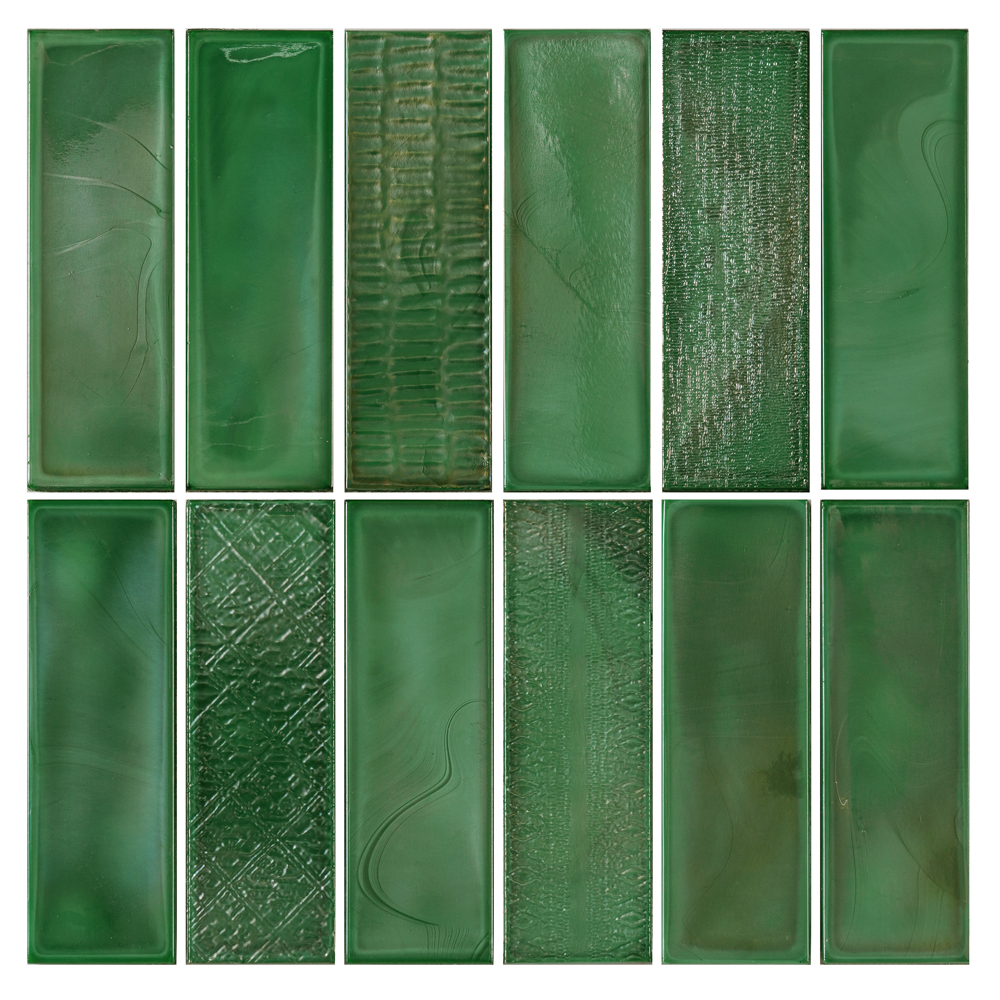
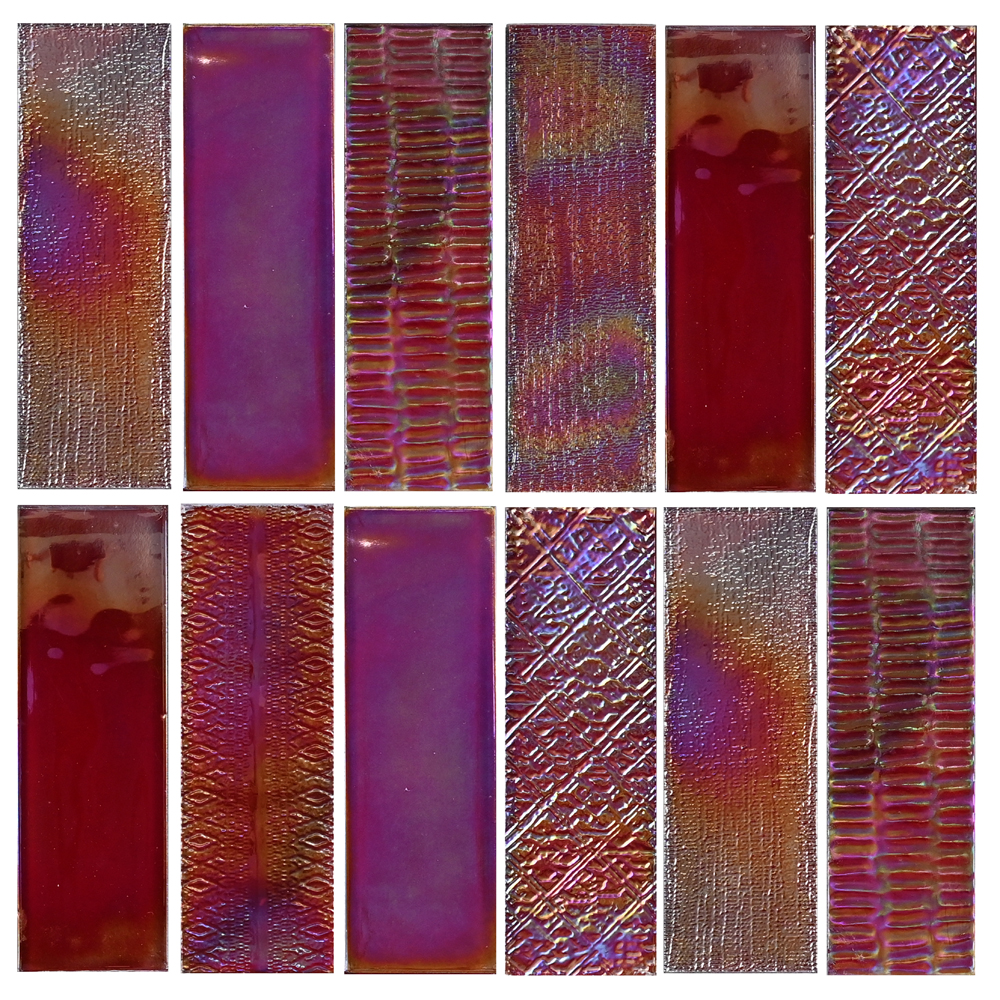
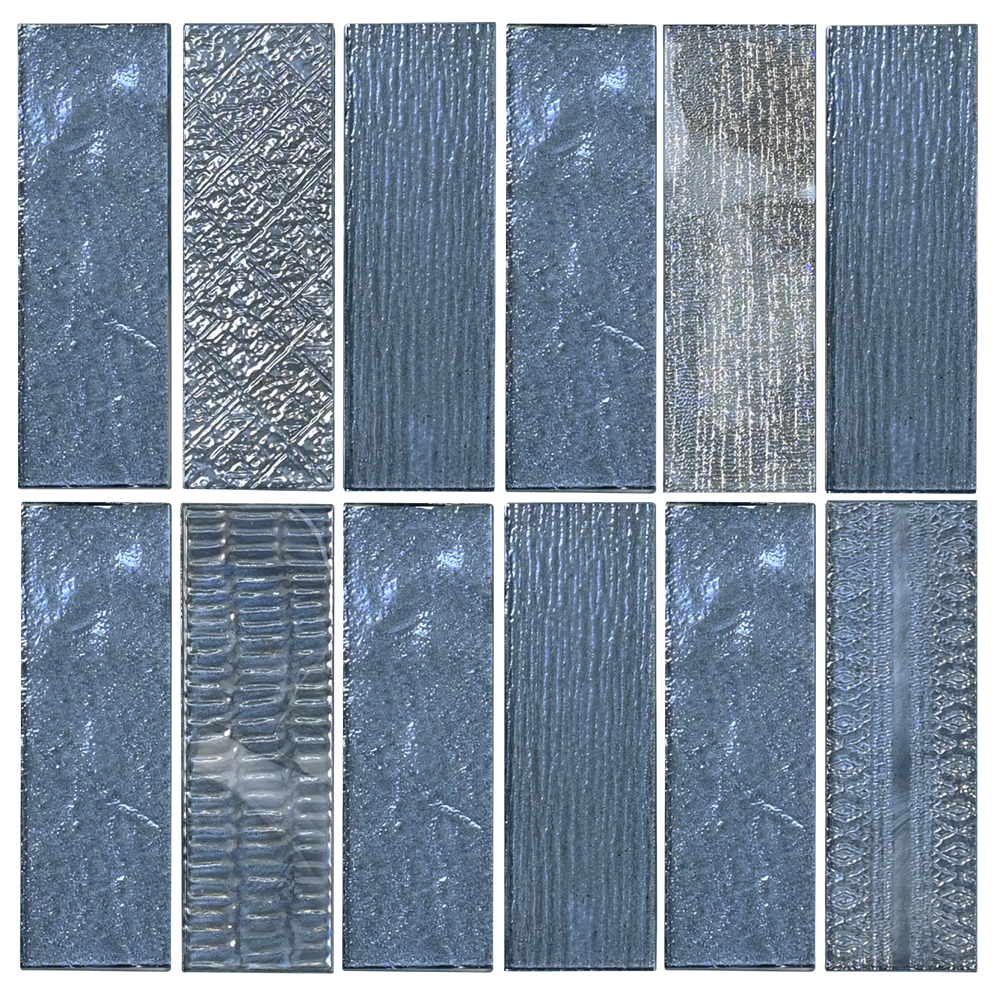
Although no unusual dimensions or new material combinations were formally requested at the booth, visitors did identify several colors they are currently looking for: burgundy, dark green, olive green and deep blue.
These requests closely reflected the wider color direction reported across CERSAIE 2026. Living Corriere observed warm earth colors, botanical greens, dusty blues and deeper cobalt tones throughout the exhibition. It also noted that color was increasingly inseparable from surface, light and texture: the same hue could change character according to its finish and relief.
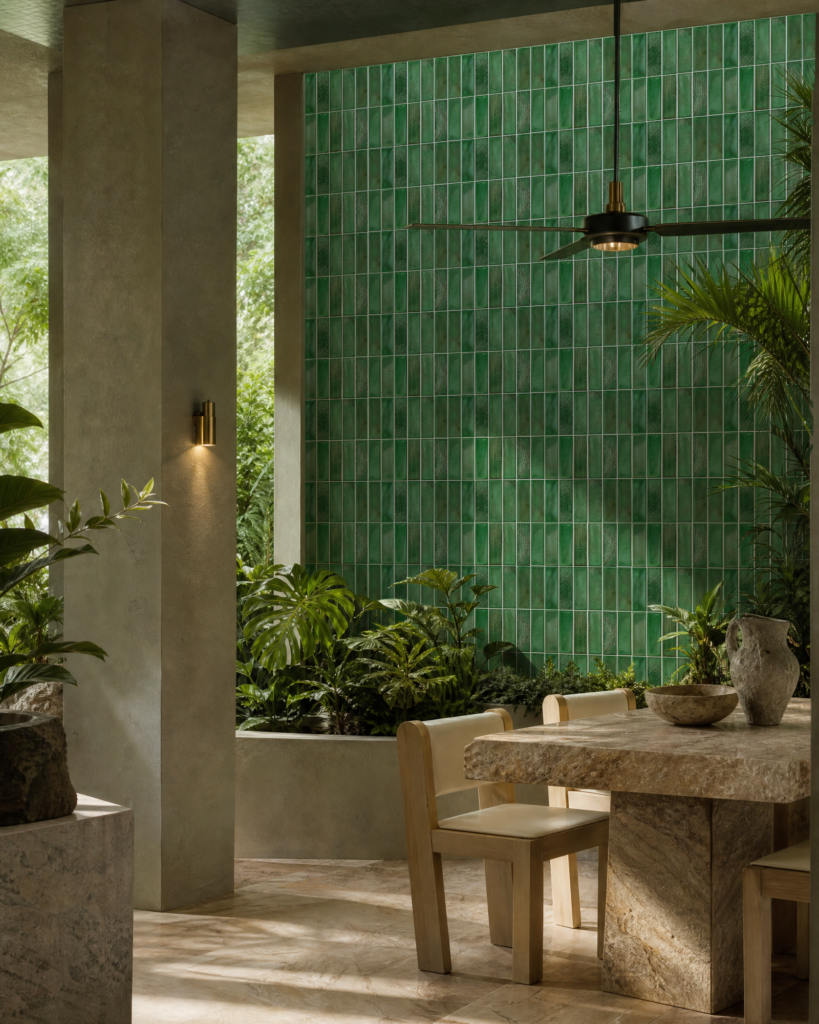
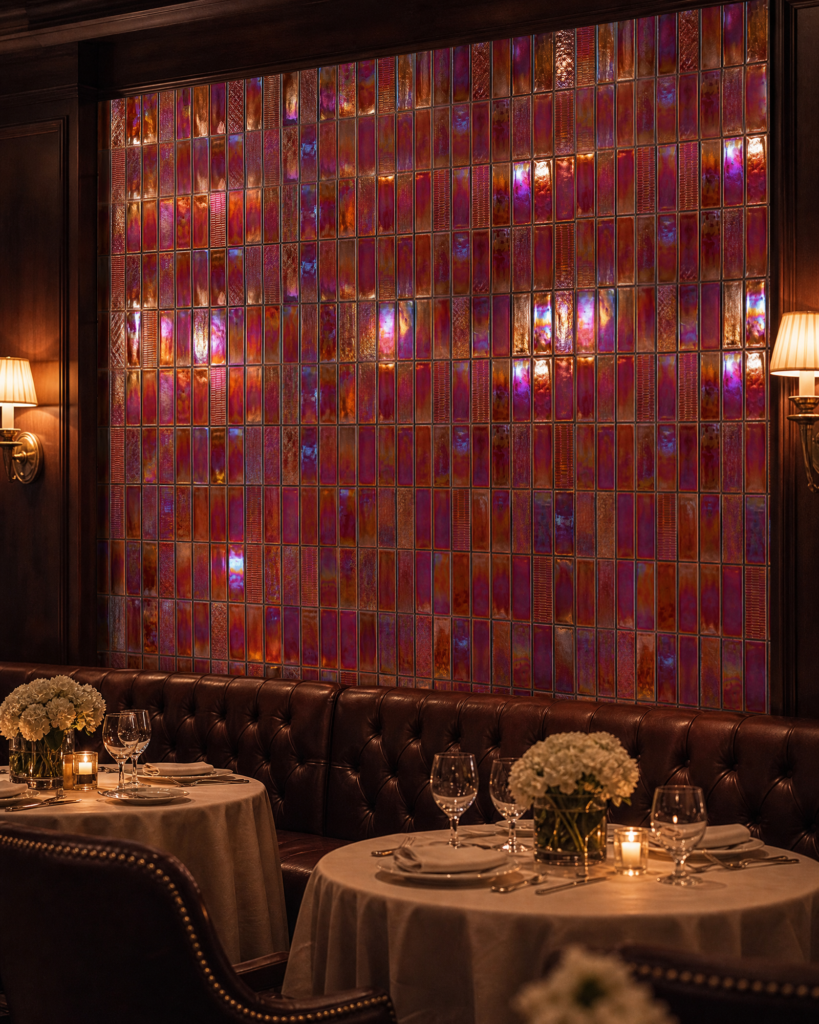
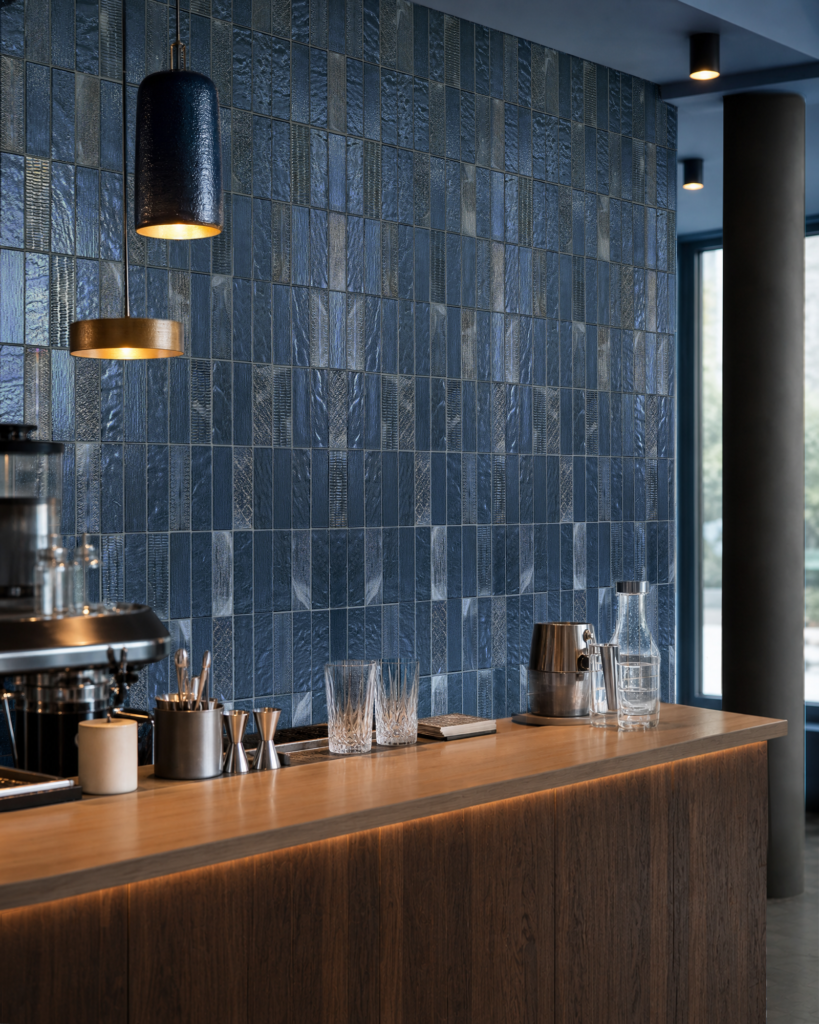
For mosaic, this relationship is especially visible. A dark green expressed through a flat, low-reflection surface creates a different atmosphere from the same green used with relief, transparency or silvered highlights. Deep blue can feel architectural on a textured wall, immersive underwater, or luminous when combined with pearlescent and transparent layers. Burgundy may function as a concentrated accent or as part of a more dramatic full-field composition.
JNJMosaic’s CERSAIE material presentation included examples that connect directly with this direction. MXHR-027 brings deep botanical green into an elongated format, combining varied textures and tonal movement to create an immersive, nature-connected surface. MXHR-037 layers burgundy, wine red, copper and violet tones, gaining greater depth and warmth under ambient lighting.
MXSLR-003 interprets deep blue through elongated textured pieces, pearlescent effects and cool silver-toned highlights. Together, these surfaces demonstrate that mosaic color is shaped not only by pigment, but also by format, texture, reflection and its relationship with light.
The lesson from Bologna is not that one shade will dominate every project. It is that color is increasingly being specified together with material character. Designers are asking not only “Which color?” but also “How will this color behave on the surface and in the space?”
What Is Moving Forward After CERSAIE?
The end of the exhibition marked the beginning of follow-up work. Current next steps arising from the event include preparing quotations, producing sample boards, developing custom pattern visualizations, revising project renderings and drafting contracts.
One follow-up involves samples and revised visualizations for an Indian customer’s showroom display. Other conversations are progressing through pricing, sample confirmation and custom artwork development. These are different stages, but they share the same purpose: turning an initial encounter with a material or image into information that can be evaluated for a real project.
This process also reinforces the role of samples. A sample is not simply a sales object. It allows the designer, buyer and contractor to examine actual color, relief, joint scale and reflectivity before committing to a larger surface. For custom work, a visualization and sample can help align aesthetic expectations with production and installation requirements.
The Conversation Continues Beyond the Exhibition
CERSAIE 2026 confirmed that mosaic continues to operate across two complementary scales. It can create immediate emotional impact through artistic imagery, and it can provide adaptable architectural surfaces through modular formats, texture and color.
What visitors wanted to explore next was the connection between those possibilities and project reality. They wanted to understand materials, costs, quantities, transport and installation. They considered applications ranging from pools and private living spaces to hotel lobbies and showrooms. They looked closely at relief, small formats, deep greens and blues, and works that changed with light.
For JNJMosaic, these conversations are valuable because they show where design support must continue after the fair: helping clients compare materials, prepare samples, adapt artwork, clarify project requirements and plan the path toward production.
Explore the artworks, materials and moments presented in Bologna on the JNJMosaic CERSAIE 2026 feature page. If you are developing a mosaic for a pool, hotel, residence, showroom or artistic feature wall, contact JNJMosaic with the intended space, dimensions, preferred colors and project location to begin evaluating the appropriate material and next steps.