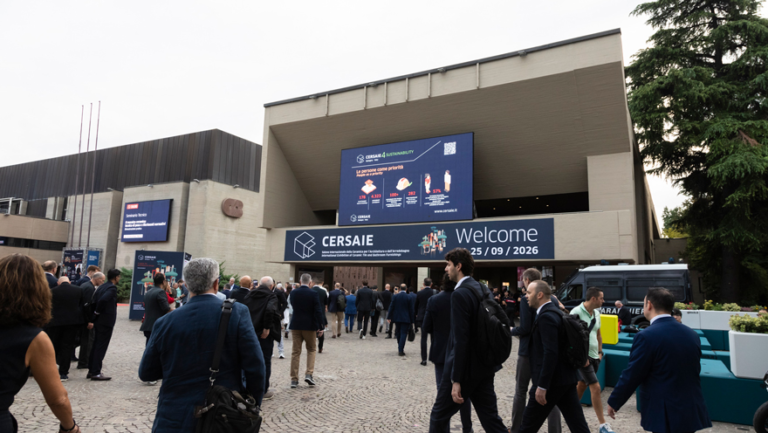
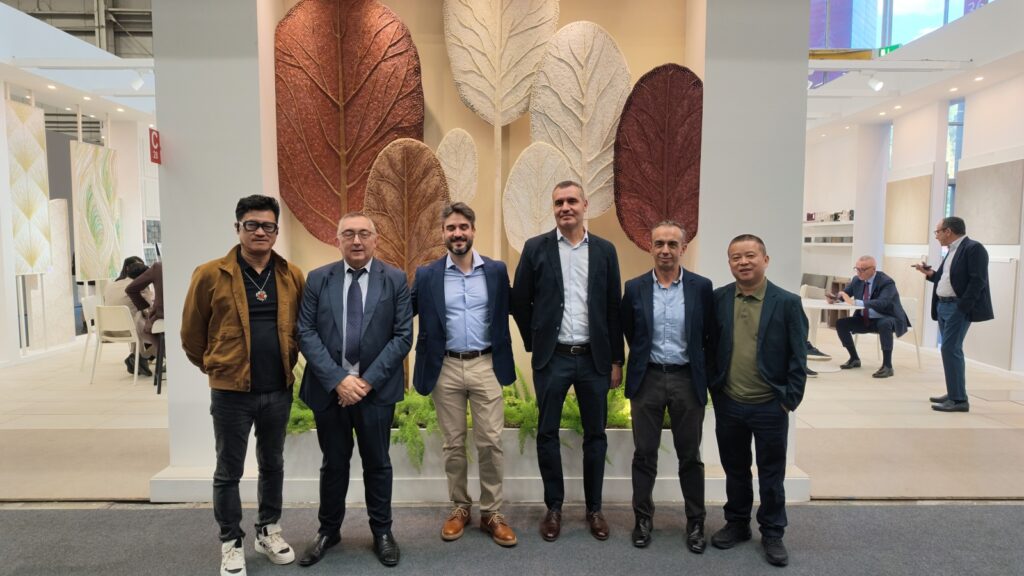
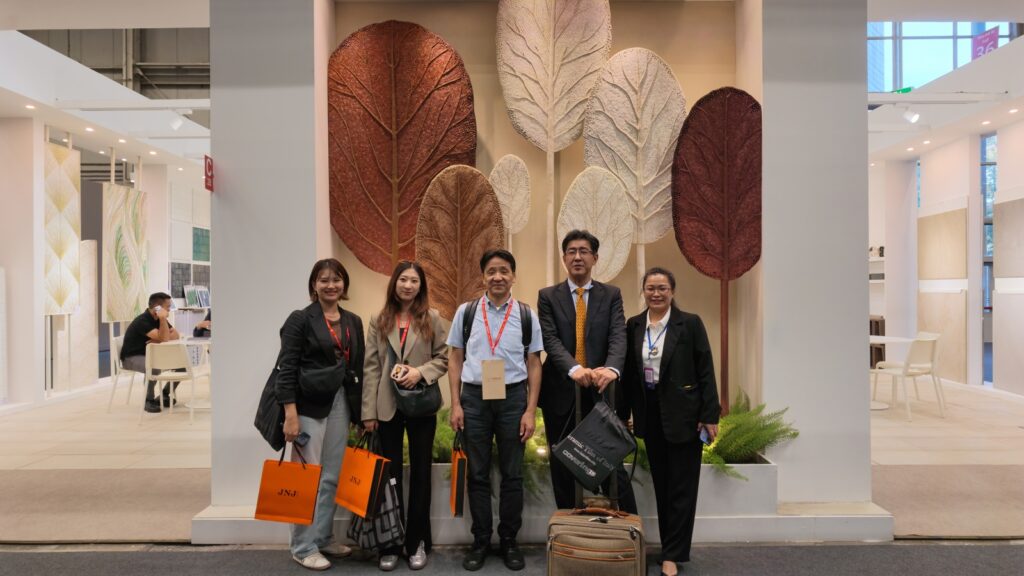
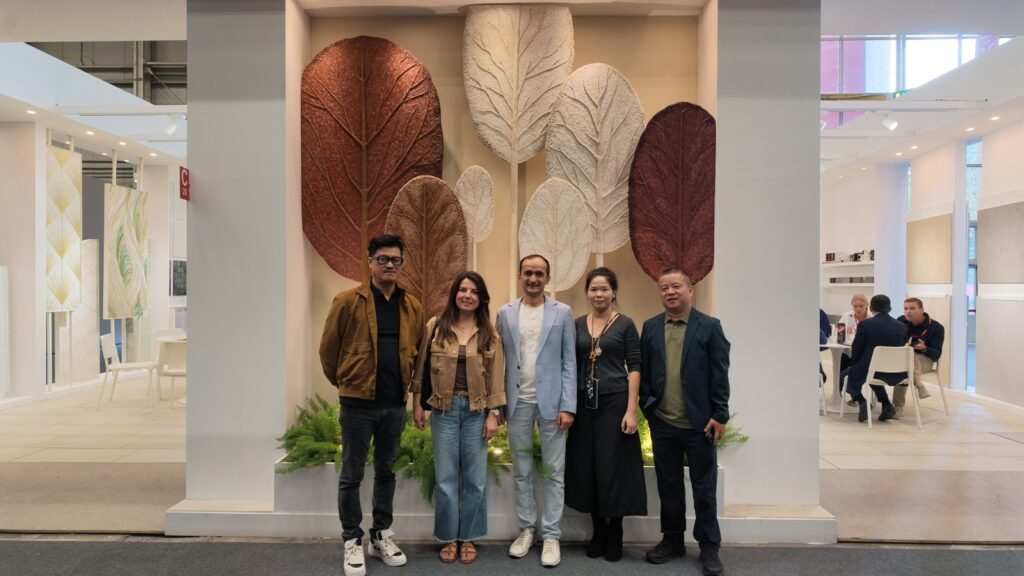
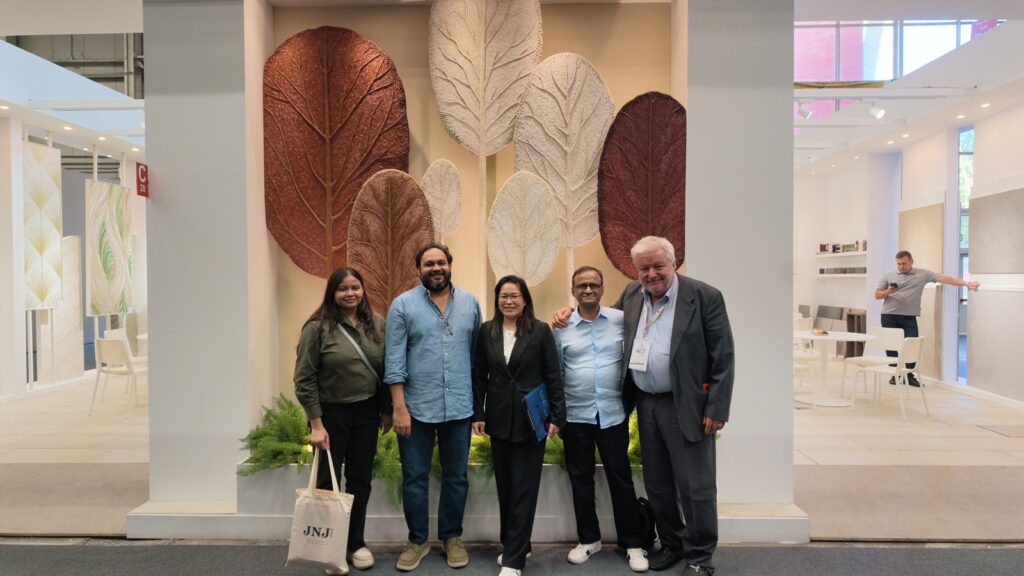
As Cersaie 2026 enters its fourth day in Bologna, the JNJMosaic booth continues to welcome visitors eager to experience mosaic from new perspectives.
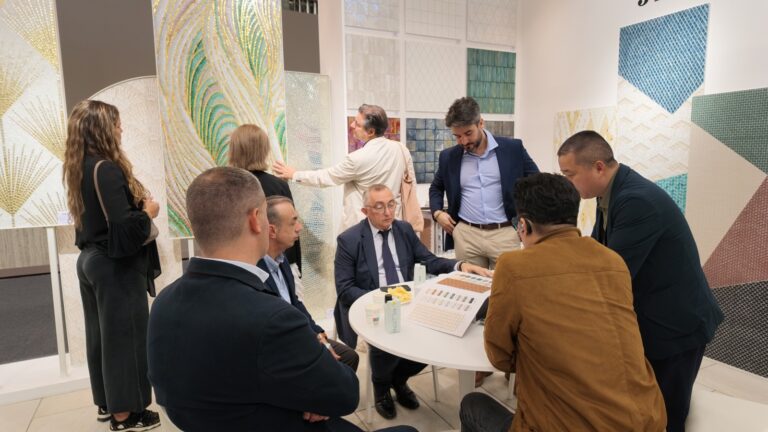
Since the exhibition opened on September 21, large-scale mosaic artworks, luminous surfaces and material samples have drawn people into the booth. Some stop to photograph an artwork. Others move closer to study individual tesserae, compare finishes or sit down with the JNJ team to discuss how a material might work within a particular space.
These encounters bring this year’s exhibition concept, “Capturing Nature in Space,” to life. More than a presentation of finished collections, the booth has become a place where art inspires observation, materials invite exploration and conversations open up new design possibilities.
JNJ Mosaic is exhibiting at Cersaie 2026 in Hall 36, Stand C28–D27.
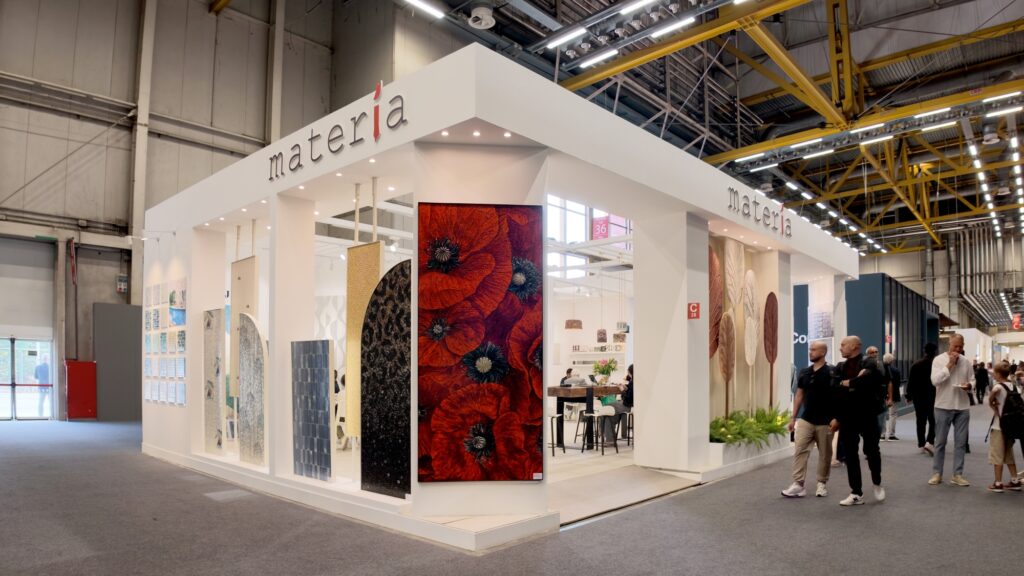
A Booth That Invites a Closer Look
The JNJ presentation brings artistic mosaic and architectural surfaces together in an open, light-filled setting.
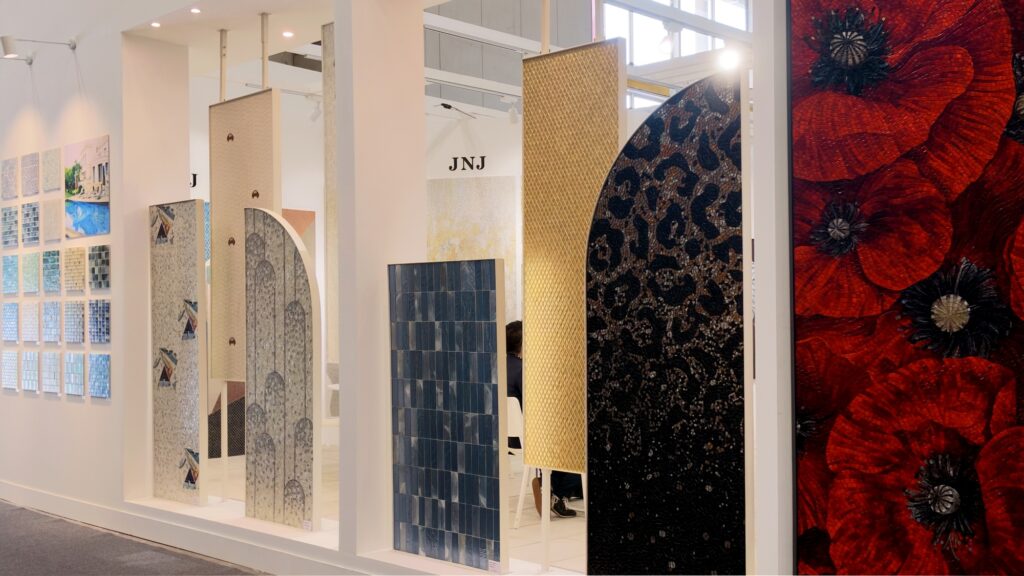
Large floral and animal artworks catch the eye from the aisle, while abstract compositions, curved decorative panels and sample walls reveal a broader range of surface possibilities. Glass, mother-of-pearl effects, reflective details and varied textures respond differently as visitors move through the space.
This changing relationship with light is an essential part of the experience. From a distance, each composition reads as a complete image or pattern. Viewed more closely, it becomes a landscape of individual pieces, subtle color transitions and carefully constructed lines.
Rather than separating art from application, the booth allows the two to exist side by side. Expressive wall art demonstrates what mosaic can communicate, while samples and architectural panels show how the same sensitivity to color, texture and rhythm can shape an interior.
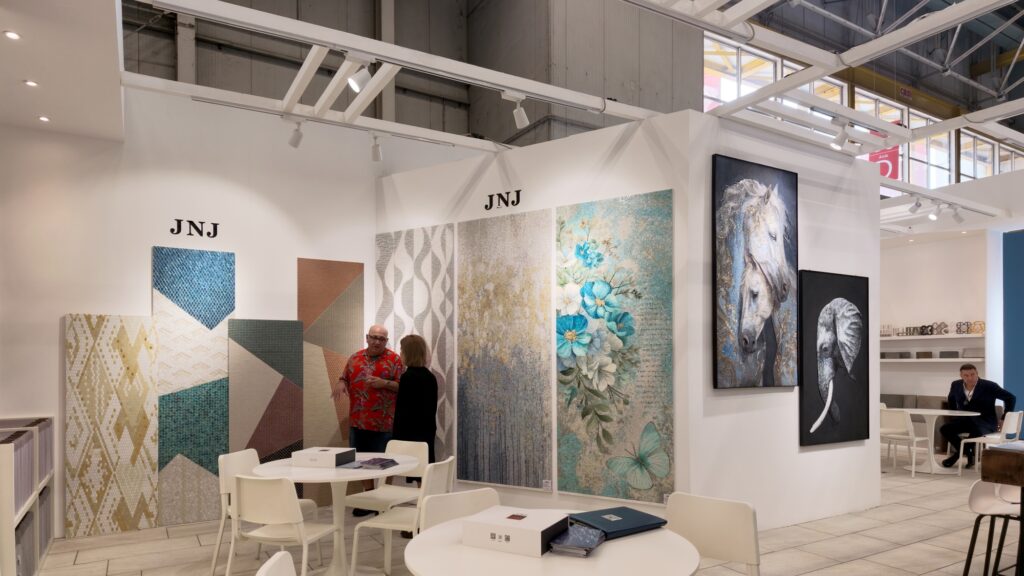
Mosaic Art That Stops Visitors in Their Tracks
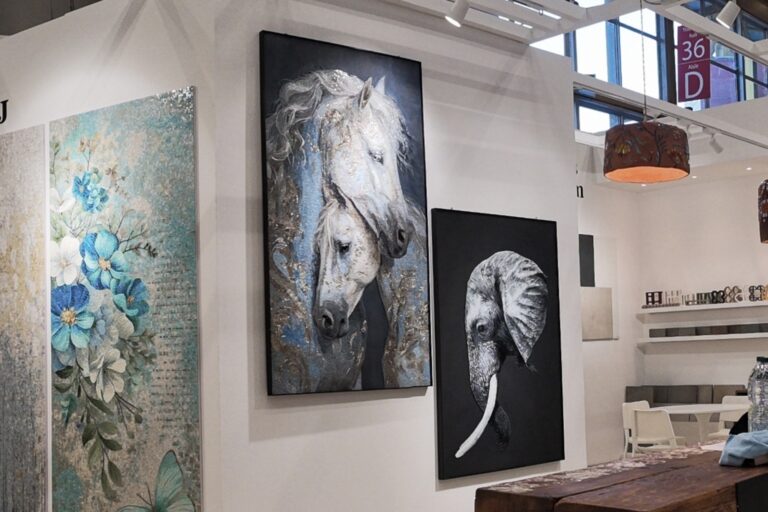
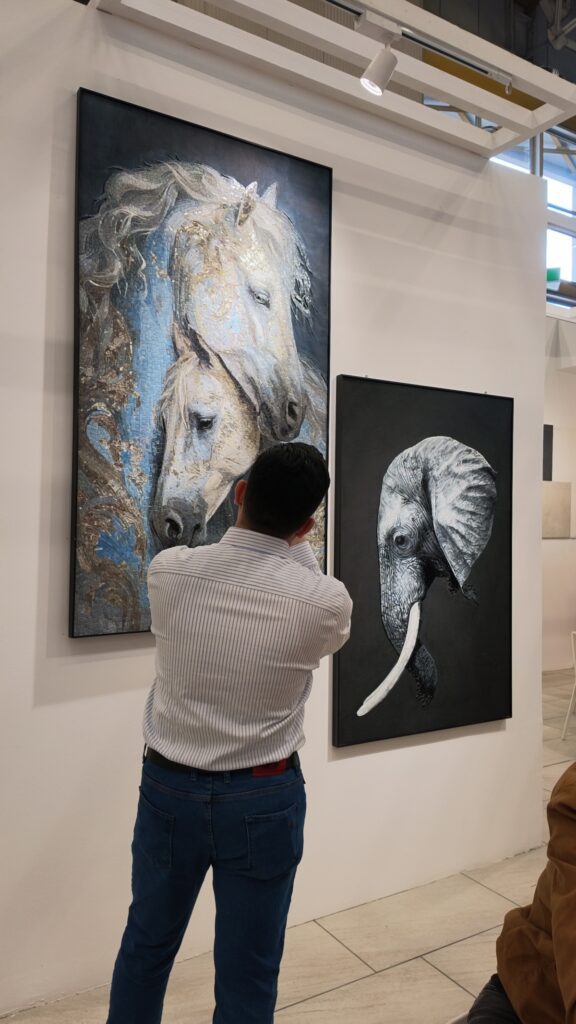
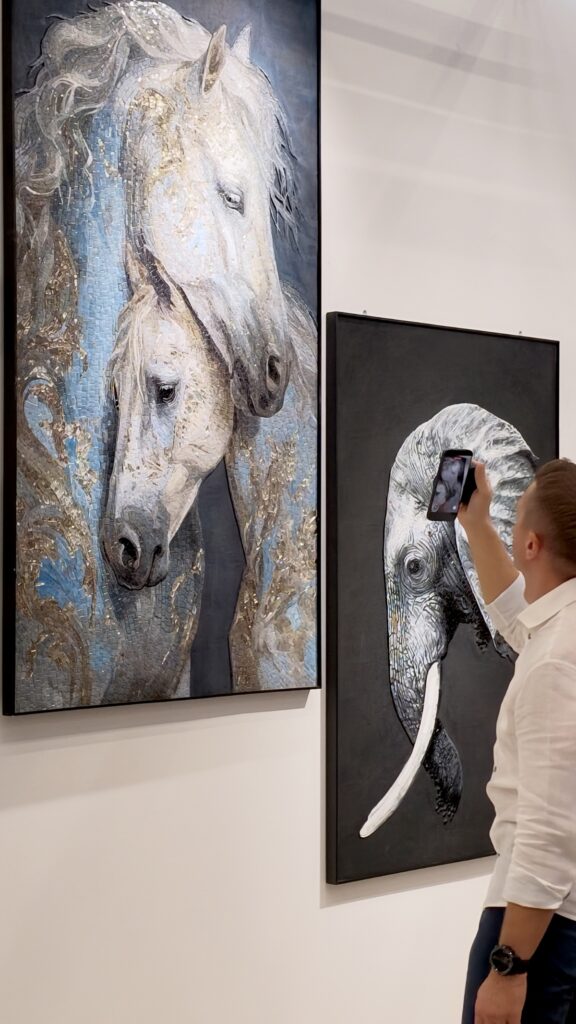
Among the works attracting attention at the booth are Sacred Connection and Silent Strength.
Displayed together, they offer two distinct interpretations of nature and character.
Sacred Connection
Sacred Connection portrays a mare and foal in a quiet moment of closeness. Flowing white manes, soft blue-grey tones and touches of gold give the composition a gentle luminosity, while the positioning of the two horses conveys trust, protection and companionship.
At the exhibition, the work changes subtly with the surrounding light. Reflective pieces brighten as visitors move past, revealing details that may not be visible at first glance. This interaction encourages viewers to step closer and examine how individual mosaic elements come together to form movement, emotion and depth.
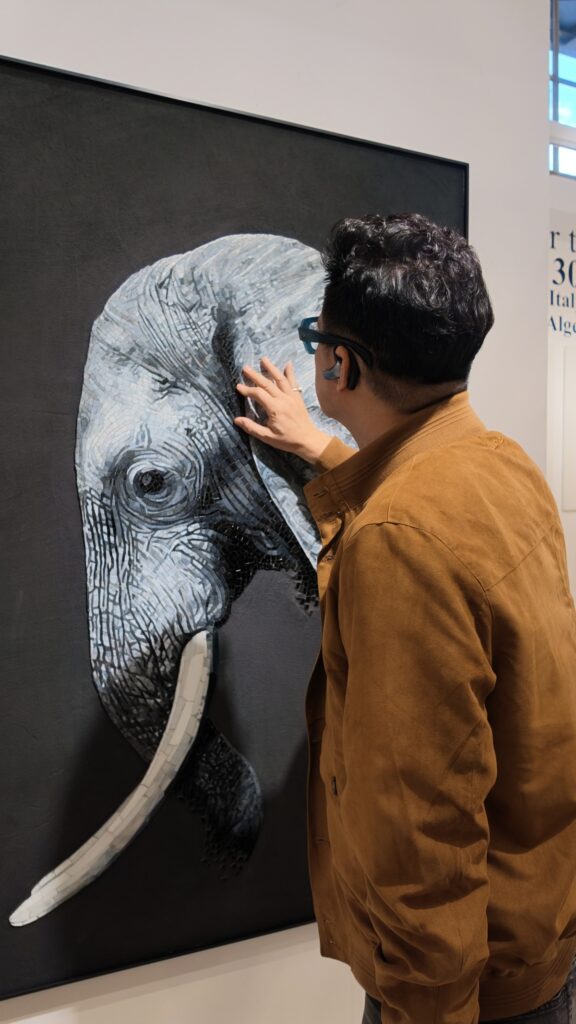
Silent Strength
Beside it, Silent Strength presents an elephant in a restrained monochrome palette. The dark background creates a dramatic contrast with the animal’s face, ear and ivory tusk, while finely arranged lines articulate the texture of its skin.
The limited color scheme gives the work a calm, graphic presence. Its visual impact comes not from an abundance of color, but from the relationship between light and shadow, positive and negative space, and smooth and textured surfaces.
Together, the two artworks demonstrate how mosaic can express both tenderness and strength—and how a familiar subject can acquire a new presence when interpreted piece by piece.
From Looking to Touching—and Talking
The experience at Cersaie does not end with viewing the finished displays.
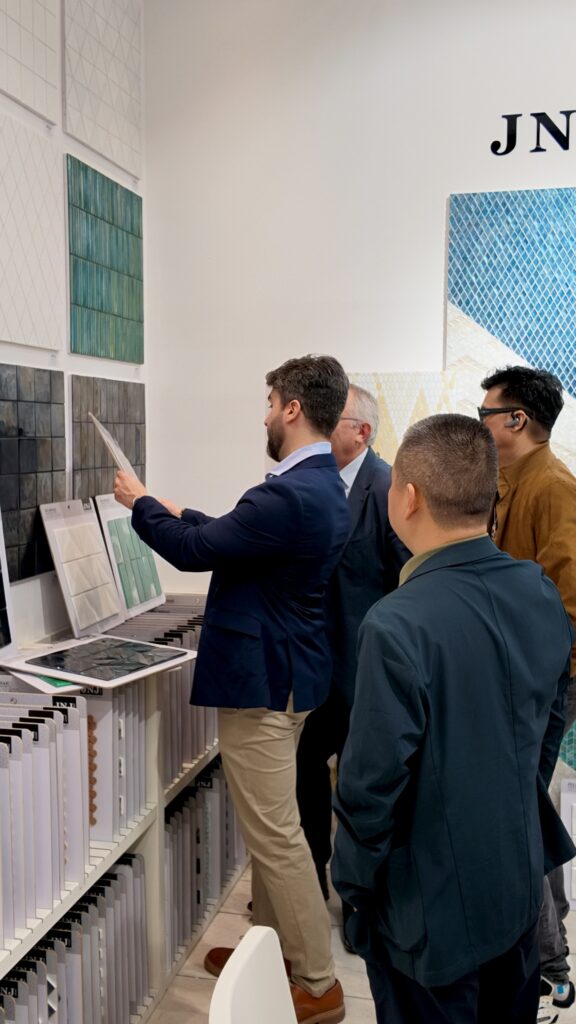
Throughout the show, visitors have explored sample boards, opened collection catalogues and compared colors, formats and surface finishes. These tactile encounters reveal qualities that are difficult to communicate through a screen alone: the depth of a translucent piece, the warmth of a particular tone, the irregularity of a handcrafted surface or the way a finish responds to changing light.
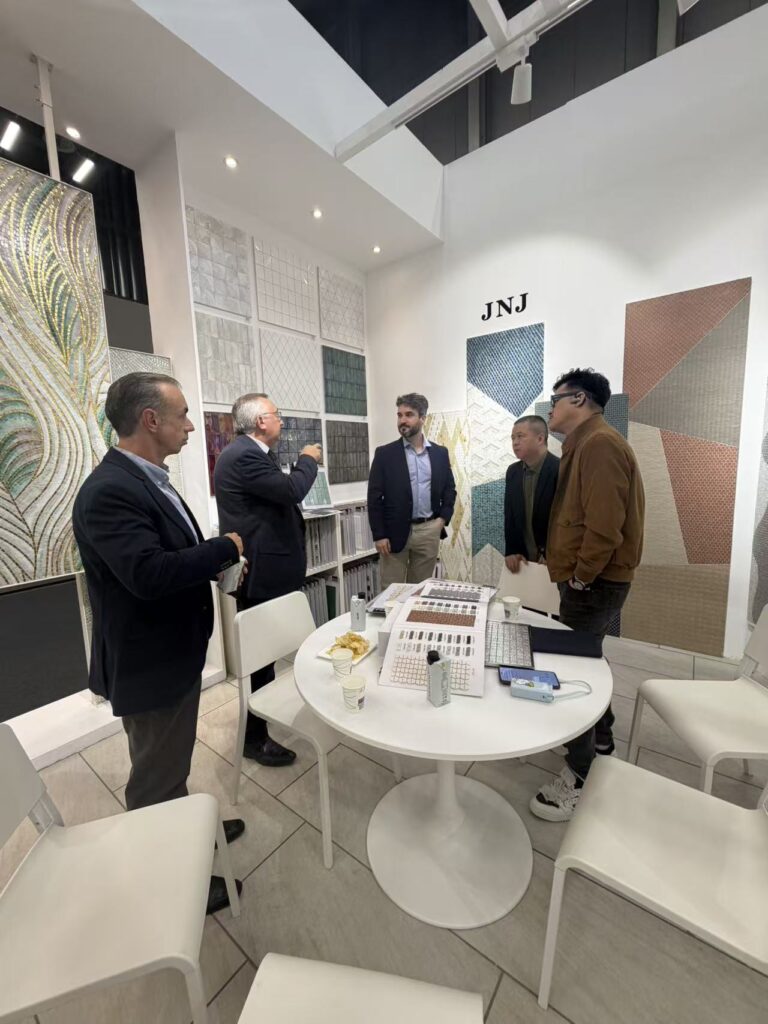
Around the display walls and meeting tables, conversations have moved naturally from visual impressions to practical design considerations.
Which palette would work best in a hospitality environment? How might the scale of a pattern change for a larger wall? Could several materials be combined to achieve a softer or more luminous effect? How can an artistic idea be translated into a surface that responds to a specific interior?
Material samples give these conversations a tangible starting point. Visitors can place colors next to one another, examine finishes at close range and connect an initial design idea with a realistic material direction.
For the JNJ team, this exchange is an important part of exhibiting at Cersaie. It creates an opportunity to listen, understand the needs behind a project and explore how mosaic can support both its visual identity and spatial character.
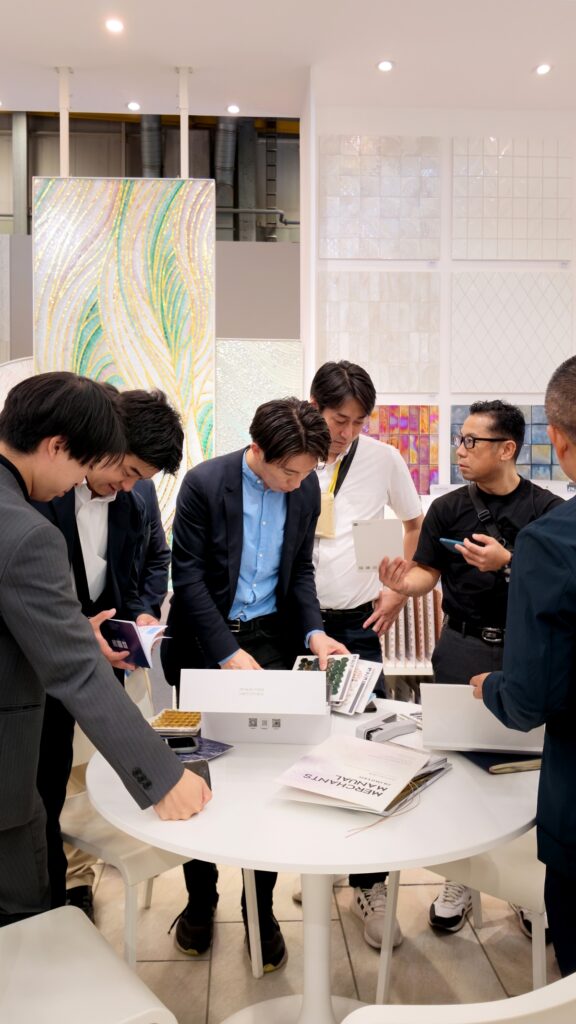
Different Ways of Discovering Mosaic
Every visitor approaches the booth differently.
Some are first drawn to the expressive character of the large mosaic artworks. They pause in front of Sacred Connection or Silent Strength, photograph the details and observe how the surfaces change from different angles.
Others begin with materials. They compare neutral tones, iridescent colors, geometric formats and textured finishes, considering how each might contribute to a wall, pool, hospitality interior or decorative feature.
For visitors with a particular project in mind, the discussion becomes more focused. Catalogues and sample boards make it possible to explore colors, proportions and possible combinations together. A conversation may begin with a single tile or pattern and gradually develop into a wider discussion about atmosphere, scale and application.
These different forms of engagement reflect the versatility of mosaic itself. It can be viewed as an artwork, specified as an architectural surface or developed into a bespoke design that belongs to one particular environment.
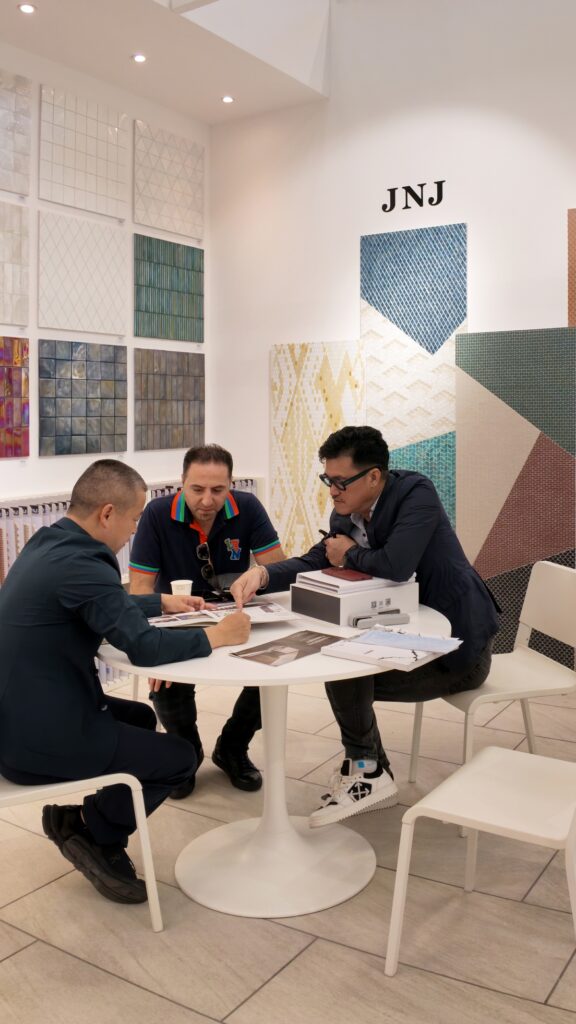
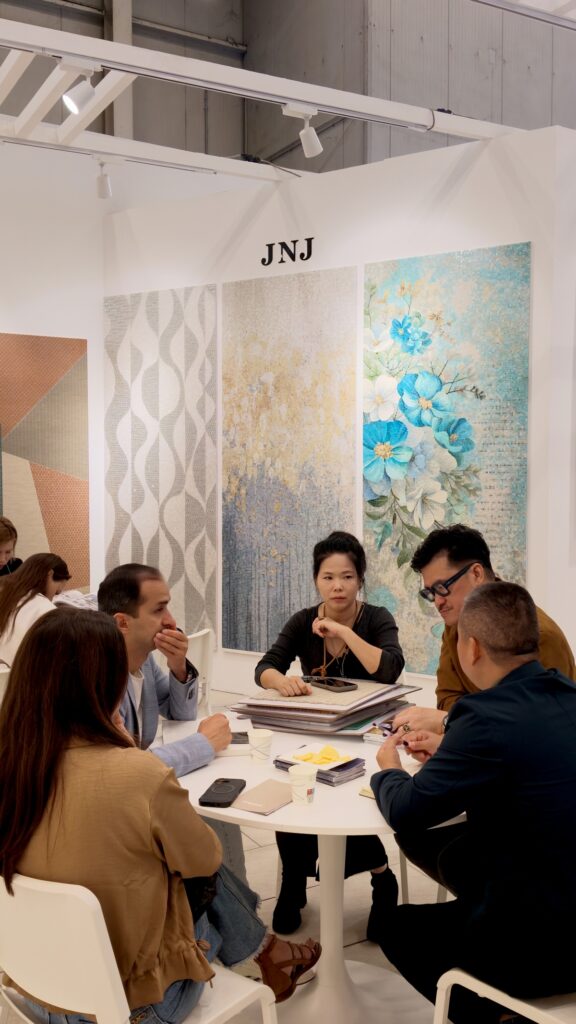
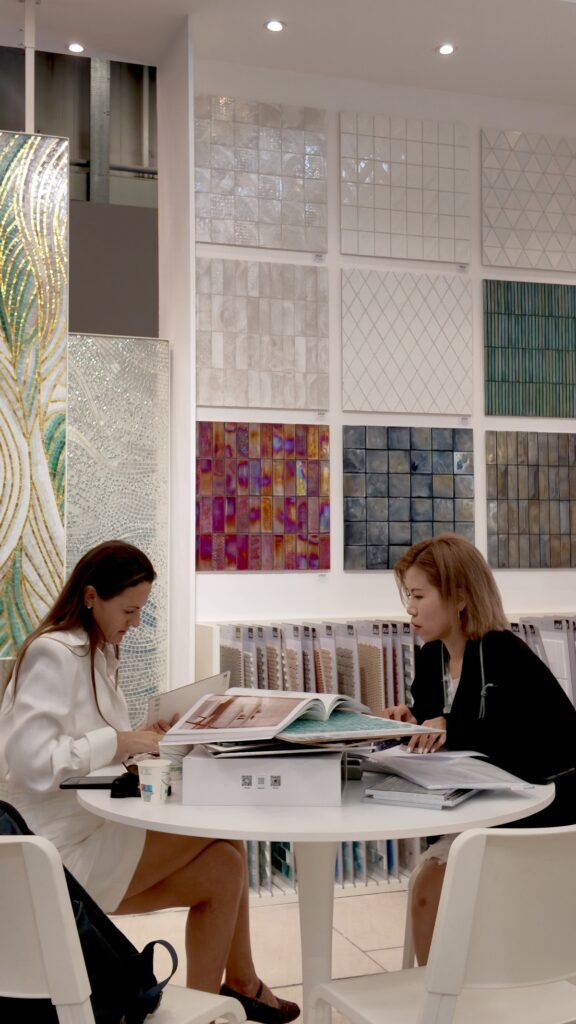
Turning Material Encounters into Spatial Possibilities
A sample is small, but the idea behind it can become part of an entire space.
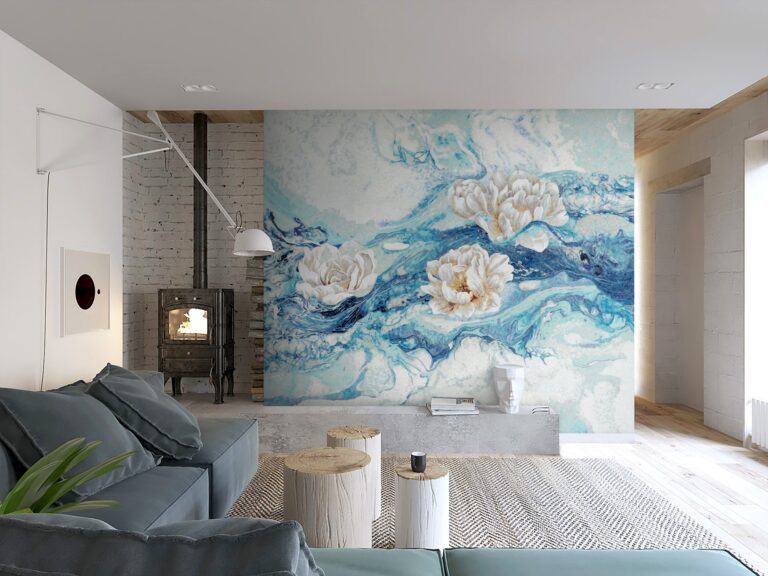
The discussions taking place at the JNJ booth highlight how color, scale, finish and pattern can be adapted to different design contexts. Depending on the project, a mosaic may serve as a dramatic focal point, a subtle textured background or a visual element that connects different areas of an interior.
Custom development can begin with an existing collection, a preferred palette, an image, a material combination or a completely new concept. The aim is not simply to add decoration, but to understand how the mosaic should interact with the architecture, lighting and intended experience of the space.
From private residences and hospitality interiors to swimming pools, commercial settings and large decorative installations, each environment presents different technical and aesthetic considerations. Meeting in person at Cersaie allows these considerations to be discussed alongside actual samples, surfaces and finished works.
It is where visual inspiration starts becoming a material conversation—and where that conversation can begin to take spatial form.
One More Day to Experience JNJ at Cersaie 2026
We sincerely thank everyone who has visited the JNJMosaic booth, explored the collections and shared ideas with our team during the exhibition.
Cersaie 2026 continues through September 25. If you are in Bologna, there is still time to experience the artworks and materials in person and speak with us about the possibilities for your next project.
Cersaie 2026
September 21–25, 2026
Bologna, Italy
Hall 36, Stand C28–D27
Visit the JNJ Mosaic Cersaie 2026 feature page for more exhibition highlights, or watch our latest video from the booth.
If you cannot meet us in Bologna, contact JNJMosaic to discuss your ideas, material requirements or custom mosaic project with our team.